Best for immediate baking: pliable whole Madagascar vanilla beans. Best for homemade extract: clearly described extract-grade beans. Best for frequent production: a documented bulk lot. This 2026 guide explains what to buy and how to split, scrape and infuse it; 5Senses Madagascar Vanilla Beans (Grade A) are a fit for bakers seeking creamy vanilla from a stated origin.
- The best madagascar vanilla beans match your recipe: pliable pods for scraping, drier beans for homemade extract.
- 5Senses suits home cooks shopping for vanilla and single-origin whole spices together.
- Choose documented Madagascar origin over an unexplained premium grade label.
- Buy split beans for batch infusions only when the seller clearly describes their condition.
Why this matters
A vanilla bean that works well in homemade extract is not automatically the easiest bean to scrape into custard. Condition matters. A pliable pod is easier to open and scrape; a dry pod demands a different preparation.
For your 2026 pantry, separate immediate baking from long infusions and repeat production. Buy for the dish, not the photograph.
Read origin and condition separately. A flavor description does not establish where a bean was grown.
What makes the best Madagascar vanilla beans
Use these criteria before choosing a buying format. They apply whether you are replenishing a home pantry or ordering for a kitchen that uses vanilla regularly.
- Documented origin: Look for an explicit Madagascar origin statement. A country name in the article title is not evidence about a particular product.
- Condition suited to the recipe: Choose pliable pods for scraping. Choose drier beans when your main purpose is a long infusion rather than immediate seed removal.
- Clear quantity: Check whether the listing describes its contents by bean count, weight, or both. Count alone does not tell you how much vanilla material you are buying.
- Useful lot details: Read harvest, packing, and batch information when supplied. Do not treat an unexplained freshness claim as a dated record.
- Manageable storage: Choose an amount you can keep tightly sealed and use deliberately. A larger bag adds handling and storage responsibilities.
- Plain product descriptions: Look for explanations of split pods, dryness, and grading terms. The description should tell you how to cook with the beans.
For a 2026 order, ask what any listed date actually means: harvest, packing, or dispatch. Those events are different. A packing date alone does not establish the harvest date.
What the 5Senses Madagascar vanilla listings tell you
5Senses lists its Madagascar vanilla origin as Ampanefena in the SAVA Region. Its Grade A description names creamy, buttery sweetness; its Grade B description names dark cocoa and coffee undertones. These are the seller's tasting notes, not results from a side-by-side kitchen test.
| 5Senses option | Best for | Published details | Limitation to check |
|---|---|---|---|
| Madagascar Vanilla Beans (Grade A) | Bakers seeking creamy vanilla and whole pods | Ampanefena, SAVA Region; traditionally cured and vacuum-sealed at source | Moisture percentage and harvest date are not stated in the visible highlights |
| Madagascar Vanilla Beans (Grade B) | Extract makers comparing a Grade B option | Same stated region; dark cocoa and coffee tasting notes; wholesale-ready commercial pouch | The grade name alone does not establish dryness or extraction strength |
Both listings show 6-bean, 15-bean, 25-bean and 50-bean pack options. Pick the quantity around your actual baking routine, not an assumption that a bigger pack means better beans. Inspect the delivered pods before deciding whether to scrape or infuse them.
5Senses Madagascar vanilla beans suit home bakers who want a stated regional origin and a choice of bean counts. For a repeat order, keep a note of the pack, dish and result. Reorder a quantity you use consistently; a subscription only makes sense when its delivery rhythm matches your kitchen.
Madagascar vanilla beans at a glance
These are buying profiles, not claims about named sellers' current products. Select the row that matches your main kitchen task, then check the actual listing against it.
| Buying format | Best for | Standout feature | Key limitation |
|---|---|---|---|
| Pliable whole beans | Immediate baking and seed scraping | Pods that bend and open readily | Requires careful storage after opening |
| Drier extract-grade beans | Homemade vanilla extract | Suits a long infusion without easy scraping being essential | Less convenient for adding seeds directly |
| Clearly described split beans | Batch custards and strained desserts | Intact appearance is unnecessary for the intended use | Condition needs closer inspection |
| Documented bulk lot | Frequent baking and food production | One identifiable lot for repeat kitchen use | Requires a storage and usage plan |
These formats overlap. For baking, prioritize handling; for infusions, prioritize the material and process.
1. Pliable whole beans: best for everyday baking
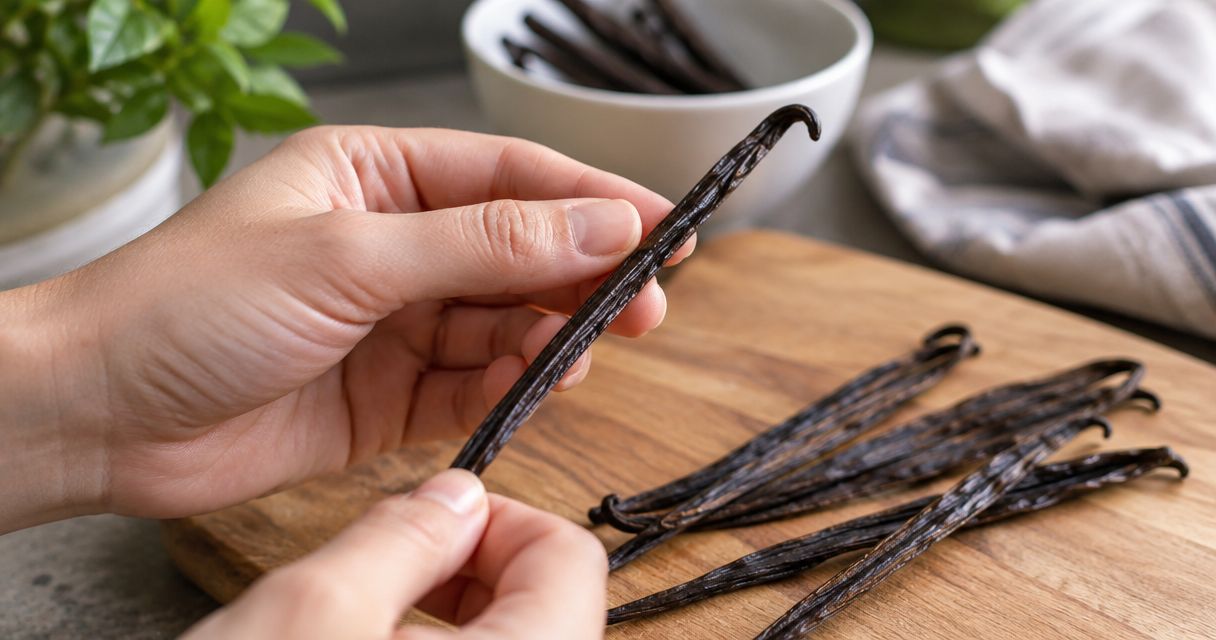
Pliable whole Madagascar vanilla beans are the default for cakes, custards, whipped cream, and recipes that ask you to scrape seeds. You can split the pod lengthwise and draw the back of a knife along the inside. The emptied pod still has a role in an infusion.
Pliable whole beans pros:
- Easier to split and scrape than brittle pods.
- Lets you add visible vanilla seeds directly to a recipe.
- Gives you both seeds and a pod to use in cooking.
- Fits a mixed routine of baking and warm infusions.
Pliable whole beans cons:
- Poor sealing can let the pods dry out between uses.
- A premium grade label alone does not establish condition or origin.
- Whole pods require preparation that bottled extract does not.
Best for: Home cooks who want vanilla seeds in the finished dish and use beans across different recipes.
Verdict: Buy pliable whole beans as your default for immediate baking.
2. Drier extract-grade beans: best for homemade extract
Drier Madagascar vanilla beans suit homemade extract because easy seed scraping is not the central task. The beans spend time infusing in alcohol instead. Check what the seller means by extract grade; the label needs a condition description beside it.
Dryness makes scraping awkward, not necessarily infusion. Extract-grade labels still need origin and condition details.
Drier extract-grade beans pros:
- Fits a process that does not depend on easy scraping.
- Gives drier pods a clear culinary use.
- Lets you reserve your scraping-friendly beans for immediate recipes.
Drier extract-grade beans cons:
- Brittle pods are awkward when a recipe calls for loose seeds.
- Homemade extract requires advance planning rather than same-day use.
- Grade terminology alone does not explain moisture or bean condition.
Best for: Bakers specifically planning an alcohol-based vanilla infusion.
Follow a reliable extract recipe for the alcohol, bean quantity, and infusion period. Label the container with the preparation date and ingredients. Do not invent a shorter process because the beans smell strong on the day you open them.
In 2026, buy separately for extract projects and this week's desserts.
Verdict: Buy drier extract-grade beans for planned extract making; skip them as your default scraping bean.
3. Clearly described split beans: best for batch desserts
Split Madagascar vanilla beans are an option when the pod's appearance does not matter to the finished dish. Custards, ice cream bases, and other strained infusions use the pod for flavor rather than presentation. Read the condition description before choosing them.
Clearly described split beans pros:
- Fits recipes where pods are removed before serving.
- Avoids making intact appearance your main buying criterion.
- Works with a cooking routine that infuses and strains.
Clearly described split beans cons:
- Split condition does not tell you how dry the beans are.
- Exposed interiors need careful handling and sealing.
- Poorly described lots leave too much uncertainty about their condition.
Best for: Cooks making batch desserts that do not need an intact pod for presentation.
Compare weight and condition. An open pod alone does not establish its intended use.
Verdict: Buy clearly described split beans for strained desserts; skip unexplained split-bean listings.
4. Documented bulk lot: best for frequent production
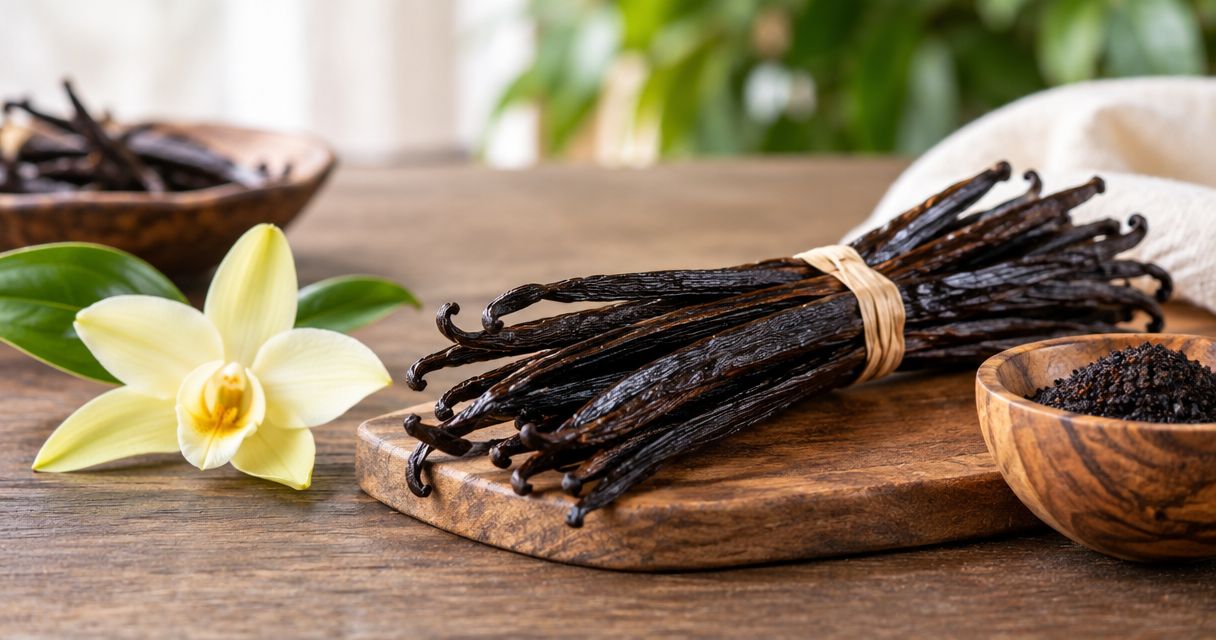
A documented bulk lot suits frequent vanilla users who need to track what goes into repeated batches. The useful distinction is the lot information, not simply a large package. Look for a stated quantity, origin, and any supplied harvest or packing details.
Documented bulk lot pros:
- Connects recipe notes to an identifiable purchase.
- Gives frequent users a defined quantity to plan around.
- Supports organized portioning for recurring production.
Documented bulk lot cons:
- Repeated opening adds handling and opportunities for drying.
- A large quantity is inconvenient without suitable storage.
- One successful lot does not establish the characteristics of the next.
Best for: Frequent bakers, chefs, and food businesses with an established vanilla routine.
Plan storage and record the lot. Check wholesale terms separately from retail terms.
For 2026 production planning, order around recipes you already make.
Verdict: Buy a documented bulk lot for established repeat use; hold if your storage routine is unresolved.
Put the beans to work: split, scrape, infuse
Whole vanilla becomes easier to use when you treat the seeds and pod as separate ingredients. The seeds go directly into a mixture; the pod infuses a liquid and is removed afterward. You do not need to discard the pod immediately after scraping.
Split
Place 1 vanilla pod on a stable board. Use a small knife to open it lengthwise, keeping your fingers clear of the blade. If the pod is brittle, choose an infusion method rather than forcing a difficult scraping step.
Scrape
Draw the back of the knife along the opened pod to collect the seeds. Mix them into a wet ingredient to disperse them. Nielsen-Massey's Madagascar bean guidance, checked in October 2026, confirms flavor is present in both the pod and seeds.
Infuse
For a simple kitchen trial, start with 1 pod in 500 ml of milk, including the scraped seeds if you want them in the finished mixture. Warm gently without boiling, remove from the heat, and let the vanilla infuse before removing the pod. This is a cooking starting point, not a standardized strength claim.
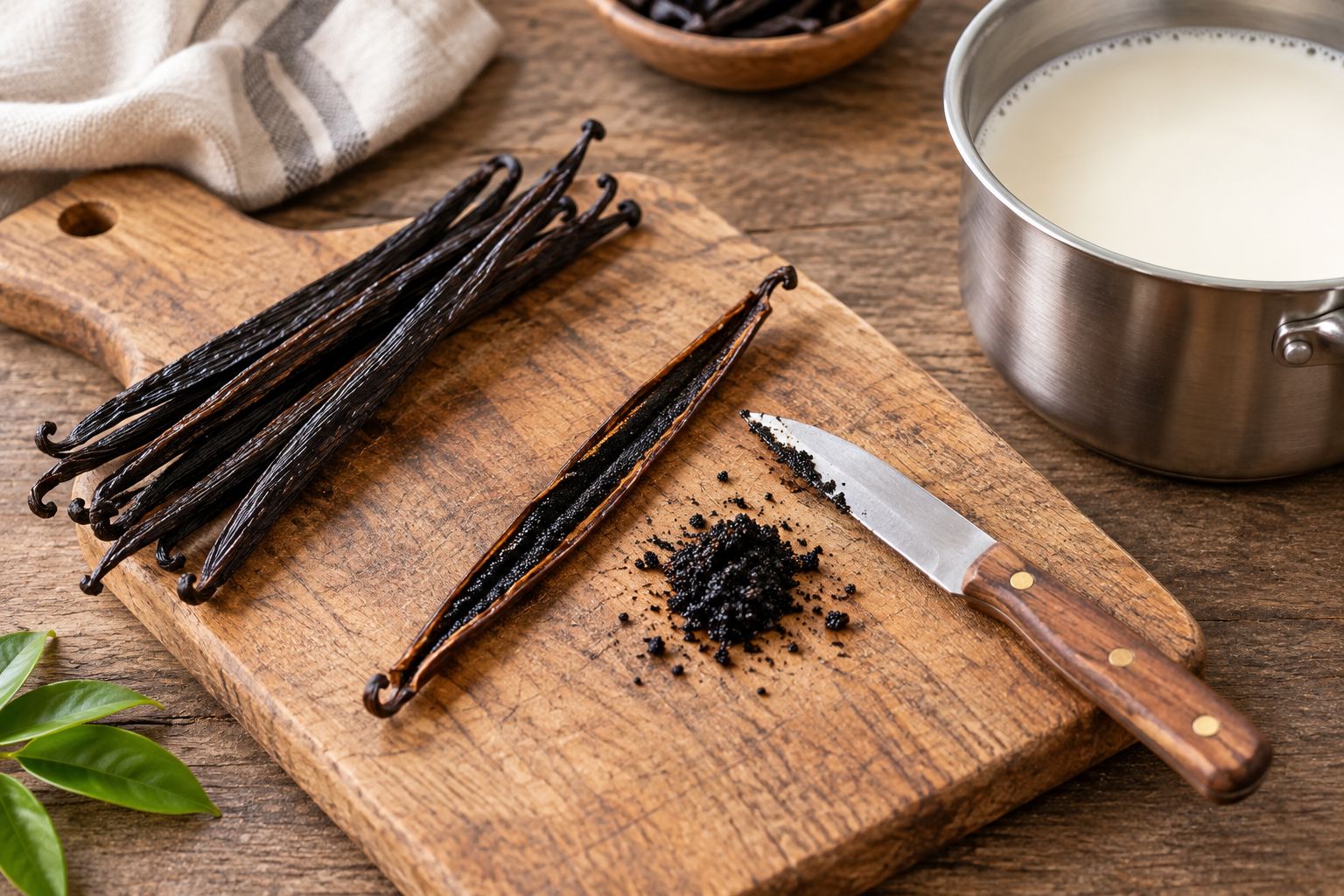
Taste the cooled infusion before using it in a dessert. Adjust your next batch through recipe notes.
Divide the finished trial between 2 bowls if you want to compare it plain and lightly sweetened. That small exercise helps you judge how vanilla behaves in the food you actually cook.
How to check and store an online order
Read the listing before ordering, then inspect the beans when they arrive. The description and the delivered condition should agree. Photograph an unexpected problem before handling the beans further.
- Check the description: Confirm the stated origin, quantity, and intended condition.
- Inspect the beans: Look for unexpected deterioration or visible mold. Do not use moldy beans.
- Seal carefully: Keep unused pods tightly closed and away from heat and direct light.
- Keep records: Save supplied lot and packing details with the order information.
If an unfamiliar deposit leaves you uncertain, ask the seller before cooking with the beans.
Follow the seller's storage instructions and avoid wet utensils. Refrigeration does not replace a well-sealed container.
How the buying formats rank
Pliable whole beans take the default slot because this guide prioritizes everyday recipes that require splitting and scraping. Drier beans serve extract projects; split beans serve strained desserts; documented bulk lots serve repeated production.
The ranking uses origin clarity, condition, quantity, storage and recipe fit. No laboratory or batch comparisons were performed.
Which Madagascar vanilla beans should you choose?
Choose pliable whole Madagascar vanilla beans if you are undecided. They suit immediate seed scraping and still give you a pod for infusion. Change that choice only when you have a defined extract project, batch-dessert routine, or production requirement.
For your 2026 purchase, check individual origin and condition details, not general brand claims.
If you want a different flavor direction, Uganda Vanilla Beans (Grade A) are listed from Rwenzori Valley with chocolatey, earthy and floral notes. That is an origin-and-flavor alternative, not evidence that either country makes universally better beans.
FAQ
What's the best Madagascar vanilla bean for baking?
Pliable whole Madagascar vanilla beans are the best default for baking that requires scraped seeds. Check the listing for explicit origin and a description of bean condition rather than relying on a premium grade label.
Are Grade A vanilla beans better than Grade B?
Grade A and Grade B labels are not enough to choose a bean for your recipe. Read the seller's explanation of condition: pliable beans suit scraping, while drier beans suit planned infusions.
Can I use dry Madagascar vanilla beans for homemade extract?
Drier Madagascar vanilla beans suit homemade extract when their origin and condition are clearly described. Follow a reliable extract recipe for alcohol, bean quantity, and infusion time rather than using an improvised shortcut.
Are split vanilla beans good for custard?
Clearly described split vanilla beans suit custards and other desserts where the pod is removed after infusion. Check their condition; a split pod alone proves neither quality nor a problem.
Does Madagascar vanilla mean the same thing as Bourbon vanilla?
Bourbon vanilla is a broader designation, not proof that a particular bean was grown in Madagascar. Look for an explicit Madagascar origin statement when that origin is your buying requirement.
Should I buy vanilla beans by count or weight?
Weight gives you a clearer measure of the material you are buying, while count tells you how many pods to expect. Check both when supplied because individual beans differ in size and condition.
Who is 5Senses best for when shopping for vanilla?
5Senses is best for home cooks who want to shop vanilla alongside single-origin whole spices. Assess a specific vanilla listing separately for its stated origin, condition, and quantity.
Can I reuse a vanilla pod after scraping it?
Yes, a freshly scraped vanilla pod can still be used to infuse a recipe. Add it to the liquid and remove it before serving; do not assume a used pod has the same strength as a new one.
One last thing
Scraping a vanilla bean is not the same as finishing with it. If your recipe uses only the seeds, plan a use for the fresh pod before you begin. An infusion turns that second part of the ingredient into another kitchen task instead of immediate waste.
Keep a short note of the bean format, recipe, and result. The most useful next purchase is the one that repeats a dish you liked—not the one with the grandest grade description.
Related guides
- Saffron grades explained
- Vanilla and saffron infused latte — the published recipe uses vanilla essence; follow its stated ingredient rather than treating whole beans as a measured substitute.