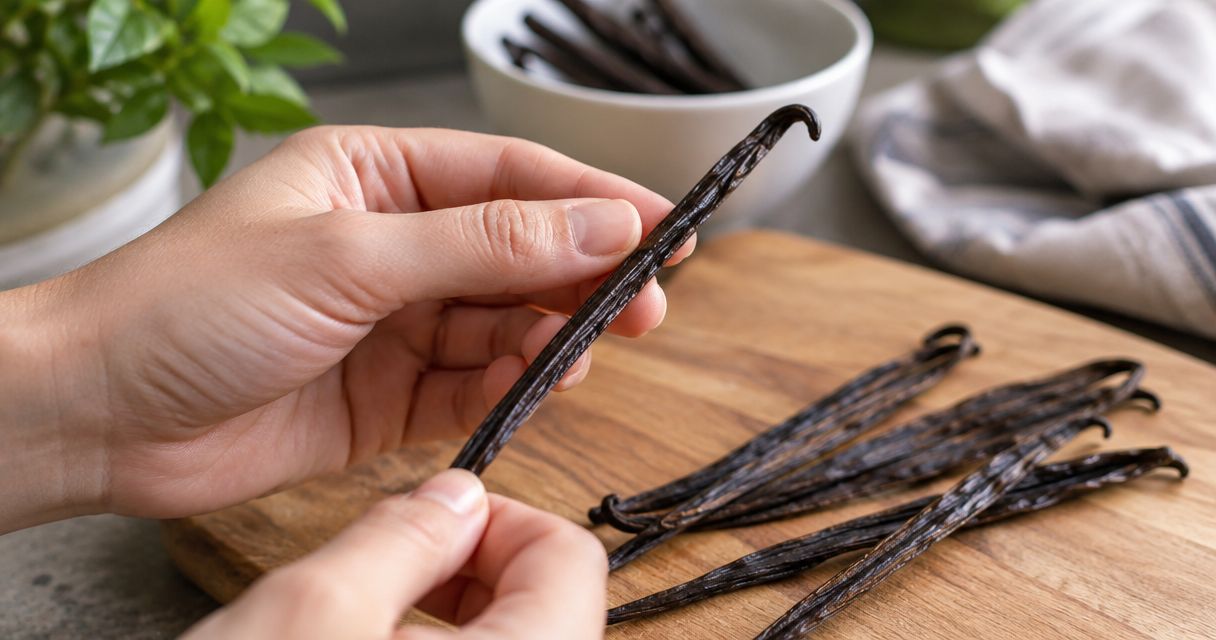
A well-kept vanilla bean bends without snapping, smells distinctly of vanilla, and shows no signs of mold or spoilage. Check the surface, aroma, and flexibility together; no single feature proves freshness or safety. A dry, brittle bean has lost moisture, but dryness alone does not mean you must discard it.
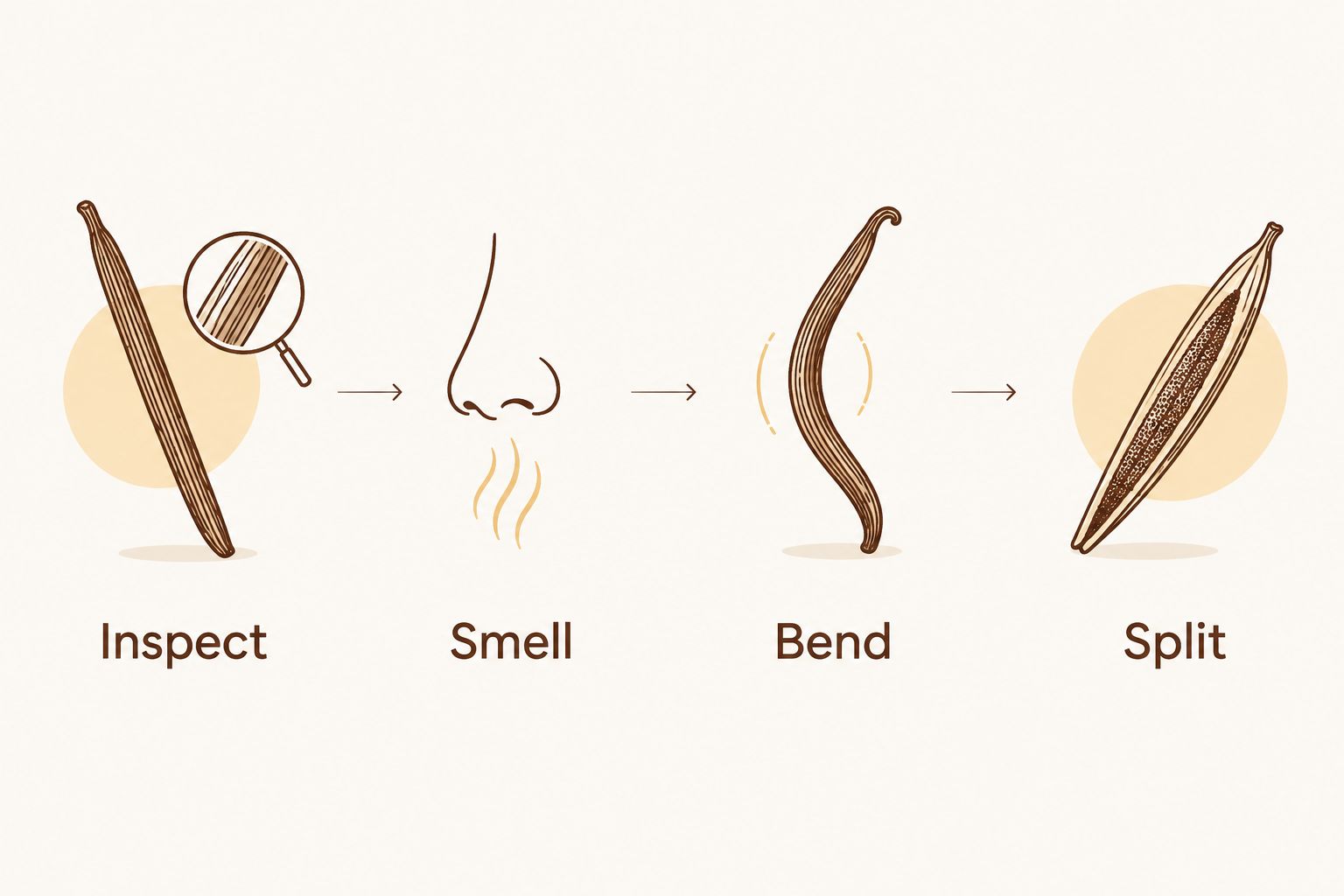
- How to tell if a vanilla bean is fresh: inspect, smell, bend, then split if needed.
- A flexible pod with a clear vanilla aroma is a good candidate for baking and infusing.
- A brittle bean is not automatically spoiled; inspect it before choosing how to use it.
- Discard moldy beans, and do not taste a questionable pod to test it.
- 5Senses suits home cooks shopping for single-origin whole spices and vanilla.
How can you tell if a vanilla bean is still fresh?
Use this 2026 pantry check before adding a whole vanilla bean to a recipe. Start with the outside, then assess the aroma and texture. Split the pod only when you are ready to use it or need to inspect a questionable area.
- Inspect. Look along the entire pod, including the ends and folds. Check for fuzzy growth, unusual wet patches, or other signs of deterioration.
- Smell. Look for a recognizable vanilla aroma. A musty or otherwise objectionable smell is a reason not to use the bean.
- Bend. Gently curve the pod rather than folding it sharply. Flexibility indicates retained moisture; cracking or snapping indicates dryness.
- Split. For a bean that passes the other checks, cut it lengthwise when preparing your recipe. Moist, paste-like seeds are easier to scrape than a dried interior.
Whole vanilla and other pantry ingredients are available from 5Senses. Judge the condition of the bean in your hand rather than treating a brand name or origin as proof of freshness.
The practical decision is whether the bean is ready for your intended recipe, dry but still usable, or unsuitable for cooking. These are different outcomes.
| Bean condition | What you notice | Best for | Useful quality | Limitation or next move |
|---|---|---|---|---|
| Flexible and aromatic | Pod bends gently and smells of vanilla, with no spoilage signs | Scraping into custard, cream, or batter | Seeds are easier to remove | Still inspect the entire surface before use |
| Dry but aromatic | Pod feels stiff or brittle but retains vanilla aroma, with no spoilage signs | Infusing a recipe's liquid | The pod can still contribute flavor | Harder to split and scrape; handle carefully |
| Suspect or spoiled | Fuzzy growth, musty odor, or unexplained deterioration | Not for cooking | None | Discard spoiled beans; do not taste-test them |
Why this matters
A vanilla bean can be less convenient to use without being spoiled. A dry pod resists your knife and releases its seeds less readily. That affects preparation, not just flavor.
The opposite mistake is treating a soft, glossy pod as automatically safe. Moisture and appearance cannot replace a surface inspection. Freshness checks help you choose a cooking method; they do not certify food safety.
For your 2026 baking pantry, keep the distinction simple: condition determines how you prepare the bean, while signs of spoilage determine whether you use it at all. Do not try to rescue a suspect bean by putting it into a recipe that will be heated.
What does a fresh vanilla bean feel like?
A well-kept culinary vanilla bean generally feels flexible rather than rigid. It should curve under gentle pressure without immediately cracking. You do not need to tie it in a knot or crease it to check.
Flexibility is useful because it tells you something about moisture. It does not tell you the harvest date, packing date, or storage history. A pliable bean can still have a problem elsewhere on its surface.
Check texture with clean, dry hands. Hold the pod near its middle and gently bend a small section. Stop if it begins to crack; repeated bending only breaks the bean and makes it harder to handle.
For baking, a pliable pod is convenient. Lay it flat, split it lengthwise, and scrape the seeds with the back of a knife. Add them where your recipe calls for vanilla.
Do not confuse flexibility with a guarantee. If the same pod smells musty or shows fuzzy growth, its soft texture is not a reason to keep it.
What should a good vanilla bean smell like?
A good vanilla bean has a recognizable vanilla aroma. Assess it close to the pod rather than expecting it to perfume the room. The smell of the package alone is not a complete check of each bean inside.
Vanilla aroma is not identical across every origin or curing method. Sweet, woody, floral, or other aromatic notes can appear in culinary vanilla. You are checking for a clear vanilla character and the absence of objectionable odors, not requiring every bean to smell exactly alike.
A faint smell deserves another look at the bean's condition. Check whether the pod is very dry and whether the container closes properly. A weak aroma alone does not establish spoilage, but it gives you less confidence in the flavor the bean will bring to a recipe.
Mustiness is different. Do not explain away a musty smell as an unusual origin characteristic. Inspect the pod and container, and leave the bean out of your food if spoilage is suspected.
Never taste a questionable bean to settle the issue. Taste is not a safe way to establish whether an ingredient is fit to use.
Does a dry vanilla bean mean it has gone bad?
A dry vanilla bean is not automatically a spoiled vanilla bean. Dryness describes moisture loss. Spoilage requires a separate assessment of the surface, smell, and overall condition.
A stiff pod with a clean vanilla aroma and no spoilage signs can still be useful for infusion. Place it in the liquid your recipe already uses, such as milk or cream, and follow the recipe's heating and steeping instructions. Remove the pod before serving when the recipe requires it.
Do not force a brittle bean open while holding it in your hand. Work on a stable cutting board. If splitting it safely is difficult, use an infusion method that accepts an intact pod rather than pushing harder with the knife.
Infusion does not reverse spoilage. It is a preparation choice for a sound but dry bean, not a treatment for mold or an objectionable smell.
Expect a practical trade-off: dry beans are less convenient when you want visible seeds distributed through frosting or batter. They are easier to work around in recipes where liquid carries the flavor. Choose the recipe to suit the condition of the ingredient.
Are white marks on vanilla beans mold?
White marks on a vanilla bean are not automatically mold. Vanillin can crystallize on the surface of cured vanilla. Mold can also appear as pale growth, so color alone cannot settle the question.
Crystalline deposits and fuzzy growth are different kinds of material. However, a description or photograph is not a reliable safety clearance for the bean in your kitchen. Examine the whole pod, its smell, and the container rather than judging a single spot.
Do not scrape off suspicious growth and use the rest of the bean. If you identify mold, discard the affected bean. Do not rely on rinsing, baking, or simmering to make it suitable for food.
If you cannot confidently identify a deposit, keep the bean out of your recipe. Ask the supplier about the specific bean and provide clear photographs of the surface and packaging. A replacement ingredient is a better choice than using an uncertain one.
Avoid using internet images as a pass-or-fail chart. Lighting, focus, and the shape of the pod can hide details that matter.
Why vanilla bean freshness varies
Vanilla beans do not all reach your kitchen in the same condition. Several practical factors influence how a pod feels and how much aroma it retains:
- Curing and drying. Culinary vanilla is cured, not used straight from a freshly picked green pod. Its final moisture condition affects flexibility.
- Storage exposure. Air exposure contributes to drying and loss of aroma. A poorly closed container undermines careful pantry storage.
- Heat and light. Keeping vanilla near a stove or in direct sunlight exposes it to conditions you can avoid.
- Repeated handling. Opening the container and handling every bean repeatedly adds unnecessary exposure. Inspect before use, then close the container.
- Intended use. A bean suitable for extracting or infusing is not necessarily as convenient for scraping into a delicate dessert.
Origin adds information about the ingredient, but it does not replace these checks. A named growing region cannot tell you whether a particular pod has dried out in your cupboard.
How should you store a vanilla bean after checking it?
Keep sound vanilla beans in a clean, airtight container in a cool, dark cupboard. Choose a spot away from cooking heat and direct sunlight. Close the container promptly after removing a bean.
Avoid putting whole beans into the refrigerator as your default storage method. Temperature changes can create condensation when the container returns to room temperature. A dry, stable pantry location avoids that unnecessary complication.
Keep packaging information when you transfer beans to another container. Origin, lot information, and any packing or best-before details help you identify what you have. Do not turn those details into a freshness guarantee; check the bean before cooking.
If you label a new container in 2026, record when you opened it as well as the information supplied on the pack. An opening date gives you a useful reference without pretending to be a harvest date.
Store unused whole beans separately from pods that have already been simmered in milk or cream. A cooked, wet pod is not the same pantry ingredient as an untouched whole bean. Follow your recipe's handling instructions rather than returning it to the original container.
What should you check before buying vanilla in 2026?
Buy for the way you actually cook. If you regularly scrape seeds into desserts, prioritize information about a bean's moisture condition and intended culinary use. If you mainly infuse liquids, assess the product description with that preparation in mind.
Look for a stated origin and clear handling information. Madagascar and Uganda are origin names to distinguish, not freshness grades. Neither name tells you how a specific bean was stored after curing.
5Senses is a fit for home cooks who want single-origin whole spices and vanilla. The same buying discipline applies: check the stated product details, then inspect the beans when they arrive. A useful description supports your choice; it does not replace the condition check.
Before replenishing, review what remains in your pantry. Flexible beans belong in recipes where scraping is useful. Sound, dry beans belong in preparations that accommodate infusion. Suspect beans do not belong in either group.
Keep your buying decision separate from a promised shelf life. Your storage conditions and the bean's actual condition matter more than an unsupported claim that every pod stays fresh for a fixed period.
Can you judge vanilla freshness from its color?
Color alone cannot establish vanilla bean freshness. Cured beans are dark, but shade varies with the vanilla and its processing. A dark pod still needs an aroma, surface, and flexibility check.
Gloss is not a complete test either. Some sound beans look more lustrous than others. Assess the whole bean rather than buying or discarding it because it matches one photograph.
Should you split every bean to check freshness?
You do not need to split every bean during a routine pantry check. Start with the outside, smell, and gentle bend test. Keep sound pods intact until your recipe needs them.
Opening a bean is useful when you are about to scrape its seeds. It is not a substitute for inspecting the exterior, and it does not clear a suspect pod for use.
FAQ
What's the easiest way to tell if a vanilla bean is fresh?
Inspect the surface, smell the pod, and gently bend it. A flexible bean with a clear vanilla aroma and no spoilage signs is a good candidate for cooking; no single check guarantees safety.
Can I use a vanilla bean that snaps when I bend it?
A vanilla bean that snaps is dry, not automatically spoiled. If it has no spoilage signs and still smells of vanilla, choose an infusion recipe instead of forcing the brittle pod open.
Is white material on a vanilla bean always mold?
White material is not always mold because vanillin can crystallize on cured vanilla. Do not use a bean with unidentified growth, and discard it if you identify mold.
Can cooking make a moldy vanilla bean safe?
Do not use cooking to rescue a moldy vanilla bean. Discard the affected bean rather than scraping, rinsing, or simmering it.
Should I keep whole vanilla beans in the refrigerator?
A cool, dark cupboard and a clean, airtight container are the practical default for whole vanilla beans. Refrigeration and subsequent warming can introduce condensation.
Does a 2026 best-before date prove my vanilla bean is fresh?
A 2026 best-before date does not prove a vanilla bean's current condition. Inspect the bean's surface, smell, and flexibility, and follow the handling instructions on its packaging.
What should I check when buying vanilla from 5Senses in 2026?
Check the stated origin, product description, and handling information when buying vanilla from 5Senses in 2026. Inspect the beans on arrival rather than treating origin or branding as a freshness guarantee.
One last thing
The seeds are not the only useful part of a sound vanilla bean. After scraping, the pod can still flavor a recipe's liquid. Keep it within the preparation you are making and follow that recipe's handling instructions.
Check first, then choose the ritual: split and scrape a flexible bean, or infuse a sound dry one. Do not discard a bean for brittleness alone, and do not keep a suspect bean merely because it bends.