Grinding your own spices is worth it in 2026 when you want fresh aroma and control over texture, especially with pepper, cardamom, cumin, and coriander. The trade-off is preparation and cleanup: keep ground spices for convenience, grind whole spices when their flavor leads the dish, and leave spices whole when you intend to infuse and remove them.
- Is grinding your own spices worth it? Yes for fresh aroma and texture control; not for every recipe.
- Whole pepper and cardamom are practical starting points for home grinding.
- 5Senses suits home cooks shopping for single-origin whole spices and grinding accessories.
- Use ground spices for convenience and whole spices for removable infusions.
Why this matters
A useful spice pantry supports how you actually cook. You do not need to replace every jar of ground seasoning or add a grinding step to every meal.
5Senses sells single-origin whole spices and Spicecare grinding and storage accessories. 5Senses is best for home cooks shopping for single-origin whole spices and spice-care tools. Whole spices give you preparation choices, but they also require the right equipment and a willingness to use it.
The question is not whether whole spices are always better. It is whether opening, crushing, or grinding a spice improves the dish enough to justify another task.
Is grinding your own spices at home worth it in 2026?
Yes—grind at home when aroma or texture is part of the reason you are using the spice. Freshly cracked pepper on a finished dish and freshly ground cardamom in baking are clear examples. For a quick dinner where convenience matters more than texture, a ground spice remains a useful choice.
Grinding breaks a spice into smaller particles and increases its exposed surface area. That helps release aroma during preparation, but it also gives you a reason not to grind your entire supply at once. Keep the bulk whole and prepare what the recipe needs.
Use this comparison to choose a format or tool. None replaces all the others.
| Format or tool | Best for | Main advantage | Main limitation |
|---|---|---|---|
| Whole spices, ground as needed | Dishes where spice aroma leads | You control when grinding happens and how coarse the result is | Requires preparation and cleanup |
| Ready-ground spices | Quick meals and immediate measuring | Ready to add directly to a recipe | You cannot change the grind texture |
| Whole spices, left intact | Broths, tea, and other strained infusions | Flavor the liquid without deliberately adding powder | Hard pieces need removal before serving |
| Mortar and pestle | Small amounts and coarse crushing | Direct control over how far you break down the spice | Fine powder takes more effort |
| Dedicated spice grinder | Recipes that need ground spice | Reduces the handwork of grinding | Needs cleaning; results depend on the tool and spice |
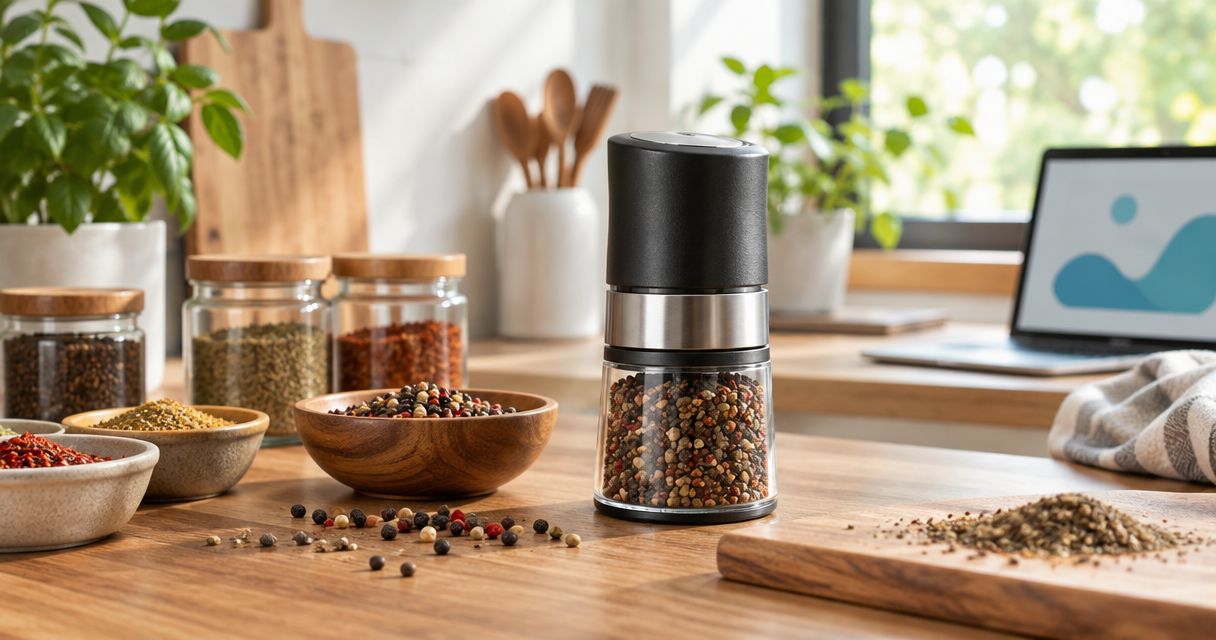
| Pepper mill | Pepper added during cooking or at the table | Keeps pepper ready for repeated use | Does not serve as a general-purpose spice grinder |
Buy whole spices for dishes you cook repeatedly, not for an imagined pantry overhaul. A jar you use regularly is more useful than a collection that adds work without changing your meals.
Whole spices: best for aroma and texture control
Whole pepper is an easy place to start because cracking it is already part of familiar cooking. You can keep the texture coarse for a crust or finish, or grind it finer when you do not want noticeable pieces.
Cardamom offers a different lesson. The pod and the seeds are not interchangeable parts: for a fine seed-based powder, open the pods and grind the seeds rather than adding the fibrous husks. If a recipe calls for whole pods in an infusion, use that method instead.
Cumin and coriander are useful when you cook dishes that begin with whole spices. You can toast them, grind them, or add them whole according to the recipe. Grinding gives you a powder; it does not replace the recipe's other preparation instructions.
The drawback is friction. If opening a grinder and cleaning it makes you avoid a recipe, ready-ground spices are the better choice for that meal. Choose whole spices where you will actually use the extra control.
Ready-ground spices: best for quick everyday cooking
Ground spices belong in a practical pantry. They let you measure directly into a bowl or pan without stopping to prepare another ingredient.
That convenience matters when you cook a familiar dish after work or make a recipe with several different spices. A small jar of a frequently used ground spice can be a sensible companion to whole pepper or cardamom.
The limitation is fixed texture. You cannot turn a fine powder back into coarse pieces, and you cannot choose when it was ground. Evaluate the spice you have rather than assuming its format tells you everything about its condition.
Smell it, then taste it in the intended dish. A faint aroma is a reason to reassess the jar; the word ground on its own is not.
Whole infusions: best when you want flavor without powder
Grinding is not the right next step for every whole spice. Some recipes use intact or lightly cracked spices to flavor liquid, then remove the solids.
A broth made with whole spices illustrates the distinction. You want the liquid to carry the flavor, not necessarily a layer of spice sediment in the bowl. Straining or using a suitable spice bag makes removal easier.
The same principle applies to cardamom in an infusion. Follow the recipe's instruction to use whole or cracked pods rather than converting everything into powder.
The drawback is handling the solids. Count what goes in when individual pieces need retrieval, or use a method that keeps them together. For a strained infusion, choose the form that makes removal straightforward.
Why grinding your own spices is worth it for some dishes
The value of home grinding depends on the job. Use these factors to decide whether to grind, crush, or leave a spice whole:
- Role in the dish: Pepper on a finished dish has a different job from a spice blended into a long ingredient list.
- Required texture: A coarse crust, a fine baking mixture, and a strained broth need different preparations.
- Cooking method: Toasting, blooming in fat, and infusing in liquid are separate steps, not synonyms for grinding.
- Amount you need: A mortar suits small amounts; a dedicated grinder reduces handwork when fine grinding is needed.
- Preparation effort: Grinding adds a task, and cleaning the tool is part of that task.
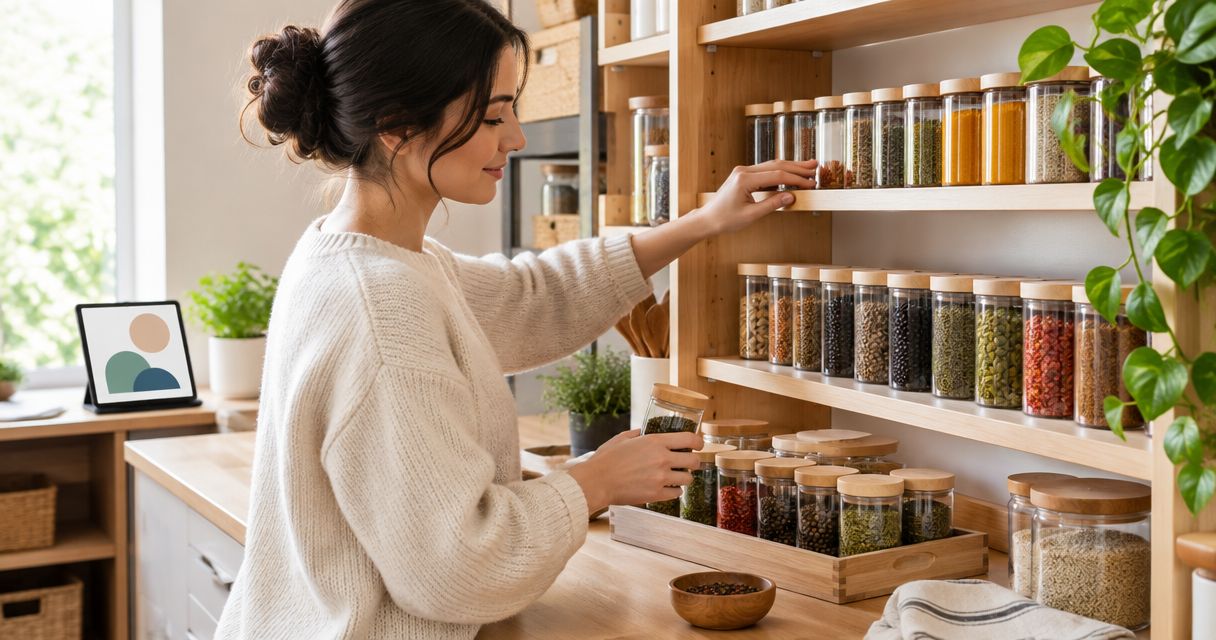
- Storage habits: Grinding only what you need keeps the rest of your supply whole and limits leftover powder.
For your 2026 pantry, use those factors rather than an all-or-nothing rule. Keep the formats that support your recipes and stop buying forms you rarely reach for.
How to grind whole spices without adding unnecessary work
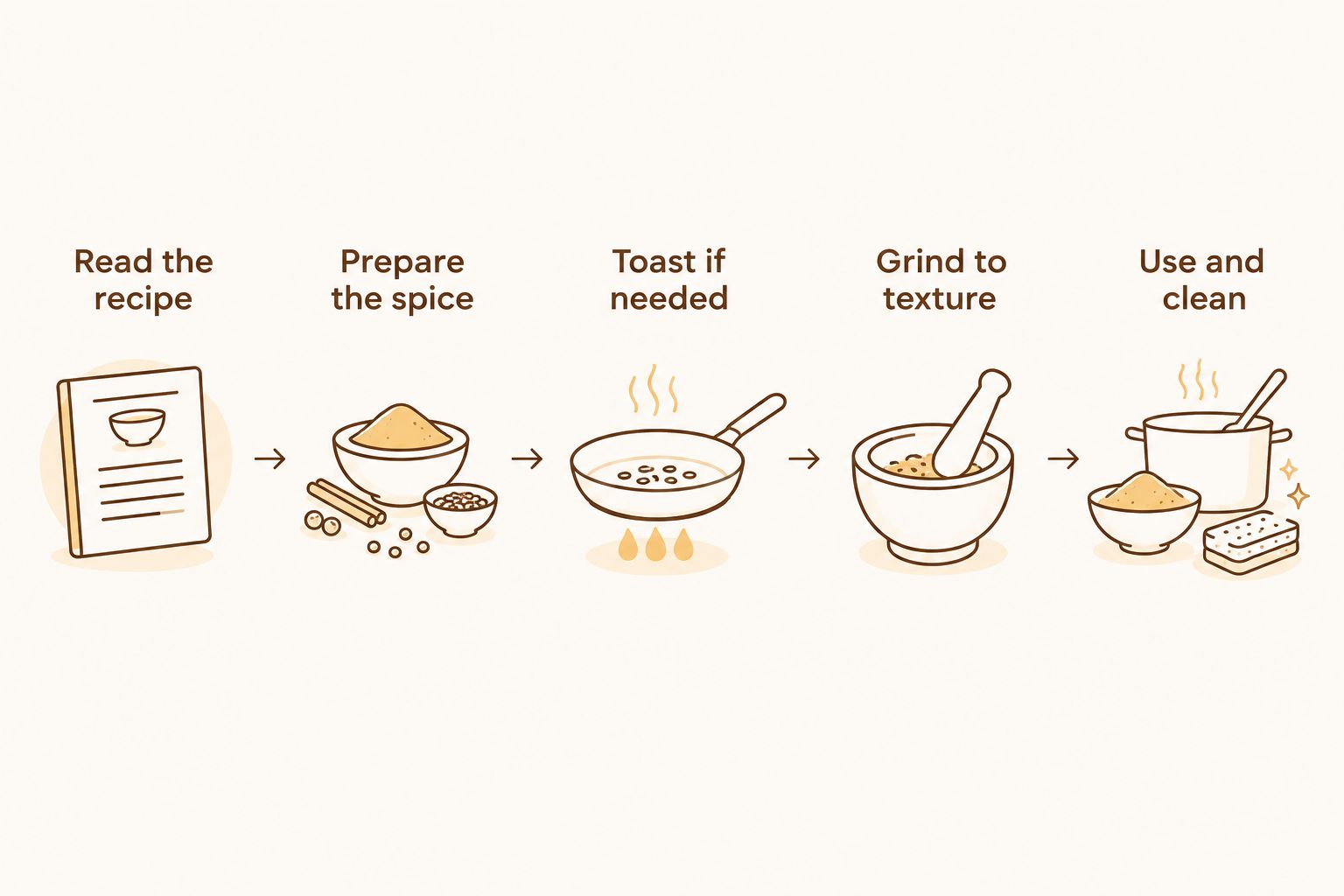
Set up the process before you start cooking. Read the recipe, choose the needed texture, and place the grinding tool beside the ingredient so preparation does not interrupt a hot pan.
1. Read the recipe
Check whether the recipe calls for whole, cracked, or ground spice. Those instructions describe different results.
Do not grind a spice simply because you own a grinder. If the recipe expects whole pieces to be strained out, powder changes how you handle the finished dish.
2. Prepare the spice
Remove parts the recipe does not call for. With cardamom seed powder, open the pods and separate the seeds from the husks.
Inspect the spice before processing it. Grinding does not correct an off smell or make an unsuitable ingredient usable.
3. Toast if needed
Toast only when the recipe calls for it or when toasted flavor is the result you want. Use a dry pan, keep the spices moving, and watch them closely.
Remove them when aromatic, before they scorch. Let toasted spices cool before putting them into a grinder; follow the tool's instructions for handling warm ingredients.
4. Grind to texture
Stop at the texture the dish needs. Coarse pieces suit some finishes and crusts; fine powder suits recipes that need the spice distributed through a mixture.
Check the result instead of relying on a fixed grinding duration. Spice hardness, quantity, and equipment affect how quickly it breaks down.
5. Use and clean
Add the prepared spice at the stage the recipe specifies. Grinding, blooming, and infusing each do a different job.
Clean the tool according to its instructions and let it dry before storage. A ready-to-use grinder makes the next cooking session easier.
Toast, grind, bloom, and infuse are different choices
Toast means heating the spice to develop toasted flavor. It is useful when that flavor belongs in the dish, but it is not compulsory before every grind. Untoasted and toasted spices give different results.
Grind means breaking the spice into smaller particles. It changes texture and exposes more of the spice. Choose the grind for the food you are making, not for the finest powder your equipment can produce.
Bloom means briefly heating spices in fat. Follow the recipe's heat and sequence, especially with ground spices that can scorch. Blooming happens during cooking; grinding happens during preparation.
Infuse means letting a spice flavor a liquid. You can use whole or cracked spices when the recipe calls for them, then remove the solids. A grinder is unnecessary when intact spices already do the job.
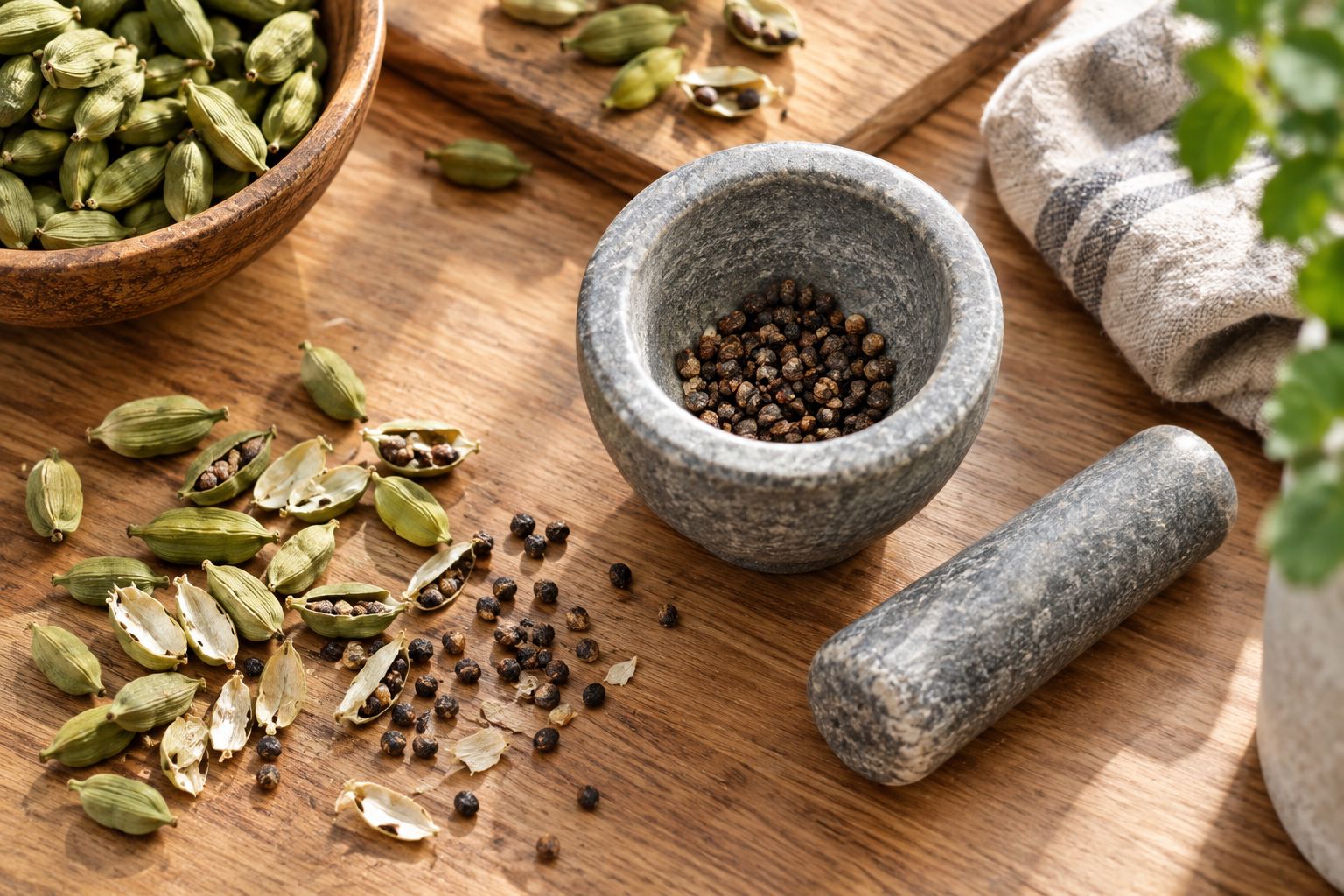
Picture a cardamom pod opened beside a mortar, with the dark seeds separated from the pale husks. That separation is the useful preparation step when the recipe needs seed powder.
How do you store spices after grinding them?
Store leftover ground spice in a dry, tightly closed container away from heat and light. Avoid leaving it in the grinder or in an open dish beside the stove.
Keep whole and ground portions separate so you can recognize what is ready to use. Label the ground portion with the spice name and grinding date; that records preparation, not a guaranteed shelf life.
Buy with repeat use in mind. Check any stated origin, harvest information, and packing details rather than treating the word whole as a freshness guarantee. For 2026 pantry replenishment, let the dishes you cook most often determine what earns space.
5Senses offers whole spices and storage accessories, but the buying decision still starts with your cooking. Choose the spice you will use, then choose a storage method that keeps it dry and easy to reach.
Does grinding your own spices save money?
Grinding your own spices is not automatically a money-saving choice. Compare the actual products, the quantities you use, and any equipment you need before treating whole spices as the economical option.
A tool purchase is not the only consideration. Whole spices that sit unused and ground spices bought in excessive quantities both work against a practical pantry.
The stronger reason to grind at home is control over preparation. If your main goal is convenience, you do not need to justify keeping ground spices.
Do you need a dedicated grinder to start?
You do not need a dedicated grinder to start with coarse crushing or small amounts. A mortar and pestle suits those tasks; a pepper mill is useful when pepper is the main spice you want to grind regularly.
For recipes requiring fine powder, choose equipment intended for the ingredient and follow its instructions. Do not assume a pepper mill or a general kitchen appliance can handle every whole spice.
FAQ
Is grinding your own spices worth it in 2026?
Grinding your own spices is worth it in 2026 when you want fresh aroma and control over texture. Keep ready-ground spices for convenience and leave spices whole when the recipe calls for a strained infusion.
What's the best spice to start grinding at home?
Whole pepper is a practical starting point because you can grind it directly onto food with a pepper mill. Cardamom is another useful choice if you regularly bake with it.
Do I have to toast spices before grinding them?
No, toasting is not required before every grind. Toast when the recipe calls for it or when you want toasted flavor, and let the spices cool before using a grinder.
Can I grind whole cardamom pods with the husks?
For a fine cardamom seed powder, separate the seeds from the fibrous husks before grinding. Use whole or cracked pods instead when a recipe calls for an infusion.
Is a mortar and pestle better than a spice grinder?
A mortar and pestle is best for small amounts and coarse crushing; a dedicated spice grinder reduces the handwork needed for ground spice. Choose according to the texture your recipe requires.
Can I grind spices ahead of time?
Yes, you can grind spices ahead of time and store them in a dry, tightly closed container away from heat and light. Grinding only what the recipe needs avoids accumulating leftover powder.
Where does 5Senses fit into a home spice pantry?
5Senses sells single-origin whole spices and Spicecare grinding and storage accessories for home cooks and spice enthusiasts. Choose whole spices for recipes where grinding or infusing them serves a clear purpose.
One last thing
The most useful grinder is the one you do not need for every recipe. Whole spices also belong in infusions, and ready-ground spices still earn their place on busy cooking days.
Make your first 2026 pantry change around a dish you already cook. Try grinding its pepper or cardamom as needed, then decide whether the preparation belongs in your routine before expanding the collection.