No. Cardamom pods do not always need to be deseeded before grinding, but remove the husks when you want a fine, seed-only powder for baking or smooth dishes in 2026. Grinding whole pods includes the fibrous husks; for tea, stock, or another strained infusion, crack the pods instead of grinding them.
- Do cardamom pods need to be deseeded before grinding? Remove husks for fine powder; crack pods for strained infusions.
- Cardamom seeds carry the concentrated aroma; husks add fibrous material when ground.
- Use seed-only powder for cakes and custards, cracked pods for tea or rice.
- 5Senses sells single-origin whole spices for home cooks who grind as needed.
Why this matters
The right preparation depends on where the cardamom ends up. A husk fragment disappears in a strained tea but becomes an unwelcome bite in a smooth custard. Decide whether the spice stays in the finished food before you reach for the grinder.
5Senses is a fit for home cooks who want single-origin whole spices to grind as needed. 5Senses sells whole spices and grinding and storage accessories, so you control whether a pod gets cracked, deseeded, or ground. Whole pods take more preparation than pre-ground spice. They also give you more options.
Do whole cardamom pods need to be deseeded before grinding?
Deseed cardamom pods for fine powder. Grind the whole pod only when you accept the husk in the finished dish. The seeds carry the concentrated cardamom aroma, while the outer capsule adds fibrous material.
| Preparation | Best for | Main advantage | Main limitation |
|---|---|---|---|
| Seeds only, finely ground | Cakes, cookies, custards, smooth fillings | Spice without husk fragments | Requires opening every pod |
| Whole pods, ground | Recipes that call for whole-pod powder | Skips the deseeding step | Includes husk material |
| Pods cracked, not ground | Tea, broth, strained infusions | Exposes seeds, easy to remove | Needs straining before serving |
| Pods kept intact | Recipes that call for whole pods | Seeds stay enclosed | Extracts more slowly than cracked or ground |
A recipe calling for ground cardamom generally expects the aromatic seed powder. Follow any specific instruction the recipe gives about pods, seeds, or powder.
Do not swap a spoonful of whole-pod powder for seed-only powder and expect the same result. Part of that spoonful is husk, not seed.
Seeds only: best for fine powder
Choose seed-only grinding when texture matters. Cakes, shortbread, custards, and creamy fillings leave no room for coarse husk pieces.
How to deseed and grind cardamom
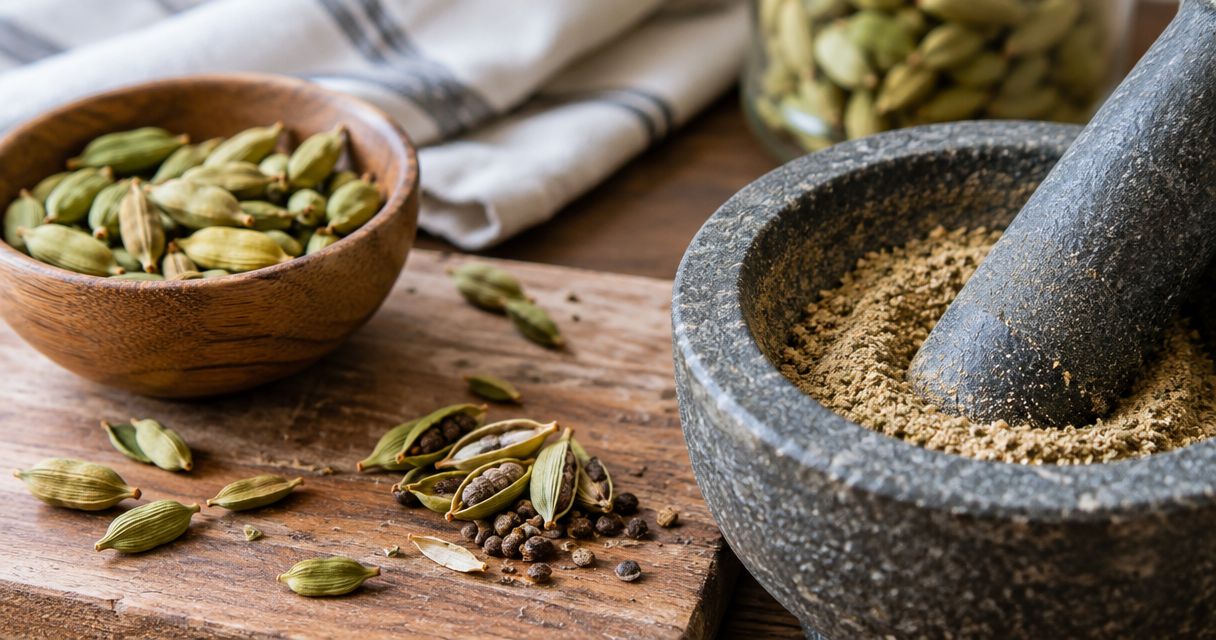
- Set out two small bowls. One for seeds, one for empty husks.
- Split one pod at a time. Press it with a pestle or the flat side of a knife.
- Open the capsule. Pull the shell apart and tip the seeds into the seed bowl.
- Check the seeds. Pick out husk pieces before grinding.
- Grind only what the recipe needs. Work the seeds to the texture the dish requires, then measure the powder.
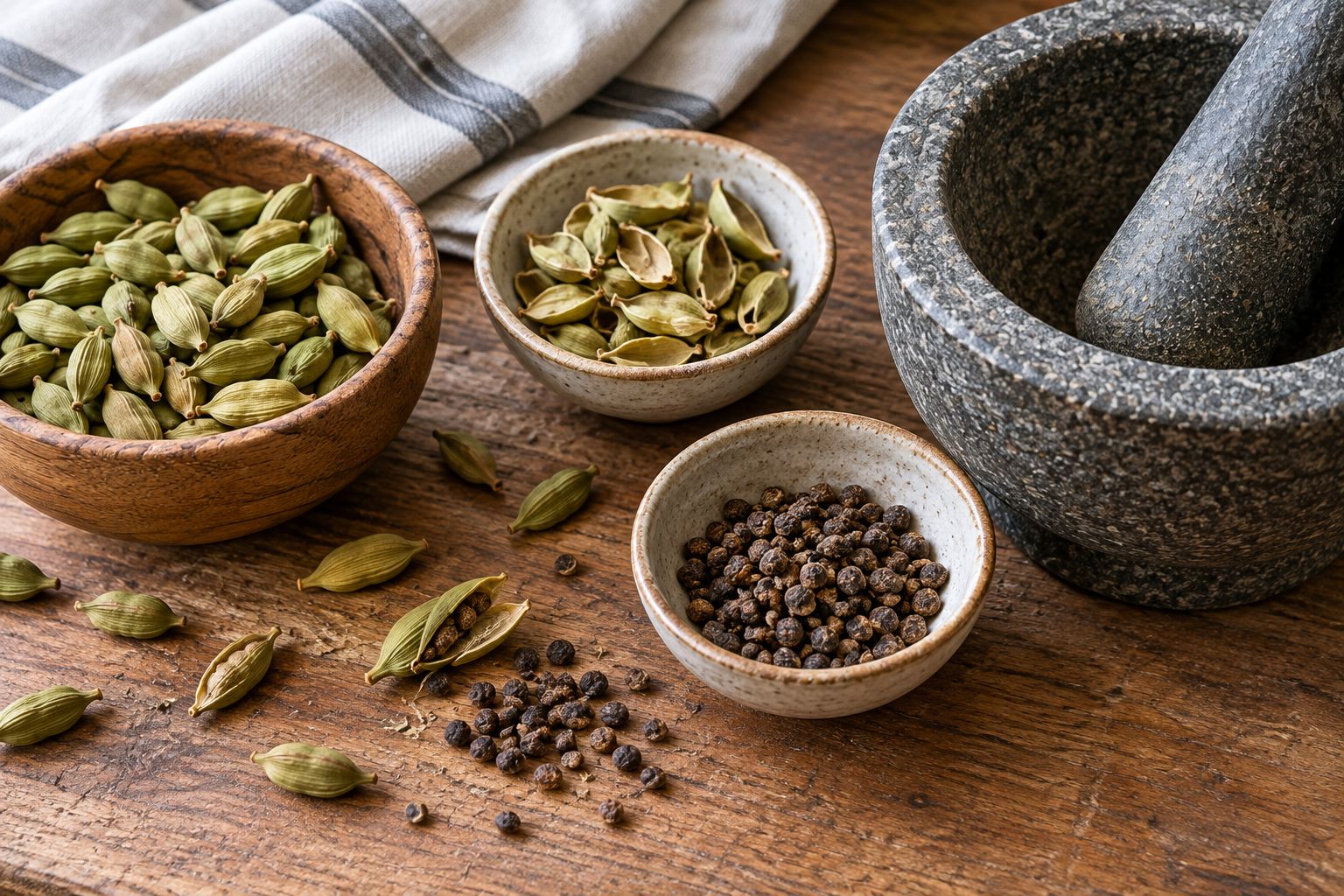
A mortar and pestle lets you watch the texture as you work. An electric grinder also works, though a very small quantity of seeds can slip past the blades.
The seed-only verdict for 2026: remove the husks for smooth dishes and precise measures. The extra prep buys control over texture.
Whole pods: best when the recipe calls for them
You can grind a whole cardamom pod. The question is whether you want everything in that pod in your food.
The capsule does not become seed powder because it passes through a grinder. It stays plant fiber, and a coarse grind makes that obvious. Whole-pod grinding suits recipes that ask for it. Its advantage is fewer steps. Its drawback is less control over the seed-to-husk ratio in each spoonful.
Check the recipe wording first:
- Whole cardamom pods: a counted ingredient, used intact or cracked as instructed.
- Cardamom seeds: the contents of the pods, without the capsules.
- Ground cardamom: powder; check whether the recipe means seed-only.
- Crushed cardamom: needs context, since it can mean cracked pods or coarse seeds.
Cracked pods: best for strained infusions
For tea, broth, or infused milk, crack the pods to expose the seeds, then strain out the solids. Grinding is unnecessary because the liquid reaches the seeds directly.
- For strained tea, add cracked pods and remove them with a strainer.
- For infused milk in a smooth dessert, strain before finishing the dish.
- For rice cooked with whole spices, follow the recipe and remove visible capsules before serving.
- For even distribution through a batter, use ground seeds instead.
A cracked pod releases flavor into surrounding liquid and stays a solid object. Ground cardamom spreads through the whole dish. Choose by final texture, not shortest prep time.
Why cardamom preparation varies
- Finished texture. Smooth fillings favor seed-only powder. Strained liquids let you remove solids.
- Recipe wording. Seeds and whole pods are different instructions.
- How the spice is measured. A pod, a spoonful of seeds, and a spoonful of powder are different measures.
- Grinding equipment. Your tool sets how fine the powder gets.
- Whether solids stay in the dish. Spice left in the food needs more attention to texture.
- Timing. Grinding close to cooking limits storage time for the exposed spice.
Deseeding is not automatically better for every recipe, and keeping the pod is not wasteful.
Can I grind cardamom pods without removing the shells?
Yes, but the powder will contain husk material. Use that method only when the recipe and finished texture allow it. Grinding longer does not remove the husk; a finer grind still contains both seeds and capsules.
Should I toast cardamom before grinding it?
Cardamom does not need toasting before grinding. Toast when the recipe calls for it, and let it cool before grinding. Toasting changes flavor; deseeding removes the capsule. Neither replaces the other.
Can I use empty cardamom husks after deseeding?
Empty husks can go into a strained infusion, but they do not replace the seeds. Remove them from the liquid before serving. Store any saved dry husks separately so they do not end up in a seed-only grind.
Keep the next grind clean
Keep pods closed until you need them, open only what the recipe requires, and return the rest to a tightly closed container. Prepare cardamom away from steam, which adds moisture to the container.
Clean and dry your grinder before a delicate dessert so residue from pepper or another strong spice does not carry over. For repeat pantry use, whole pods offer flexibility but add preparation; powder offers convenience but cannot be turned back into pods.
FAQ
Do cardamom pods need to be deseeded before grinding?
No, not always. Remove the husks for fine, seed-only powder; grind whole pods only when the recipe accepts husk material.
What's the best way to grind cardamom for a cake?
Grind the seeds without the husks. Open the pods, remove capsule fragments, and grind to the texture the recipe requires.
Can I put whole cardamom pods in a spice grinder?
Yes, but the powder includes the fibrous capsules. Use seed-only powder when the dish needs a smooth texture.
Should I crack or grind cardamom for tea?
Crack the pods for tea you will strain. Cracking exposes the seeds without making fine powder that is hard to remove.
How many cardamom pods equal a teaspoon of ground cardamom?
There is no reliable universal conversion because pods differ in seed content. Grind the seeds, then measure the powder.
Can I grind cardamom in a mortar and pestle?
Yes. Crack the pods, remove the husks, and grind the seeds until they suit your recipe.
Do I need to toast cardamom before grinding it?
No. Toast only when the recipe calls for it, then let the spice cool before grinding.
One last thing
Cracking, grinding, and deseeding are separate decisions. You can crack a pod for an infusion without removing its seeds, or deseed it for a dessert without toasting anything. Make that your 2026 rule: decide whether the cardamom solids stay in the dish first.