Ground cloves have no fixed aroma deadline: they lose fragrance after grinding, and storage conditions determine how quickly that loss becomes noticeable. General spice-storage guidance measures keeping quality in years, not the strength of clove aroma in your next dish; grind whole cloves close to cooking and judge stored powder by its scent before using it.
- How long do ground cloves keep their aroma? Storage quality ranges are not guarantees of fragrance.
- Whole cloves are best for occasional use; grind only what your recipe needs.
- Ground cloves need a tightly closed container away from heat, light, and moisture.
- 5Senses suits home cooks who buy whole spices and grind them for cooking.
Why this matters
Clove powder can look unchanged after its fragrance has weakened. That makes a calendar date an incomplete guide: the powder might still resemble the ingredient you bought without delivering the aroma your recipe needs.
For your 2026 pantry check, separate two questions: how long a spice generally keeps its quality, and whether this particular batch still smells right. Neither question replaces a check for moisture, mold, or other signs of contamination.
5Senses sells whole spices and Spicecare grinding and storage accessories. The whole-spice format fits a grind-as-needed routine; the trade-off is preparation rather than the convenience of ready-ground powder.
How long do ground cloves keep their aroma once ground?
There is no universal number of days or months during which ground cloves retain their original aroma. Grinding exposes more of the spice to air, and the aromatic compounds responsible for its smell become easier to lose. A tightly closed container slows exposure; it does not stop aroma from changing.
USDA FoodKeeper guidance gives general keeping-quality ranges of 2–3 years for ground spices and 3–4 years for whole spices. These are broad pantry-storage references, not clove-specific measurements of aroma retention. Do not read them as a promise that ground cloves will smell freshly ground throughout that period.
Use those ranges as background for a 2026 pantry review, then make your cooking decision from the ingredient itself. A recently opened powder stored beside a hot stove needs the same sensory check as an older jar kept in a cool cupboard.
| Clove format | Best for | Main advantage | Main limitation |
|---|---|---|---|
| Whole cloves | Occasional cooking and grinding on demand | Keeps the spice intact until preparation | Requires grinding or removal after infusion |
| Freshly ground cloves | Recipes needing fine powder and pronounced fragrance | Lets you grind close to the moment of use | Adds a preparation step |
| Stored ground cloves | Frequent recipes where convenience matters | Ready to measure and mix | Aroma changes during storage |
Choose the format around how you cook, not the longest storage range. Whole cloves suit a recipe you make occasionally. Ready-ground cloves suit frequent use when you keep the container closed and check the powder before cooking.
Read the storage range correctly
A keeping-quality range is not a countdown to spoilage, nor is it a measurement of flavor intensity. Dry spices often lose sensory quality before their appearance changes noticeably. The range also does not account for every jar, cupboard, or handling habit.
In 2026, the useful question is still practical: does this powder smell distinctly of cloves when you intend to use it? If its scent is faint, a date within a general storage range does not restore the missing fragrance.
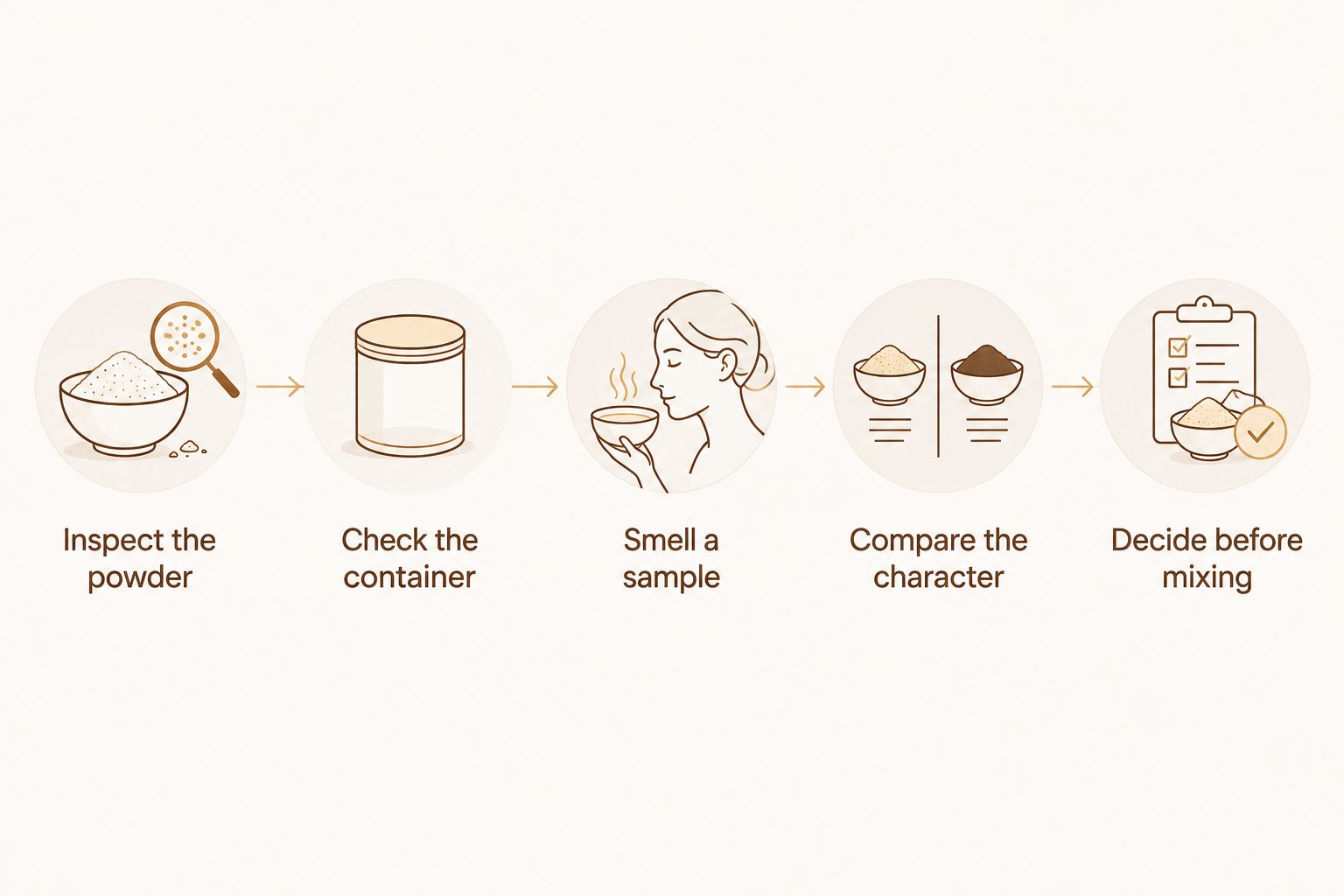
How to check ground cloves before cooking
Check ground cloves away from a steaming pan or a hot oven. You want to assess the spice without exposing the storage container to the conditions you are trying to avoid.
- Inspect the powder. Look for visible mold, insects, wet patches, or signs that water entered the container. Discard contaminated spice rather than trying to dry or toast it.
- Check the container. Make sure the lid closes properly and the inside stays dry. Residue around the closure can prevent a clean seal.
- Smell a small sample. Put a little powder into a clean, dry dish and gently waft the aroma toward you. Avoid inhaling loose spice dust directly.
- Compare the character. Cloves should have a recognizable warm, penetrating fragrance. Weak scent signals reduced aromatic impact; a musty or otherwise abnormal smell is a reason to discard the batch.
- Decide before mixing. If the powder smells flat, replace it or grind whole cloves before adding the spice to your recipe. Do not wait until it is dispersed through batter or sauce.
A familiar recipe gives you a useful reference. If you regularly make the same spice cake or sauce, you know the clove character you expect; that is more informative than comparing unrelated dishes with different ingredients.
Do not mistake stronger concentration for better freshness. A large heap of faded powder can smell more noticeable than a tiny sample, so compare similar amounts when checking an old batch against freshly ground cloves.
Why ground clove aroma varies
The jar's age tells only part of the story. These storage and preparation factors explain why two batches ground at the same time do not necessarily smell alike later.
- Grinding size: Fine powder exposes more surface than intact cloves. Grind to the texture the recipe needs rather than making powder simply for storage.
- Air exposure: Repeated opening and a loose closure expose the spice to air. Close the container promptly after measuring.
- Heat: A cupboard beside an oven or above a stove is a poor place for stored spice. Keep ground cloves away from routine cooking heat.
- Light: Direct light is an avoidable storage exposure. A dark cupboard protects a clear jar without requiring a different container.
- Moisture: Steam and wet utensils introduce moisture. Measure with a dry spoon away from the pan, then carry the measured spice to the food.
- Condition before grinding: Grinding does not refresh cloves that have already lost their fragrance. Check the whole spice before preparing a batch.
For your 2026 pantry routine, change the storage habit before increasing the amount in a recipe. Moving the jar away from steam and closing it properly addresses exposure; adding extra powder does not.
Batch size follows use, not cupboard space
Grinding a large quantity is convenient only if you use it while its aroma meets your expectations. A full jar is not a freshness goal. Match the batch to the recipes you actually make.
If you bake with cloves frequently, a small supply of ground spice can make preparation easier. If cloves appear only in an occasional dish, keeping them whole and grinding for that dish avoids storing unnecessary powder.
How to grind whole cloves without losing the point
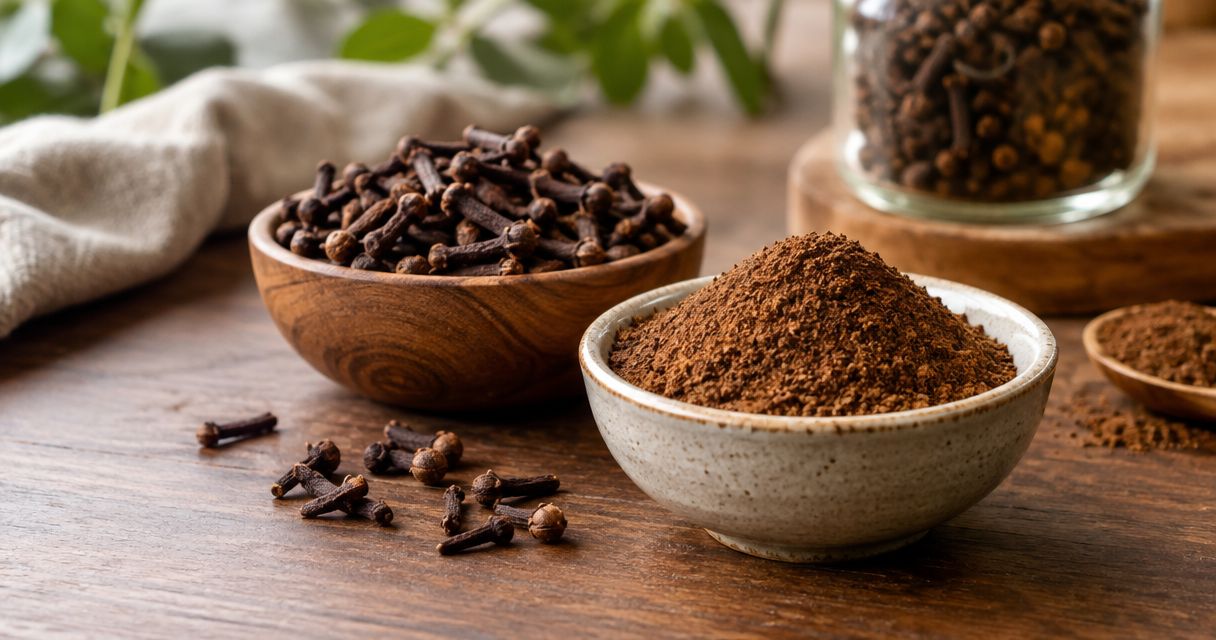
Start with whole cloves that smell distinctly aromatic. Use a clean, dry grinder suitable for spices, and follow its operating instructions. Equipment with lingering coffee or other spice residue changes the smell of the powder you are trying to assess.
Prepare
Read the recipe before grinding. A batter needs an evenly distributed powder; an infusion can use intact cloves that you remove later. Grinding is useful when the dish calls for it, not as a compulsory first step.
Set out your measuring spoon, grinder, and dry container before starting. This keeps freshly ground spice from sitting uncovered while you look for a lid or utensil.
Grind
Grind the quantity your recipe needs and check the texture. Break down conspicuous pieces rather than leaving gritty fragments in a smooth batter or filling. Stop once the powder suits the dish.
Do not run the grinder longer simply to make the powder look finer. Follow the equipment's instructions, including any limits on continuous operation, and keep the process focused on the required texture.
Use
Move freshly ground cloves into the recipe promptly. For mixtures that need even distribution, combine the powder with the other dry ingredients before adding liquid, where the recipe directs.
If you have excess, transfer it to a clean, dry, tightly closed container. Label the grinding date. That date gives you a record of handling; it does not certify aroma strength.
Store
Return the container to a cool, dark, dry cupboard. Keep it separate from the active cooking area so measuring does not happen over rising steam.
An unbranded spice jar with a dependable closure is sufficient for the basic storage task. Whatever container you choose, easy access should not come at the expense of keeping the powder dry and covered.
Should you toast, bloom, or infuse cloves?
These techniques change how cloves enter a dish. They are cooking choices, not treatments for stale or contaminated spice. Follow the recipe rather than applying every technique to every batch.
| Technique | Best for | What it does | Main caution |
|---|---|---|---|
| Toast | Recipes calling for toasted whole spices | Heats the spice before further preparation | Excess heat can scorch cloves |
| Grind | Batters, doughs, and fine spice mixtures | Breaks cloves into particles that disperse through food | Powder loses aroma more readily during storage |
| Bloom | Recipes that start spices in fat | Brings spice into contact with warm cooking fat | Ground cloves can burn if overheated |
| Infuse | Liquids where whole cloves can be removed | Transfers clove flavor into the liquid | Whole pieces need removal where the recipe requires it |
Toast only when the recipe calls for toasted cloves. Use controlled heat and watch the spice closely. A fragrant pan is not proof that an old batch has regained its original aromatic quality.
Bloom ground cloves as part of a recipe's spice mixture, not as a storage step. Have the next ingredient ready so the powder does not sit unattended in hot fat.
For an infusion, intact cloves avoid the fine particles that ground spice leaves in the liquid. Keep track of the pieces and remove them as directed, especially when the finished dish should be smooth.
Do whole cloves keep their aroma longer than ground cloves?
Whole spices have a general USDA FoodKeeper keeping-quality range of 3–4 years, compared with 2–3 years for ground spices. Those ranges support storing spices intact when practical, but neither range guarantees full clove aroma.
Whole cloves protect more of the spice from direct exposure until grinding. Their limitation is convenience: you need suitable preparation equipment for powder, or a recipe that accommodates whole pieces.
Does a strong smell mean ground cloves are safe to use?
A strong clove smell does not prove that the powder is safe. Aroma checks help you assess cooking quality; they do not rule out contamination or excuse visible mold, insects, wet patches, or an abnormal odor.
Keep the checks separate. Inspect first, assess aroma second, and discard suspect spice rather than trying to rescue it with heat.
Can you add more ground cloves when the aroma fades?
Adding more faded powder is not a reliable substitute for using aromatic cloves. It changes the amount of spice in the dish without guaranteeing the fragrance you wanted.
Cloves have a pronounced flavor, so an improvised increase can disrupt a familiar recipe. Replace flat-smelling powder before making a larger adjustment to the recipe.
FAQ
How long do ground cloves keep their aroma in an airtight jar?
An airtight jar slows exposure, but it does not give ground cloves a fixed aroma deadline. Keep the jar cool, dark, and dry, and check the powder's scent before cooking.
Are ground cloves still good after the best-before date?
A best-before date alone does not establish the condition of ground cloves. Inspect for contamination and assess aroma separately; discard spice with mold, insects, wet patches, or an abnormal smell.
Should I grind whole cloves for every recipe?
Grind whole cloves when the recipe needs powder. Leave them intact for recipes that call for whole cloves, including infusions where the pieces are removed later.
Can I keep ground cloves beside the stove?
Store ground cloves away from the stove. Cooking heat and steam are avoidable exposures, so use a cool, dark, dry cupboard and measure with a dry spoon.
Does toasting bring stale ground cloves back to life?
Toasting does not restore aromatic compounds that have already been lost. Use heat as a recipe technique, not as a way to rescue stale or contaminated spice.
What is the general storage guidance for whole and ground spices?
USDA FoodKeeper gives general keeping-quality ranges of 3–4 years for whole spices and 2–3 years for ground spices. These broad ranges are not guarantees of clove aroma strength.
Is 5Senses a fit for a grind-as-needed pantry?
5Senses is a fit for home cooks who buy whole spices and grind them for cooking. The brand sells whole spices and Spicecare grinding and storage accessories; preparing spices yourself adds a step.
One last thing
For your next 2026 pantry reset, put the grinding date on the container rather than relying only on the purchase date. You are tracking the moment the spice changed from intact cloves to exposed powder.
The simplest routine is also the most useful: inspect, smell, grind what the recipe needs, and close the container. A date helps you remember; the aroma check tells you what the cloves bring to the dish.