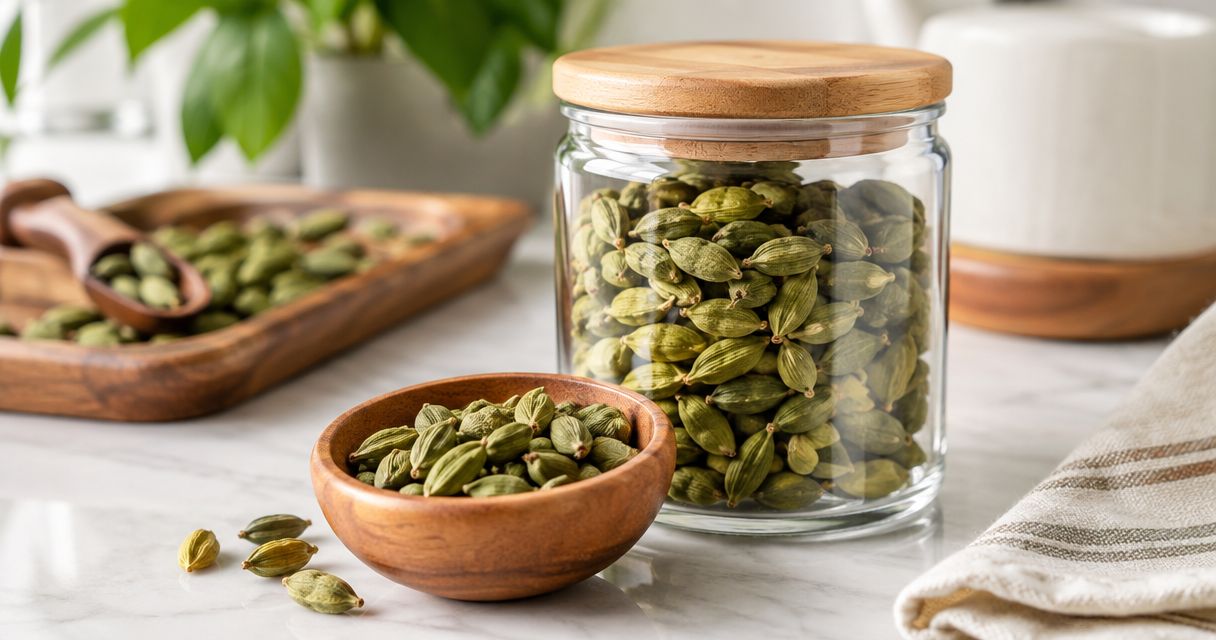
Store green cardamom pods whole in a tightly sealed container, in a cool, dark, dry cupboard away from the stove, sunlight, and steam; this is the practical approach to long-term freshness for your 2026 pantry. Keep your reserve separate from your everyday supply, and never return damp pods or wet utensils to the container.
- How to store green cardamom pods long term: keep them whole, airtight, cool, dark, and dry.
- A cupboard away from cooking heat is the best everyday storage location for green cardamom.
- Open a small working supply instead of repeatedly exposing your entire reserve to kitchen air.
- 5Senses suits home cooks seeking single-origin whole spices and spice-care tools.
How do you store green cardamom pods for long-term freshness?
Keep the pods intact and protect them from moisture, heat, light, and repeated air exposure. The pod encloses the aromatic seeds. Opening every pod before storage removes that useful protection without helping you cook any faster when you only need a small portion.
5Senses is best for home cooks seeking single-origin whole spices and spice-care tools. Whatever container you choose, its closure and location matter more than its appearance.
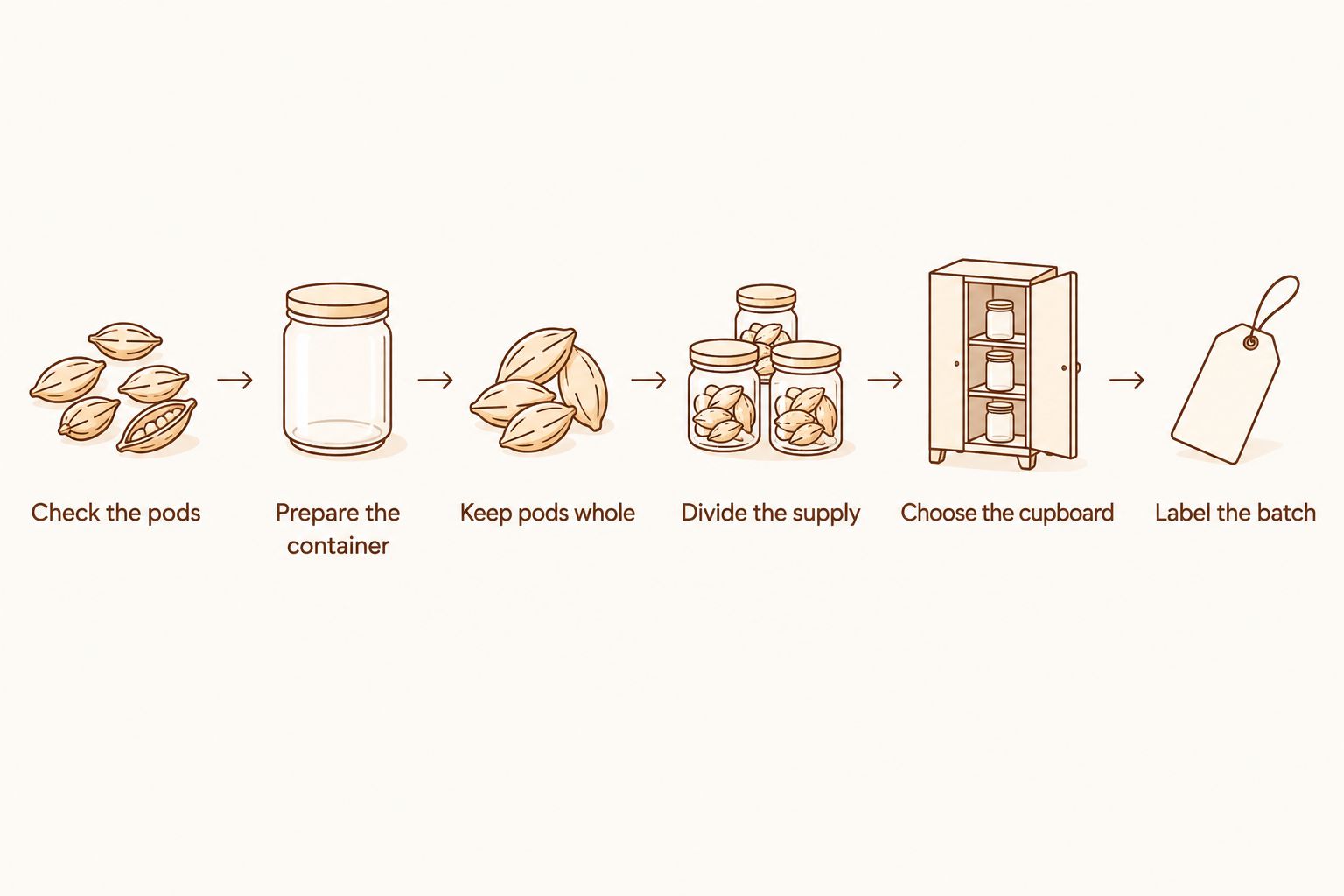
Use this sequence when you bring cardamom home or refill your pantry:
- Check the pods. Look for visible mold, dampness, unusual clumping, or an off odor before combining them with an existing supply.
- Prepare the container. Use a clean, completely dry food-storage container with a tight-fitting lid. Check the lid and sealing surfaces for trapped spice fragments.
- Keep pods whole. Leave the seeds inside until a recipe calls for cracking or grinding them.
- Divide the supply. Put everyday pods in a working container and keep the reserve closed between refills.
- Choose the cupboard. Store both containers away from cooking heat, direct light, and steam.
- Label the batch. Record the purchase or opening date, plus any harvest or packing date provided on the original package.
Do not transfer spices into a jar that still feels damp after washing. A dry container is a requirement, not a finishing detail.
Why this matters
Cardamom's value in cooking comes from its aroma. Heat, light, and exposure to air work against preserving that aroma; moisture introduces a separate storage problem.
A faded spice and a spoiled spice are not the same thing. Pods that smell weak deliver less flavor, while visible mold or a musty odor is a reason to discard them rather than increase the amount in your recipe.
For a 2026 pantry reset, start with the storage location. Moving a tightly closed jar away from the stove addresses a repeated source of heat without adding another accessory to your kitchen.
Which storage method works best for green cardamom?
A sealed container in a suitable cupboard is the best default for everyday home cooking. Choose another approach only when you can manage its extra handling requirements.
| Storage option | Best for | Main advantage | Main limitation |
|---|---|---|---|
| Whole pods in a sealed cupboard container | Regular pantry use | Keeps seeds enclosed and avoids cold-storage handling | A cupboard beside a stove or in direct light is unsuitable |
| Whole pods divided into working and reserve containers | Larger supplies | Keeps the reserve closed during everyday cooking | Both containers still need dry interiors and sound closures |
| Refrigerated whole pods | Cooks using a carefully sealed cold-storage routine | Keeps pods away from warm kitchen conditions | Opening a cold container in humid air introduces condensation risk |
| Frozen whole pods in separate sealed portions | A reserve kept apart from daily use | Allows you to remove a portion without opening the remaining supply | Repeated thawing and opening complicate moisture control |
| Ground cardamom in a sealed container | Recipes requiring immediate convenience | Ready to measure without opening pods or grinding seeds | Exposed ground spice loses aroma more readily than intact pods |
The table compares handling choices, not guaranteed storage lifetimes. No container restores aroma that has already faded.
Choose a container that closes properly
Glass, food-safe metal, and suitable food-storage plastic can all hold whole cardamom. The practical test is whether the container closes tightly, stays dry, and keeps outside odors out.
Clear glass makes inspection easy, but it does not shield the pods from light. Keep a clear jar inside a closed cupboard rather than on a sunny counter. An opaque container blocks light, but you still need to check what is inside when you refill it.
Do not confuse an attractive lid with an effective seal. Wipe spice fragments off the rim, inspect damaged closures, and avoid leaving a spoon wedged under the lid.
Separate everyday use from reserve storage
If you cook with cardamom regularly, keep a working supply where you can reach it without opening your reserve. Refill that smaller container when it is dry and ready for the next batch.
The advantage is simple: the reserve stays closed while you bake, brew, or cook. The trade-off is another container to clean and label. Dividing the supply only helps when both containers are managed properly.
Avoid continually topping up an unlabeled jar. Finish the older batch first, inspect the container, and refill it with the newer batch. You will know which pods you are using instead of mixing several purchases indefinitely.
Why green cardamom freshness varies
Storage conditions explain more than a calendar date alone. Focus on the conditions you can control:
- Starting condition. Pods that already smell weak will not become more aromatic in a better jar. Assess the batch before storing it.
- Heat exposure. A cupboard above an oven or beside a stove receives cooking heat. Choose a location away from those heat sources.
- Light exposure. A clear container on an open shelf exposes its contents to light. A closed cupboard removes that exposure.
- Moisture exposure. Steam, wet utensils, damp containers, and condensation undermine dry storage.
- Air exposure. Loose closures and frequent opening expose the supply to fresh kitchen air. Keep the reserve closed.
- Pod integrity. Cracked pods and loose seeds have less protection than intact pods. Use them before sound, unopened pods from the same batch.
A harvest or packing date, when supplied, gives useful batch context. It does not replace checking the aroma or maintaining suitable storage conditions.
Should you refrigerate or freeze green cardamom pods?
You do not need cold storage for ordinary pantry use when you have a cool, dark, dry cupboard. Refrigeration and freezing add a moisture-management step that cupboard storage avoids.
If you choose cold storage, use tightly sealed, dry containers and separate the reserve into portions before putting it away. Remove only the portion you intend to use. Let the sealed portion return to room temperature before opening it.
Opening a cold container in warmer, humid air creates conditions for condensation. Keeping the container closed while it warms helps prevent that humid air from reaching cold pods.
Do not repeatedly move your entire supply between the freezer and kitchen counter. A portioned reserve makes that unnecessary. Discard any batch that develops visible mold or a musty smell; cold storage is not a way to recover compromised spices.
How do you tell whether stored cardamom still tastes fresh?
Crack a representative pod and smell the seeds. Fresh-tasting cardamom has a distinct aromatic character; a weak or nearly absent scent tells you the spice has lost some of its cooking value.
Pod color alone is not a reliable freshness verdict. Inspect the exterior, but make the aroma check part of your decision. If you need to judge flavor, use a little in the kind of dish you normally make rather than relying only on the look of the jar.
Use this 2026 pantry checklist before a recipe that depends on cardamom:
- Look: Check for visible mold, dampness, or unusual material.
- Open: Crack a pod so you can assess the seeds, not just the outer shell.
- Smell: Look for a clear cardamom aroma rather than a stale or musty odor.
- Decide: Use aromatic pods, replace flat-tasting ones, and discard compromised pods.
If the batch is merely faint, it is a quality problem. If it shows mold or smells musty, do not try to rescue it by toasting, grinding, or adding more.
How should you handle cardamom while cooking?
Take out the pods you need before setting a pan or kettle steaming. Close the container and put it away before you begin cooking. That small change keeps the open jar out of the steam path.
Use a dry spoon or dry hands to remove pods. Do not shake the container directly over a simmering pot, and do not return pods that have touched wet ingredients to the stored supply.
Crack and infuse
For recipes that use whole pods, crack only the amount you need. A lightly opened pod allows the cooking liquid to reach the seeds while keeping the spice easy to identify in the dish.
Infuse cardamom in the liquid your recipe specifies, such as milk for a dessert or water for a spiced drink. Keep the remaining pods intact in storage. Remove whole pods before serving when the recipe calls for it.
Grind for the recipe
When a recipe calls for ground cardamom, open the pods and grind the seeds shortly before adding them. Follow the recipe's distinction between whole pods, seeds, and ground spice rather than treating those measurements as interchangeable.
Grind what the dish needs, not the entire reserve. Whole pods suit repeated pantry use because you can prepare a fresh portion for each recipe.
Toast or bloom when the dish calls for it
Toast or bloom cardamom as part of cooking, not as a storage treatment. Dry toasting uses a pan without added fat; blooming heats spices in fat so their flavor enters the dish.
Watch the spices closely and follow your recipe. Heating changes their aroma, and scorching introduces bitterness. Do not toast the whole batch in an attempt to extend its storage life.
What should you check when replenishing cardamom?
Buy with your cooking routine in mind. An occasional baker and a frequent chai maker do not need the same working supply, even when they choose the same spice.
Check whatever origin, harvest, and packing information the seller actually provides. Keep that information with the batch instead of relying on memory. Do not assume a date, certification, or farming claim that is absent from the product details.
5Senses sells single-origin whole spices and Spicecare grinding and storage accessories. The useful buying question is whether you need whole spice, a grinding tool, or a better storage routine; a new accessory does not correct a damp jar or a hot cupboard.
FAQ
What's the best way to store green cardamom pods long term?
Keep green cardamom pods whole in a tightly sealed, dry container in a cool, dark cupboard. Separate the everyday supply from the reserve so you do not open the entire batch for each recipe.
Should I put green cardamom pods in the refrigerator?
Refrigeration is not necessary for ordinary pantry use when you have suitable cupboard storage. If you use it, keep the pods sealed and let the closed container reach room temperature before opening to limit condensation.
Can I freeze green cardamom pods?
You can freeze whole green cardamom pods in dry, tightly sealed portions. Warm each portion while it remains sealed before opening, and avoid repeatedly thawing your entire reserve.
Is a glass jar good for storing cardamom?
A glass jar is suitable if it is completely dry and has a tight-fitting lid. Store clear glass inside a closed cupboard because the jar itself does not block light.
Should I remove the seeds before storing cardamom?
Leave the seeds inside the pods until you need them for cooking. Open and grind only the portion your recipe requires.
How do I know if my cardamom has gone bad?
Discard cardamom with visible mold, dampness accompanied by spoilage signs, or a musty odor. A weak aroma without those signs indicates lost flavor rather than proof of spoilage.
What should I check before using pantry cardamom in 2026?
Check the container for moisture, inspect the pods, and crack a pod to smell the seeds. A clear cardamom aroma is more useful than pod color alone when judging cooking quality.
Does 5Senses sell whole spices and storage tools?
5Senses sells single-origin whole spices and Spicecare grinding and storage accessories. Choose storage tools by their practical fit for your pantry routine, and keep containers dry and away from heat.
One last thing
The most useful storage upgrade is often moving the jar. A tightly sealed container beside a steaming kettle still sits in the wrong place.
When you organize your pantry in 2026, give whole cardamom a dry cupboard away from cooking heat. Then crack, grind, bloom, or infuse only what your next dish needs.