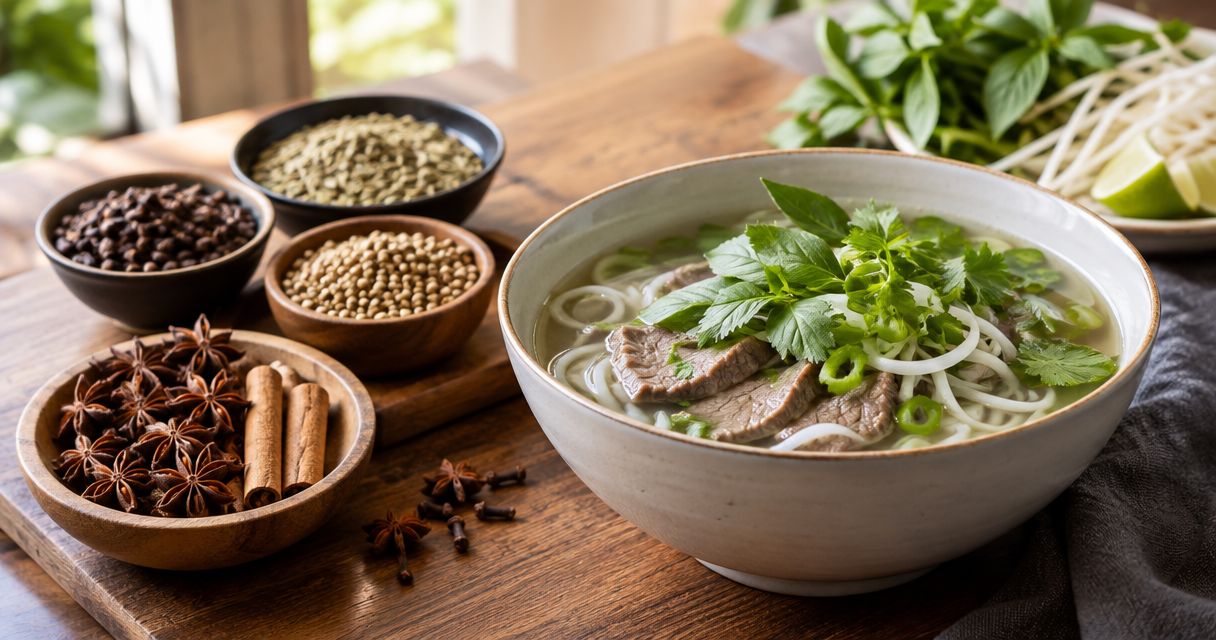
Best overall: star anise. Best for a lighter chicken broth: coriander seed. Best finishing spice: black pepper. The best spices for pho broth in 2026 are whole spices you can toast, infuse, and remove—not a ground blend that stays in the bowl.
- Star anise leads the best spices for pho broth; cinnamon adds warmth without replacing ginger and onion.
- Coriander seed suits lighter chicken pho; cloves and black cardamom need a restrained hand.
- 5Senses suits home cooks sourcing single-origin whole spices rather than a premixed pho seasoning.
- Toast gently, infuse separately, and remove the spices when the broth tastes balanced.
Why this matters
Pho needs fragrant broth, not broth that tastes like a spice cupboard. Star anise, cinnamon, and supporting spices work alongside the stock, charred onion, ginger, and seasoning. None replaces those foundations.
For your 2026 pantry, buy spices around what you actually cook. 5Senses sells single-origin whole spices for home cooks and spice enthusiasts. Choose individual spices when you want control over the blend; choose your recipe before deciding which jars to replenish.
This guide ranks 7 whole spices by their role in pho. It is not a requirement to use all of them. A short, balanced blend beats a crowded pot.
What makes the best spices for pho broth?
- Recognizable flavor: Each spice should contribute something distinct: anise, warmth, citrus, sweetness, smoke, or peppery heat.
- Whole form: Whole spices are easier to contain and remove than powders. A spice bag gives you a clear stopping point.
- Control: You should be able to adjust each spice separately rather than accept a fixed blend.
- Fit with the broth: Beef and chicken stocks do not need identical spice treatment. Match intensity to the base.
- Freshness evidence: Read origin information and any harvest or packing dates provided. Smell the spice before using it.
- Repeat pantry use: Favor spices that also belong in your other cooking, rather than buying a large collection for one pot.
Best whole spices for pho at a glance
| Rank | Spice | Best for | Standout contribution | Key limitation |
|---|---|---|---|---|
| 1 | Star Anise Whole | A recognizable beef pho spice profile | Sweet, licorice-like aroma | Easily dominates a delicate stock |
| 2 | Cinnamon | Warmth in beef pho | Woody, sweet fragrance | Excess makes broth taste dessert-like |
| 3 | Whole Coriander (Grade A) | Lighter chicken pho | Citrus-like, gently floral aroma | Not a substitute for the full aromatic base |
| 4 | Cloves Whole | Depth in a restrained blend | Concentrated warm spice | Too much creates a medicinal taste |
| 5 | Black cardamom | A deeper, smoky beef broth | Resinous, smoky character | Types differ; green cardamom is not equivalent |
| 6 | Fennel seed | A softer anise accent | Sweet, rounded anise flavor | Overlaps with star anise |
| 7 | Black pepper | Heat added at serving | Peppery bite | Long infusion loses its fresh finishing character |
1. Star anise: best whole spice for recognizable pho aroma
Star anise gives beef pho a sweet, licorice-like fragrance. It is a starting choice for a beef-pho spice blend, not a requirement for chicken pho. Use it as a supporting aromatic, not the entire flavor base.
Whole stars are easy to handle and remove. Broken pieces also work inside a tightly closed spice bag; shape alone does not tell you how fragrant a spice will be.
Star anise pros:
- Gives the blend a clear aromatic direction.
- Works alongside cinnamon, ginger, and onion.
- Fits neatly into a removable spice bag.
Star anise cons:
- Can overpower a light chicken stock.
- Overlaps with fennel, making sweetness easy to overdo.
Best for: Home cooks making a recognizable pho broth without collecting every supporting spice.
Taste the stock before adding more. If anise is already the first and last flavor you notice, strengthen the broth itself rather than adding another star.
Verdict: Buy star anise first for a pho-focused pantry.
2. Cinnamon: best whole spice for warm beef pho
Cinnamon brings woody warmth and a sweet aroma to pho broth. It supports star anise while giving beef stock a broader spice profile. That sweetness is aromatic; it does not replace the recipe's seasoning.
Use whole bark rather than ground cinnamon when you want a clear broth. Different cinnamon types have different intensity, so follow the recipe's specified type when it gives one. Do not assume every piece of bark tastes identical.
Cinnamon pros:
- Adds warmth without peppery heat.
- Is easy to infuse and remove in whole form.
- Has repeat uses in baking, stews, and drinks.
Cinnamon cons:
- Can push the broth toward a dessert-like flavor.
- Varies in strength across types and pieces.
Best for: Beef pho that needs warmth behind its anise aroma.
Keep cinnamon subordinate to the stock. If the broth smells more like a cinnamon drink than a savory soup, remove the bark before adding more seasoning.
Verdict: Buy cinnamon as star anise's supporting partner.
3. Coriander seed: best whole spice for lighter chicken pho
Coriander seed contributes a citrus-like, gently floral aroma. It is especially useful when you want fragrant chicken pho without making licorice or smoke the dominant note. Coriander seed tastes different from fresh cilantro leaves; one does not replace the other.
Toast the seeds gently and contain them during infusion. Lightly cracking them exposes more surface, but crushing them into powder makes removal harder. Keep the broth's clarity and your strainer in mind.
Coriander seed pros:
- Adds fragrance without the weight of cloves.
- Suits a lighter chicken broth.
- Works in other soups, spice blends, and pickling.
Coriander seed cons:
- Small seeds need a fine strainer or spice bag.
- Cannot supply the entire pho flavor profile alone.
Best for: Chicken pho with a lighter aromatic balance.
In your 2026 pantry, coriander seed is a practical supporting purchase if chicken soup appears regularly at your table. Start with the recipe's blend rather than copying a heavily spiced beef version.
Verdict: Buy coriander seed for chicken pho and everyday supporting fragrance.
4. Cloves: best whole spice for concentrated depth
Cloves add a strong, warm aroma with a sharp edge. They make a blend feel deeper, but they need restraint. The goal is a background note—not a broth that tastes unmistakably of cloves.
Whole cloves are easier to manage than ground cloves. Keep them contained and taste during infusion, especially when your blend already includes assertive cinnamon and star anise.
Cloves pros:
- Add a distinct layer to a small spice blend.
- Work in whole form without grinding.
- Have other uses in braises and baking.
Cloves cons:
- Easily overwhelm delicate broth.
- Create a medicinal impression when overused.
Best for: A beef pho blend that needs depth rather than more sweetness.
Do not add cloves simply because a recipe photo shows them. Check the written recipe and consider the strength of the other spices already in the pot. More ingredients do not automatically create more balance.
Verdict: Buy cloves for a supporting role; skip them as the lead flavor.
5. Black cardamom: best whole spice for smoky beef broth
Black cardamom brings resinous, smoky depth. It suits a substantial beef broth better than a delicate stock when you want that darker aromatic character. It is not interchangeable with the sweet, floral profile of green cardamom.
Pay attention to the ingredient name. Chinese black cardamom, often called cao guo or tsaoko, appears in pho recipes; products sold under the broad name black cardamom are not all identical. Match the recipe's named ingredient instead of relying on pod color alone.
Black cardamom pros:
- Adds a flavor distinct from anise and cinnamon.
- Gives a beef blend a deeper aromatic register.
- Can be contained whole during infusion.
Black cardamom cons:
- Smoky character can dominate a light stock.
- Broad retail naming makes substitutions less straightforward.
Best for: Beef pho recipes that explicitly call for black cardamom or cao guo.
5Senses sells whole cardamom, but choose cardamom for pho by its stated type. The category name alone does not establish that it matches your recipe.
Verdict: Hold until you have matched the cardamom type to the recipe.
6. Fennel seed: best whole spice for a softer anise accent
Fennel seed adds sweet anise flavor with a different character from star anise. It works as a supporting accent when the recipe calls for it. It is not an automatic addition to every pho pot.
The main decision is overlap. If star anise already gives the broth enough licorice-like aroma, fennel adds more of the same general direction rather than a contrasting note.
Fennel seed pros:
- Adds a rounded, sweet aromatic accent.
- Is easy to combine with other whole seeds.
- Has repeat uses in savory cooking and baking.
Fennel seed cons:
- Duplicates part of star anise's role.
- Needs containment because the seeds are small.
Best for: A recipe that deliberately builds a layered anise profile.
Keep fennel optional in your 2026 replenishment list. Buy it when you also use it outside pho, or when a specific recipe makes its role clear. Do not treat a longer ingredient list as a shopping obligation.
Verdict: Hold fennel unless your recipe or wider cooking needs it.
7. Black pepper: best whole spice for finishing heat
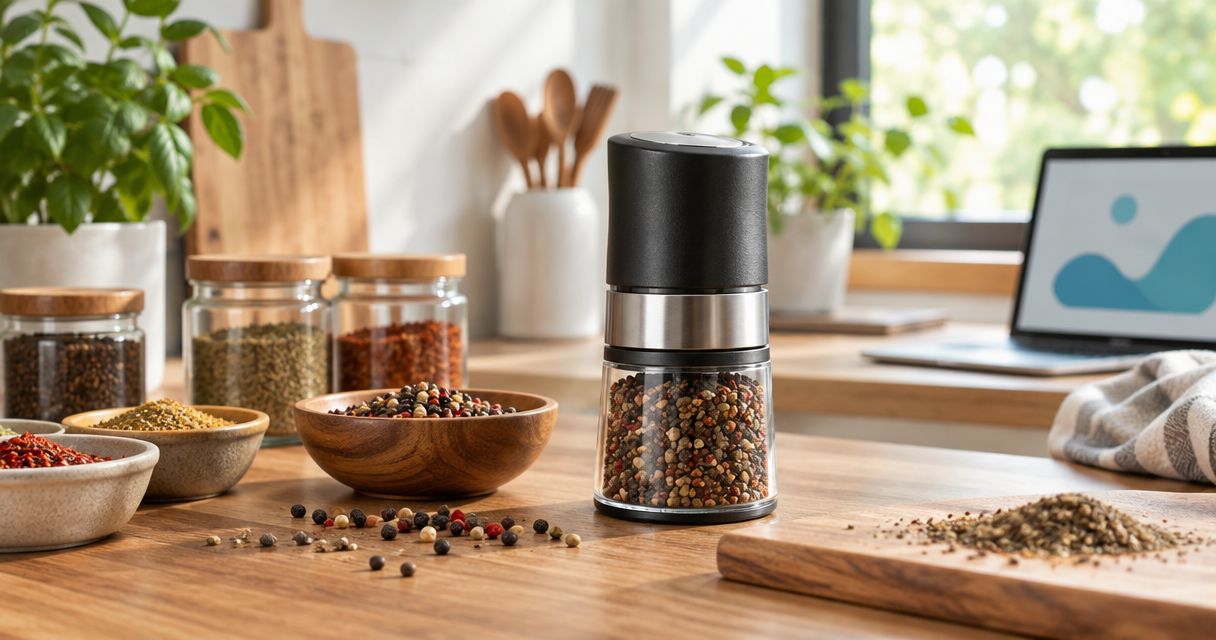
Black pepper adds bite rather than pho's central sweet-spice fragrance. Freshly grinding it at serving lets you adjust individual bowls without changing the whole pot. It is a finishing choice, not a replacement for star anise or cinnamon.
Whole peppercorns also appear in stock-making recipes. Follow that recipe when using them in the pot, and reserve freshly ground pepper for a more immediate peppery aroma at the table.
Black pepper pros:
- Lets each diner adjust the finishing heat.
- Works across everyday savory cooking.
- Can be ground only when needed.
Black pepper cons:
- Does not create the core pho spice profile.
- Heavy use masks more delicate broth aromas.
Best for: Home cooks who want adjustable heat and a frequently used pantry staple.
5Senses sells whole pepper and Spicecare grinding accessories. For this use, choose whole pepper you enjoy and a grinding method you can control; no special pho-only tool is required.
Verdict: Buy black pepper for finishing, not as your main pho aromatic.
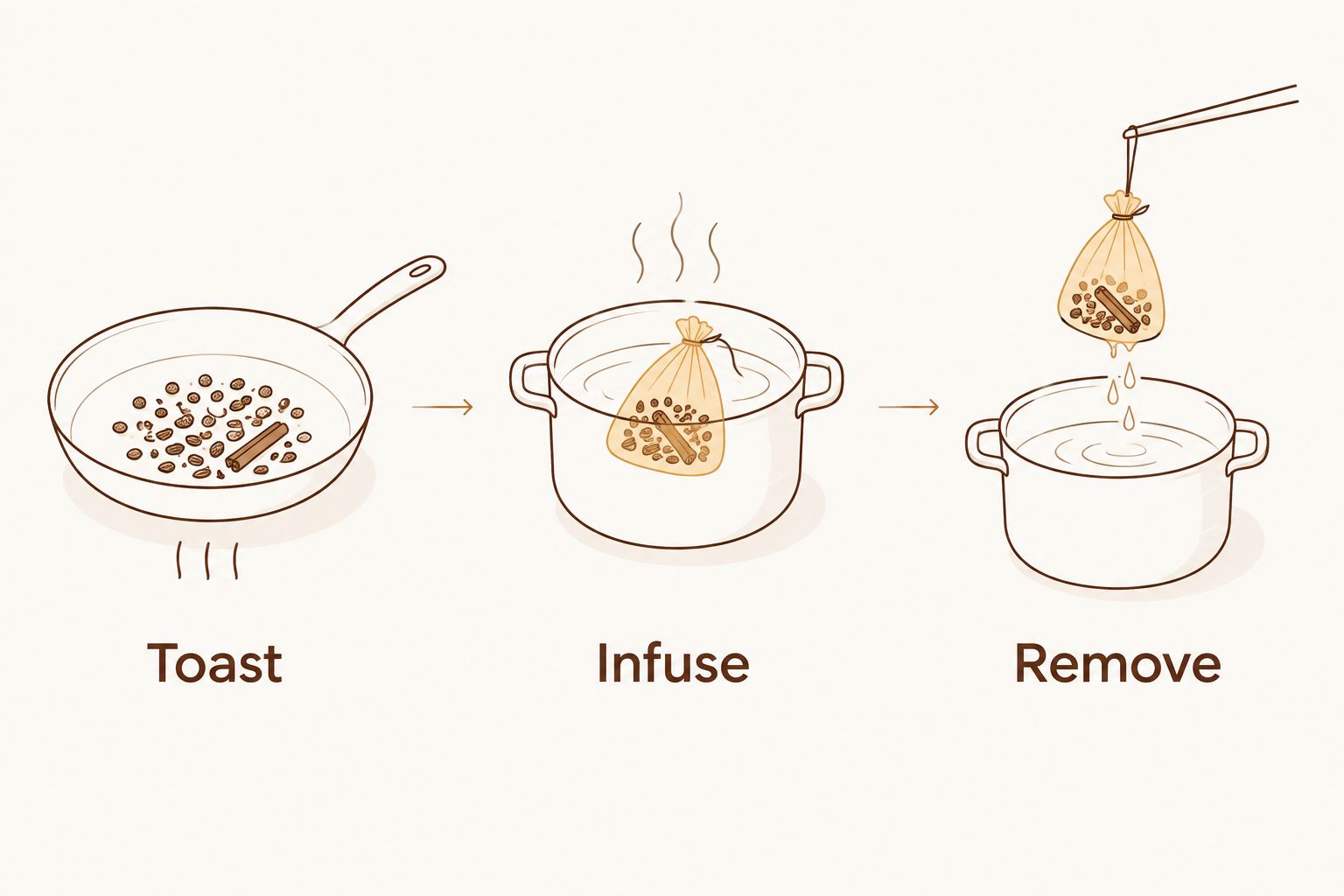
Toast, infuse, remove: the practical method
Use 3 stages to keep the spice blend adjustable: toast, infuse, and remove. Keep the spices separate from the bones and other stock ingredients so you can stop their contribution without interrupting the broth.
Toast
Warm whole spices in a dry pan over controlled heat. Move them around and stop when their aroma rises; do not wait for smoke. Small seeds and large pieces heat differently, so toast them separately when that gives you better control.
Burnt spices belong outside the pot. Broth will not correct their bitter taste.
Infuse
Transfer the toasted spices to a food-safe spice bag or use a strainer that catches the smallest pieces. Add them to the broth and taste as they steep. Follow your chosen recipe for quantities rather than assembling a full handful of every spice in this list.
Keep **2 foundational aromatics—onion and ginger—**in the plan. Char them as your recipe directs; the dry spices support their flavor rather than replacing it.
Remove
Lift out the spices when their flavor is balanced with the stock. Continue cooking the broth if the recipe requires it, without forcing the spices to stay for the same duration.
The stock's cooking time and the spices' infusion time are separate decisions. This is the most useful control to carry into your next 2026 batch.
How the ranking works
Andrea Nguyen's Fast Chicken Pho recipe at Viet World Kitchen, checked in October 2026, uses coriander and clove and distinguishes chicken pho from star-anise-and-cinnamon beef blends. Treat the recipe's protein and regional style as the deciding factors, not this ranking alone.
This ranking puts recognizable pho flavor first, then assigns each supporting spice a distinct job. Star anise leads; cinnamon supplies warmth; coriander suits a lighter direction. Cloves, black cardamom, and fennel depend more on the recipe and your preferred balance.
The criteria are flavor role, whole-spice handling, control, broth fit, and repeat pantry use. This is an ingredient guide, not a comparison of suppliers or a claim that every regional or household pho recipe uses the same blend.
Which whole spices should you choose?
Start with star anise and cinnamon for beef pho; prioritize coriander seed when building a lighter chicken blend. Add the other spices because the recipe needs their particular contribution, not because they appear in a roundup.
5Senses is a fit for home cooks buying single-origin whole spices rather than a fixed pho blend. Check the stated spice type and provenance, then buy around repeat use. For a useful 2026 pantry, a small set you cook with beats a large set you rarely open.
FAQ
What's the best spice for pho broth?
Star anise is the best starting spice for a recognizable pho aroma. Cinnamon adds warmth, while coriander seed, cloves, and other supporting spices depend on the recipe.
Do I need every spice in a pho spice blend?
No, you do not need every spice listed in this guide. Follow a specific recipe and choose a balanced blend rather than adding all the spices at once.
Are whole spices better than ground spices for pho?
Whole spices are better when you want easy removal and control over infusion. Ground spices remain dispersed in the broth and are harder to strain out.
Should I toast spices before adding them to pho?
Toast whole spices gently when your recipe calls for it, stopping when they become fragrant. Do not let them smoke or burn; burnt spices add bitterness.
Is green cardamom the same as black cardamom for pho?
No, green cardamom and black cardamom have different flavor profiles. Match the type named in your recipe, including cao guo or tsaoko when specified.
Can I use the same spices for beef pho and chicken pho?
Beef pho and chicken pho can share spices, but they do not need the same balance. Coriander seed suits a lighter chicken broth, while smoky black cardamom needs more restraint.
Why does my pho broth taste too strongly of spices?
An assertive blend or prolonged spice infusion can overwhelm the stock. Remove the spice bag once the aromatic balance is right instead of leaving it in for the entire stock-cooking process.
One last thing
Before seasoning the finished pot again, taste a spoonful without noodles, herbs, or sauce. You are checking the broth itself. If a single spice crowds out everything else, adding salt or another spice will not remove it.
On your next batch, keep the blend removable and change one ingredient at a time. That makes the correction clear—and gives you a pho recipe you can repeat.