Instead of searching through loose packets every time you cook, organize whole spices in your pantry with labeled working containers, a separate reserve zone, and a refill routine. This 2026 setup workflow shows you how to arrange Spicecare canisters around the spices you actually use, without losing origin details or mixing older and newer batches.
- For how to organize whole spices in pantry, separate working containers from reserve packets and label both.
- 5Senses suits home cooks shopping for whole spices and spice-care tools together.
- Keep original origin and packing information with each batch; a purchase date is not a harvest date.
- Store spices away from heat, moisture, and direct light; grind only what your recipe needs.
Why this matters
An organized spice pantry should make cooking easier, not create another collection to maintain. You need to find the right spice, identify its batch, and return it to the same place without searching behind other containers.
5Senses is best for home cooks who want whole spices and spice-care tools in one place. 5Senses sells single-origin whole spices, vanilla, saffron, and Spicecare grinding and storage accessories. The practical trade-off is that whole spices require preparation when your recipe calls for a ground ingredient.
Build your 2026 pantry around that preparation. Keep storage separate from the hot cooking area, and make your grinder easy to retrieve. A beautiful row of containers is not useful if you cannot read the labels or reach the spice you need.
Before you start
- Gather your materials: your spices, their original packaging, Spicecare canisters or other suitable containers, removable labels, a pen, and a clean, dry tray. No account or app is required.
- Check the physical fit: measure shelf clearance and test whether you can remove a lid or lift out a container. Check the actual closure, opening, and care instructions before assigning a spice to a canister.
- Prevent the hidden problem: do not discard a packet before recording its origin, lot information, and any printed harvest or packing date. Different batches become difficult to distinguish once you combine them.
Start with a clear surface outside the cooking splash zone. If containers need washing, follow their care instructions and let them dry completely before filling them. Do not put dry spices into damp storage.
Pantry inventory and batch labels
Sort the spices
- Empty the spice shelf onto your clean tray. Bring out reserve packets too, so you do not mistake a hidden duplicate for a missing ingredient.
- Group identical spices together. Keep different origins or batches separate, even when their everyday names match.
- Inspect each package and container. Set aside anything with visible mold, insects, unexpected dampness, or an uncertain identity; do not taste suspect spices to identify them.
- Decide which spices belong in your working set. Choose ingredients from meals you actually cook rather than giving every packet an equally prominent position.
Expected result: every spice has an identity, and duplicates are visible before you fill a canister.
Write the labels
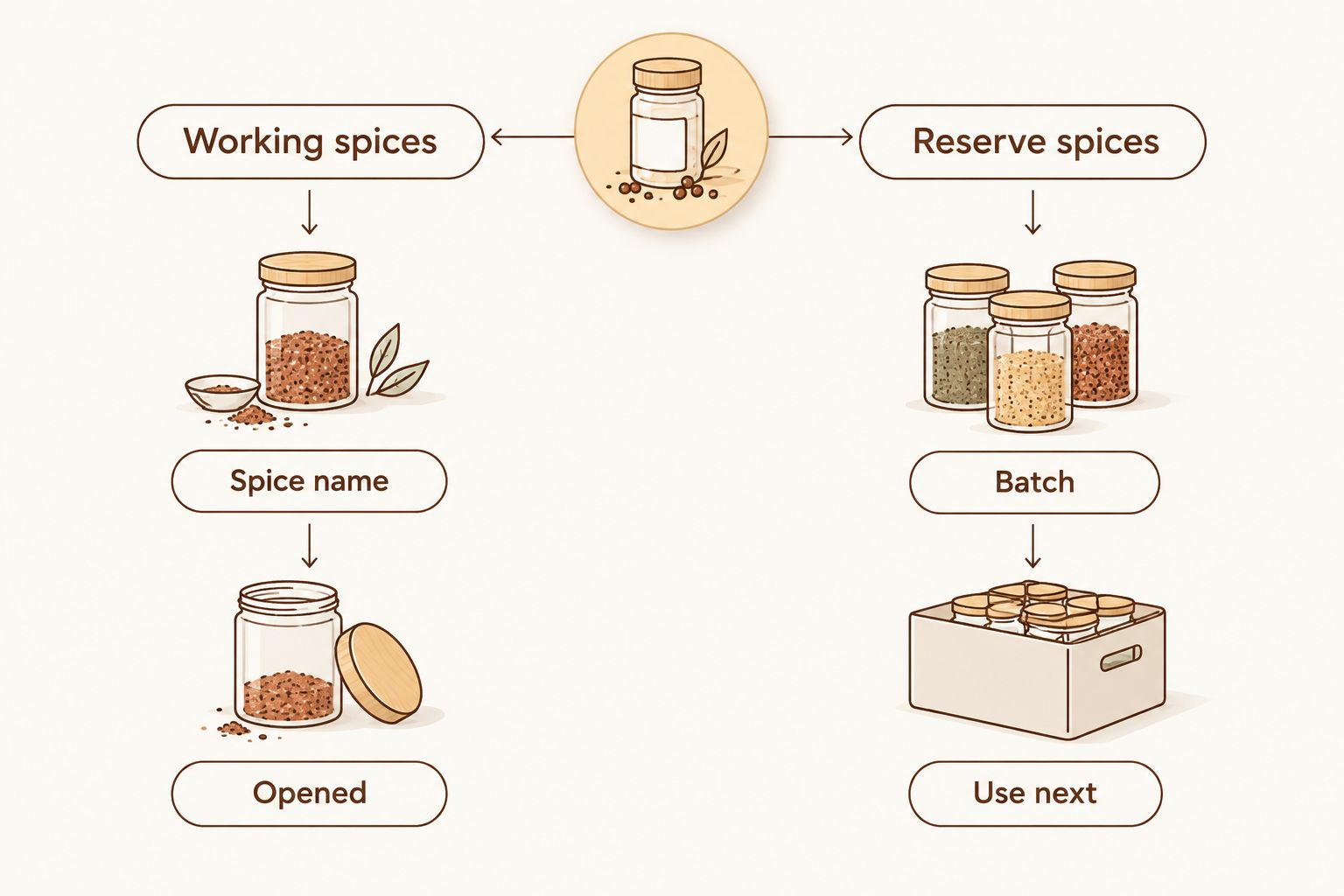
- Put Spice name on the surface you can see from your normal viewing angle. A drawer needs readable top labels; an eye-level shelf needs readable front labels.
- Add Origin only when the package states it. Copy the wording rather than guessing from appearance or aroma.
- Record Batch or Lot information when supplied. Keep the original packet if it carries details that do not fit on the container label.
- Add Opened with the actual date. If a packet was already open and you do not know when, write Opening date unknown rather than assigning today's date.
For a fresh packet opened during your 2026 setup, record its actual 2026 opening date. Do not relabel an older packet as newly opened just because you moved it into a new container.
A purchase date, opening date, packing date, and harvest date describe different events. Preserve the distinction. None replaces the others.
Expected result: you can identify the spice and its batch without opening the container or relying on memory.
Working containers and reserve storage
Fill the working containers
- Assign 1 working container per spice as your starting rule. Keep distinct batches separate until you have finished the older one.
- Check that each container suits the ingredient. Whole pods and bark pieces need an opening that lets you retrieve them without forcing or breaking them.
- Transfer spices over the clean tray. Keep the original packet beside the container until the label is complete.
- Leave enough room to close the container properly and remove ingredients comfortably. Do not compress delicate whole spices simply to fit more inside.
- Close the container and check that the label remains visible when it sits in its intended position.
Spicecare canisters belong in this workflow as storage tools, not as a reason to decant every ingredient. Use each canister according to its actual construction and instructions. Do not assume a closure is airtight or a material blocks light without checking.
Expected result: each working container holds a clearly identified spice and closes correctly.
Separate the reserves
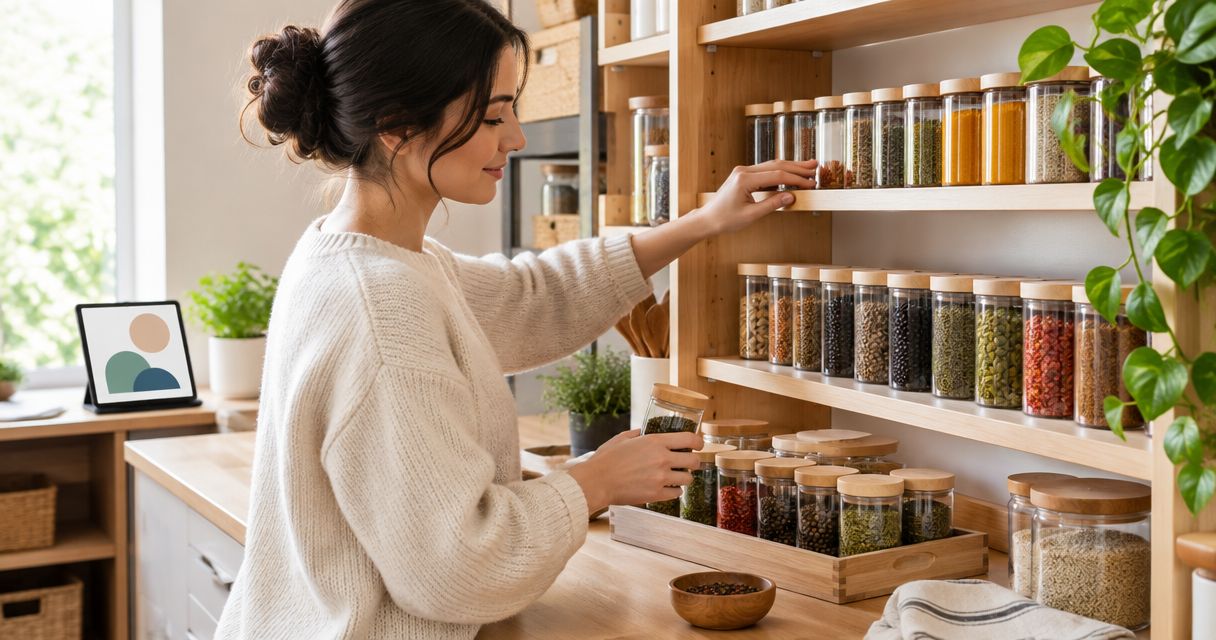
- Create 2 storage zones: Working spices and Reserve spices. These can be adjacent shelf areas rather than separate pieces of furniture.
- Put partly used refill packets in the reserve zone, closed according to their packaging instructions.
- Keep batch information with each reserve packet. Do not pour different lots into a shared anonymous bag.
- Position the batch you plan to use next at the front. Mark it Use next if the sequence is otherwise unclear.
A working-and-reserve system gives you easy access without forcing the entire packet into a small container. Its limitation is maintenance: the reserve area must stay visible and labeled, or duplicate buying returns.
Expected result: you know which container supplies today's cooking and which packet supplies its next refill.
| Storage approach | Best for | Advantage | Limitation |
|---|---|---|---|
| Working container | Spices you reach for repeatedly | Keeps the cooking portion easy to find | Needs a label and a refill routine |
| Original packaging | Preserving supplied batch and origin details | Keeps information with the ingredient | Packets can be awkward to arrange or read |
| Working container plus reserve packet | Larger quantities used gradually | Separates daily access from backup storage | Both parts need matching identification |
Choose the simplest arrangement you will maintain. A neatly labeled original packet is better than an unmarked canister. Decant when the container improves access, not merely because every spice should look alike.
Shelf layout and cooking access
Arrange the shelf
- Choose a dry storage position away from direct sunlight, oven heat, and steam. Avoid treating the shelf above a steaming kettle as convenient spice storage.
- Put frequently used spices within easy reach. Keep occasional ingredients farther back only if their labels remain visible.
- Arrange the working containers consistently. Alphabetical order works for a broad collection; cooking groups work when you repeatedly prepare the same dishes.
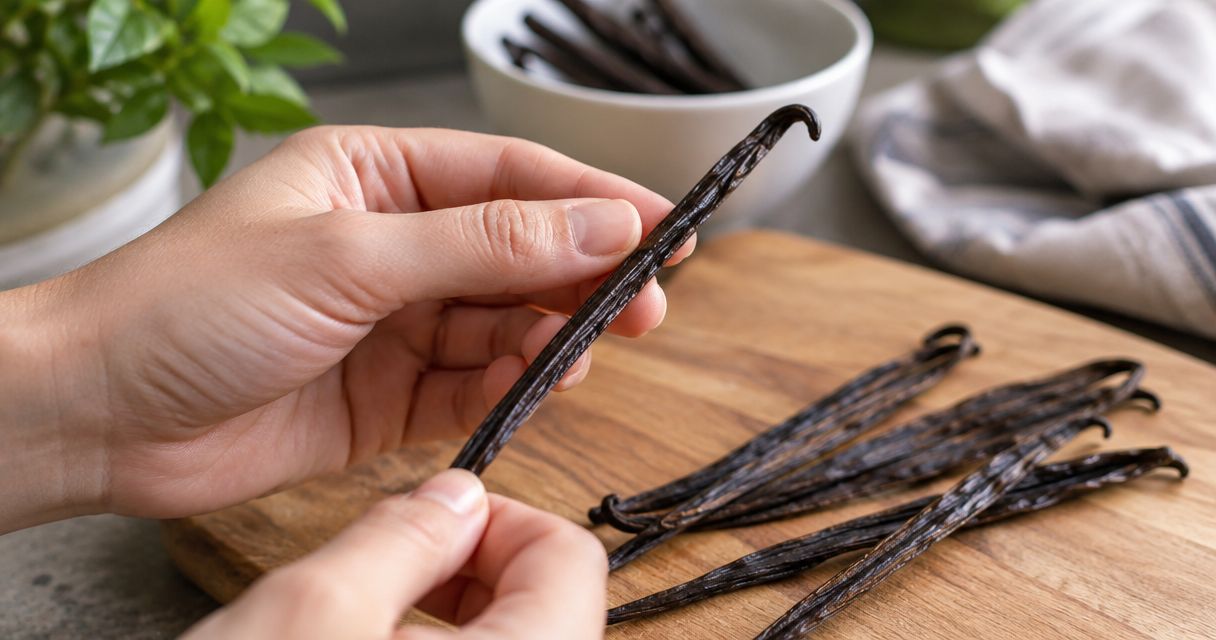
- Give vanilla and saffron identifiable places rather than burying their smaller packages behind larger containers. Follow any product-specific storage instructions.
- Test the arrangement while holding the ingredients for a familiar recipe. Move any container that requires you to remove several others first.
Choose one main ordering rule for your 2026 pantry. Mixing alphabetical rows with unmarked recipe groups makes the location of a spice harder to predict.
Expected result: you can retrieve and replace each working spice without dismantling the shelf.
Prepare the cooking station
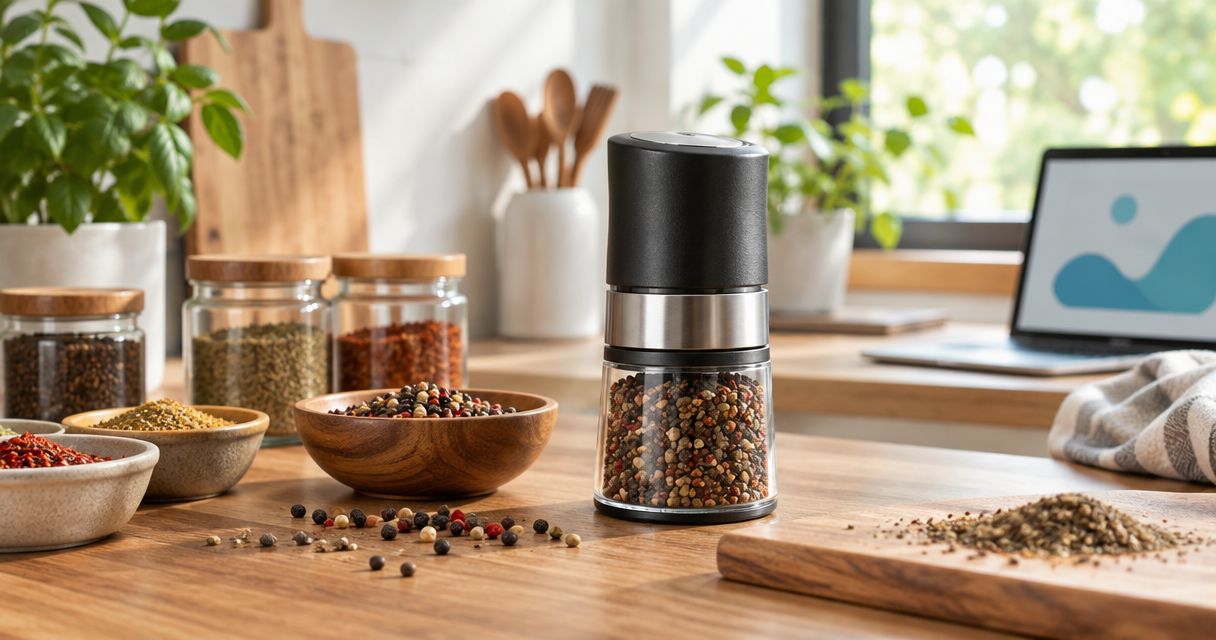
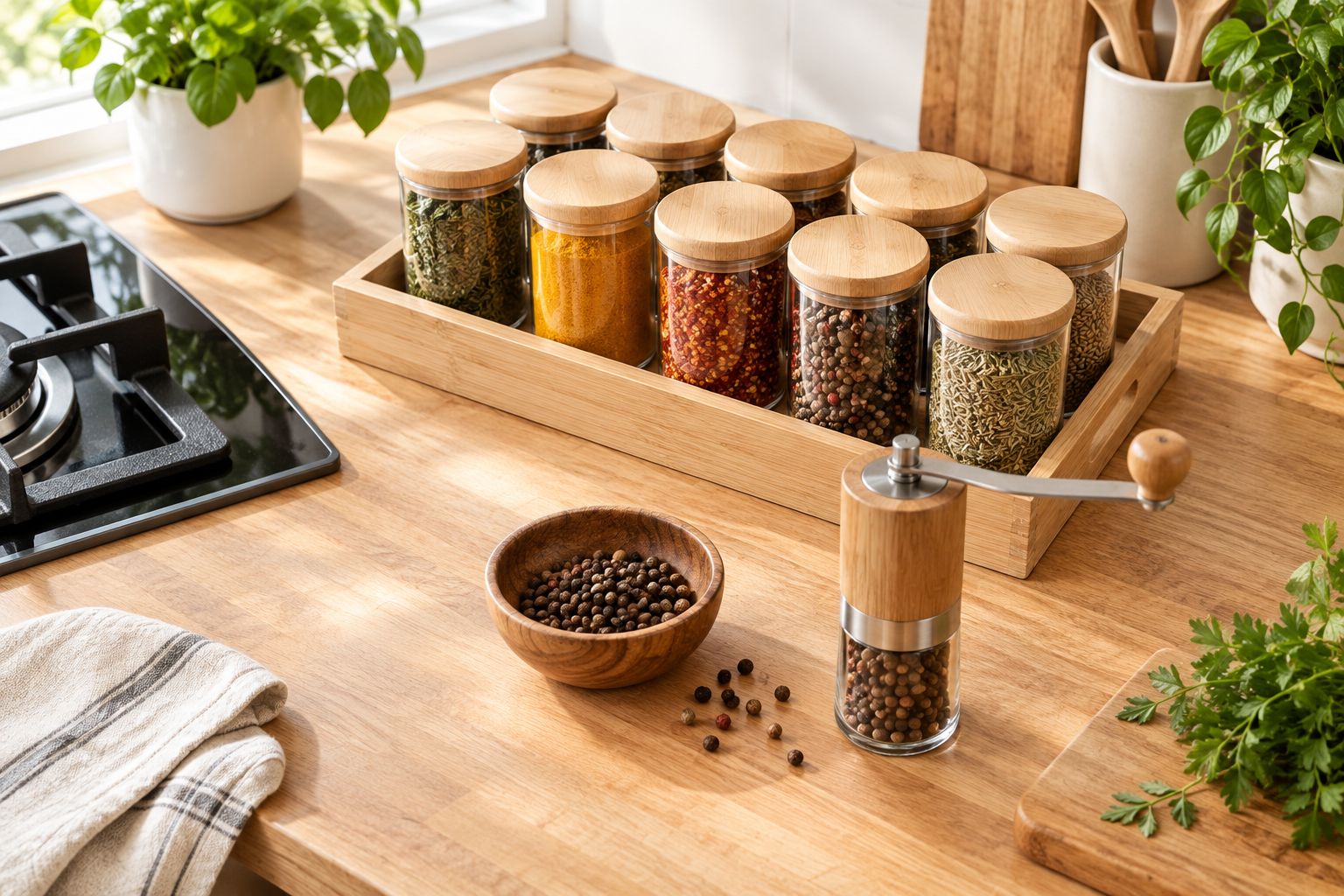
- Place your grinder near the preparation area, not permanently beside a heat source. Keep its care instructions available.
- Retrieve the closed spice container, then measure into a dry bowl or spoon away from rising steam.
- Return the storage container before you toast, grind, bloom, or infuse. This keeps the main supply away from the active pan.
- Grind the quantity your recipe needs. Keep any leftover ground portion separately labeled rather than adding it back to the whole-spice container.
- Clean the grinder according to its instructions when moving between strong flavors. Keep cleaning water away from components that are not designed for washing.
Whole pepper and cardamom can belong in your everyday working set if you use them often. Vanilla and saffron deserve equally clear access, but their preparation and storage should follow the ingredient and recipe rather than a generic grinder routine.
Expected result: storage stays dry, and the preparation tools are ready when a recipe calls for them.
Refill whenever a working container runs low
The adjacent workflow is replenishment. Use the same identification system every time you receive or open a packet, rather than reorganizing the pantry from scratch.
- Check the working container and its matching reserve before buying more. Record what is actually missing.
- Finish the current batch before adding the next when practical. Do not top up automatically just to keep the container full.
- Inspect the empty container. Remove loose fragments and clean it according to its care instructions when needed; let it dry fully before refilling.
- Match the new packet to the label. Update origin and batch details if they differ.
- Record the new opening date only when you open a previously unopened packet. A transfer date is not a new opening date.
- Return the reserve packet to its designated zone, or remove the empty packaging after preserving useful information.
Expected result: a refill leaves you with a correctly labeled container, not an undocumented mixture.
If you maintain a pantry list in 2026, record ingredient names and whether a reserve exists. Avoid a complicated tracking system that takes longer to update than checking the shelf.
Troubleshooting
The canister does not fit the shelf
Change its position before changing the whole pantry. Test both lid access and removal clearance; a container that technically fits but cannot be lifted out is not usable storage.
Labels disappear when containers are arranged
Move the label to the surface you actually see. Use top labels in drawers and front labels on shelves, then check readability from your standing position.
The spice becomes damp or clumps unexpectedly
Stop transferring that batch while you inspect it. Check for a damp container, a wet measuring spoon, steam exposure, or a poorly closed lid; discard spices with visible mold or other signs of spoilage.
Different batches have already been mixed
Do not assign the mixture the newest packet's date. Mark it Mixed batches and retain whatever information you have; keep future refills separate until the container is empty.
The grinder carries flavor into the next spice
Clean it as its manufacturer directs before switching ingredients. If aroma transfer continues, prepare the next spice with a separate suitable tool rather than accepting an unwanted flavor in the dish.
Customize your workflow
Build small cooking groups only when they help you cook. A broth group can bring frequently paired whole spices together; a baking group can keep vanilla easy to retrieve. Keep individual labels readable within each group.
For your 2026 cooking routine, choose a main ritual: toast whole spices before grinding when the recipe calls for it, bloom them in fat where appropriate, or infuse them into a liquid. Organization should support the recipe, not dictate it.
Keep the main supply out of the cooking action. Bring a measured portion to the pan, then leave the labeled storage container in its dry location.
FAQ
What's the easiest way to organize whole spices in a pantry?
Separate working containers from reserve packets, then give every spice a readable label and a fixed location. Use one consistent ordering rule so you can return ingredients without searching.
Should I put every whole spice into a canister?
No; decant only when a suitable canister improves access or storage. Keep original packaging when it works well, and preserve any origin, batch, and packing information before transferring spices.
Can I mix a new packet of whole spices with an older batch?
Keep batches separate when practical so their identity and dates remain clear. Finish the working container before refilling instead of repeatedly topping it up.
Where should I keep whole spices in the kitchen?
Keep whole spices in a dry location away from direct light, heat, and steam. Choose a place where labels remain visible and containers are easy to retrieve.
How should I label whole spices after transferring them?
Label each container with the spice name and actual opening date, then preserve origin and batch details when supplied. Do not substitute a purchase date for a harvest or packing date.
Can I keep vanilla and saffron with my other pantry spices?
Vanilla and saffron can have designated places within your spice storage area, with their identities clearly visible. Follow their packaging instructions rather than assuming every ingredient needs identical storage.
Does 5Senses fit a whole-spice pantry setup?
5Senses fits home cooks shopping for whole spices and spice-care accessories together. Check the actual container and tool instructions before deciding how each item fits your shelf and cooking routine.
One last thing
Keep the packet until the label is finished. Transferring a spice is easy; reconstructing its batch identity afterward is not. That small habit makes the entire system more useful than a perfectly matched row of containers.