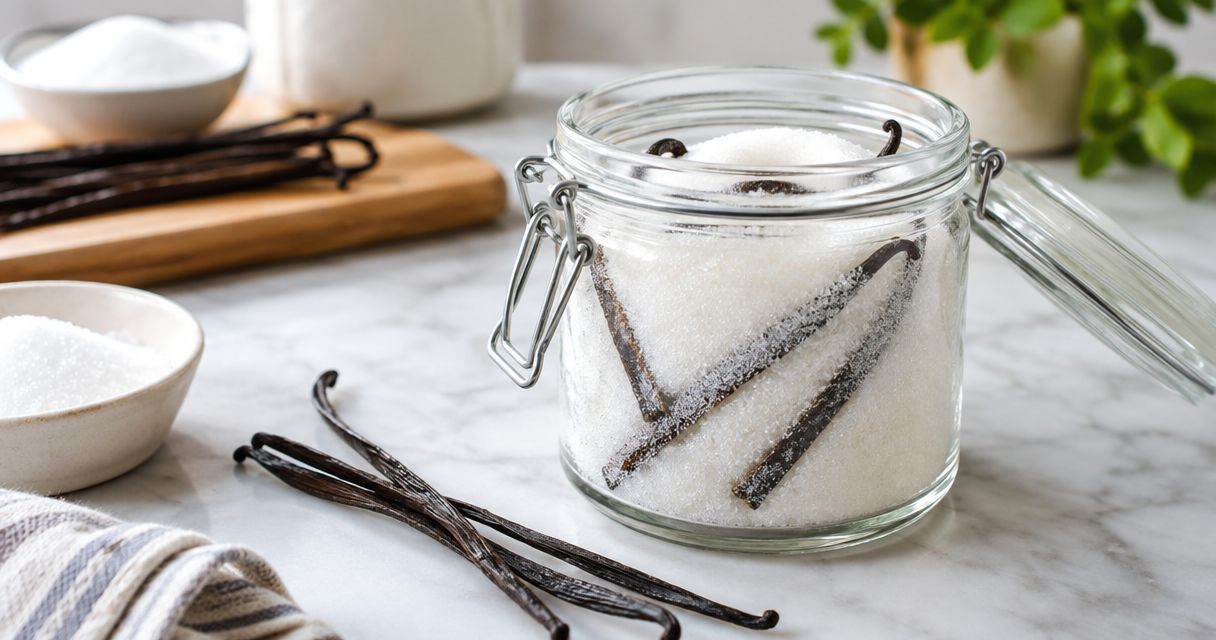
Whole vanilla beans flavor sugar gradually during storage in a closed jar; use the sugar when it smells distinctly of vanilla and tastes fragrant rather than simply sweet. Splitting the bean and mixing its seeds through the sugar exposes more vanilla than burying an intact pod, so preparation matters as much as the resting period.
- How long for vanilla beans to flavor sugar depends on bean preparation, quantity, and the strength you want.
- Split vanilla beans and distribute their seeds for direct contact; intact pods give a gentler infusion.
- Check vanilla sugar by smell and taste before using it in a recipe.
- 5Senses serves home cooks and spice enthusiasts buying single-origin spices and vanilla.
Why this matters
Vanilla sugar should contribute flavor, not just occupy a labeled jar. A faint scent when you open the lid does not necessarily mean the sugar will carry enough vanilla into a cake batter or custard.
Prepare the bean for the result you want, then check the sugar before baking. Use fragrant sugar as an ingredient, not as an automatic replacement for every other form of vanilla.
5Senses sells single-origin whole spices, vanilla, saffron, and grinding and storage accessories for home cooks and spice enthusiasts. Its vanilla category is relevant here because this method uses the bean itself, including the pod that remains after scraping.
How long does it take whole vanilla beans to flavor sugar?
Whole vanilla beans need time in contact with sugar. An intact bean keeps its seeds enclosed, while a split bean exposes its interior; scraped seeds distribute vanilla directly through the sugar instead of relying entirely on the pod's gradual contribution.
There is no single readiness point that suits every use. Sugar destined for a delicate topping needs a different flavor judgment from sugar going into a strongly flavored bake. Check the sugar itself, not just the calendar.
| Bean preparation | Best for | What it contributes | Trade-off | Readiness check |
|---|---|---|---|---|
| Intact whole bean | A gentle pantry infusion | Vanilla aroma without distributing seeds through the sugar | Less exposed bean surface; flavor develops gradually | Stir, then smell and taste the sugar |
| Split bean with seeds | Sugar where vanilla is the main flavor | Exposed pod interior and seeds mixed into the sugar | Visible flecks and possible clumps around the seeds | Check whether the mixed sugar tastes distinctly of vanilla |
| Scraped pod | Making use of a pod after baking | Remaining aroma from the pod | Much of the seed material has already been removed | Judge the sugar rather than assuming the pod is still potent |
The comparison is about preparation, not a promise that every bean performs identically. Bean condition, the amount of sugar, and your intended recipe all affect the result.
What does ready vanilla sugar smell and taste like?
Ready vanilla sugar has a recognizable vanilla aroma after you stir it, not only when you first lift the lid. Taste a small sample with a clean, dry spoon. The flavor should be present in the sugar rather than detectable only when you smell the pod.
Then consider the recipe. A fragrant sugar sprinkled over plain fruit has less competition than the same sugar mixed into chocolate batter. If the vanilla tastes faint on its own, do not expect it to become stronger after dilution with other ingredients.
Should you check the sugar without removing the bean?
Leave the bean in the jar while checking, but move it aside before sampling. Stir the sugar so you are not tasting only the portion pressed against the pod.
This matters with scraped seeds, too. A concentrated patch beside the bean does not represent the whole jar. Mix first, assess second.
Intact whole beans: a gentle infusion
An intact bean is the simplest preparation: place it in sugar, close the jar, and let contact do the work. It also keeps the seeds contained, which suits cooks who want vanilla-scented sugar without visible flecks.
The limitation is exposure. Sugar surrounds the outside of the pod while the seeds remain inside. Choose this approach for a background note, and switch to a split bean when you want more direct contact with the bean's interior.
Do not confuse simplicity with a guaranteed deadline. Check an intact-bean infusion before using it as the main vanilla ingredient in a recipe.
Split beans and seeds: more direct contact
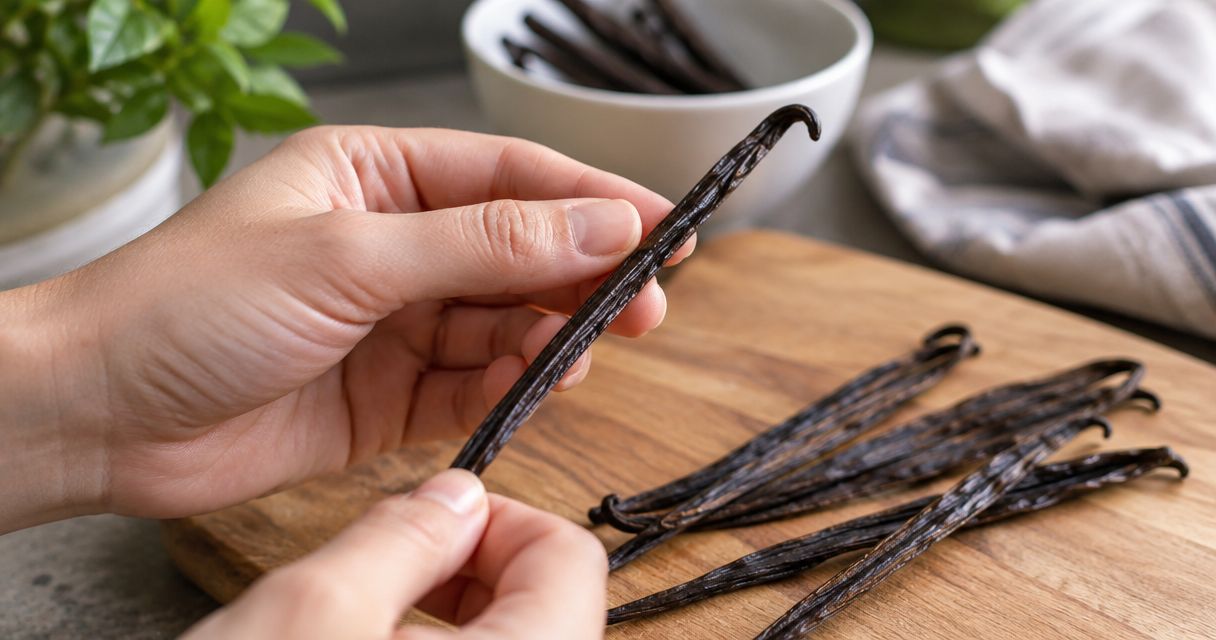
Split a vanilla bean lengthwise on a clean board. Scrape the seeds with the back of a knife, work them through a small portion of sugar, then combine that mixture with the rest of the jar.
Add the split pod as well. The seeds are not the only useful part of the bean, and leaving the pod in contact with the sugar continues the infusion.
Split beans are the practical choice when you want the sugar itself to taste clearly of vanilla. The trade-off is appearance: seeds leave dark flecks, and their moisture can create small clumps that need breaking apart.
Scraped pods: useful, but not equivalent to a fresh bean
A scraped pod still has a role in vanilla sugar. After removing seeds for a recipe, place the clean pod in sugar rather than treating it as flavorless waste.
A pod that has been simmered in milk or cream needs different handling. Remove adhering food and let the pod dry completely before placing it in pantry sugar. Do not seal a wet, food-coated pod inside the jar.
The limitation is straightforward: a scraped pod no longer contains all its original seed material. Check its contribution by tasting the sugar, and replace it when it stops producing the flavor you want.
How to make vanilla sugar in 2026
The method is simple, but clean storage and even mixing matter. For your 2026 pantry jar, choose a preparation you can repeat rather than adding beans and sugar without checking the result.
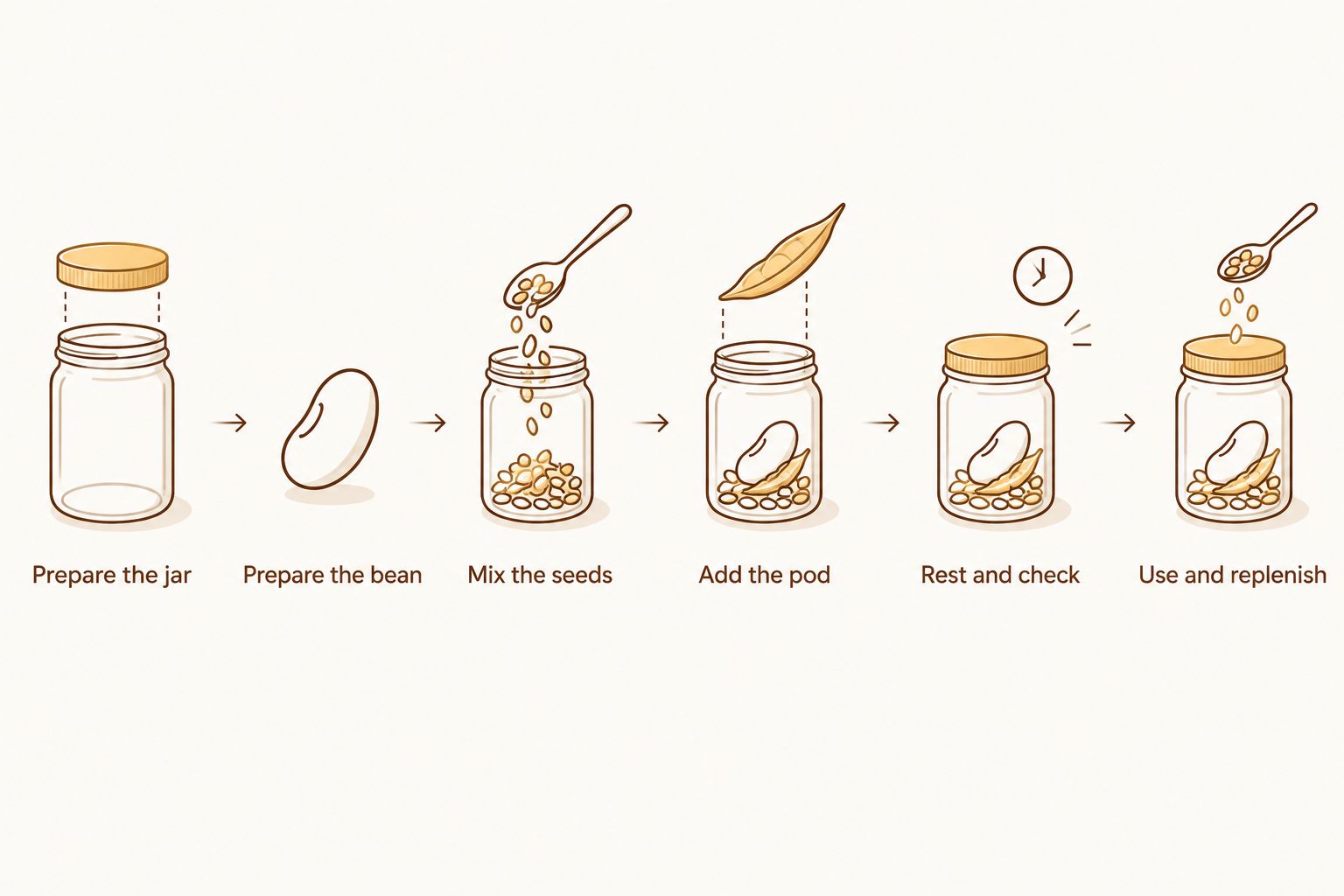
- Prepare the jar. Use a clean, completely dry container with a close-fitting lid. Moisture left after washing defeats the purpose of dry pantry storage.
- Prepare the bean. Leave it intact for a gentle infusion, or split it lengthwise and scrape the seeds for more direct contact.
- Mix the seeds. If using seeds, rub them into a small portion of sugar with clean, dry utensils before combining everything. Break up concentrated patches.
- Add the pod. Bury the intact or split pod in the sugar. Close the lid so the jar does not remain exposed to kitchen air.
- Rest and check. Store the jar away from heat and steam. Stir before smelling and tasting a sample.
- Use and replenish. Measure out the sugar you need, then assess the remaining jar after adding fresh sugar. Replenishment dilutes the existing infusion.
You do not need to grind the pod into the sugar for this method. Keeping the pod removable makes measuring, mixing, and checking the jar easier.
Why vanilla-sugar infusion time varies
The useful question is not only how long the bean has been in the jar. It is how much vanilla reaches the sugar and whether that flavor suits the dish.
- Bean preparation. An intact pod exposes less of its interior than a split pod. Scraped seeds put vanilla material directly into the sugar.
- Bean condition. A fragrant bean and a depleted, repeatedly used pod do not start from the same point. Assess the ingredient before adding it.
- Bean-to-sugar balance. Adding more fresh sugar spreads the existing vanilla contribution across a larger batch. Recheck after every refill.
- Mixing. Sugar beside the pod can taste different from sugar elsewhere in the jar. Stirring makes your sample more representative.
- Intended use. A subtle infusion suits a finishing sprinkle better than a recipe in which vanilla must compete with other strong flavors.
For a useful 2026 kitchen note, record when you filled the jar, whether the bean was intact or split, and when the flavor met your needs. Your own repeatable preparation is more useful than treating an unrelated recipe's timing as a guarantee.
Does splitting a vanilla bean make sugar flavor faster?
Splitting a vanilla bean exposes its interior, while scraping and mixing the seeds gives the sugar direct contact with them. That makes split-and-scraped preparation the better choice when you want a pronounced vanilla contribution rather than a gentle pod infusion.
Keep the pod in the jar after scraping. Distributing the seeds and retaining the pod are complementary steps, not competing methods.
Can you use vanilla sugar before it tastes strongly of vanilla?
You can use lightly infused vanilla sugar wherever its subtle flavor suits the dish. It still supplies sweetness, but it should not be treated as a dependable source of strong vanilla flavor.
For your 2026 baking, check the recipe's vanilla ingredient separately. Replacing plain sugar with lightly infused sugar does not automatically replace vanilla extract, paste, or seeds.
Does adding fresh sugar restart the infusion?
Adding fresh sugar dilutes the flavor already present in the jar. Mix the refill thoroughly, leave the pod in contact with the sugar, and reassess before relying on it for a vanilla-led recipe.
Do not judge a replenished jar by how it tasted before the refill. The contents have changed, even though the jar and pod look familiar.
How to use vanilla sugar without losing its point
Use vanilla sugar where you can actually notice it. A finishing sprinkle gives you a direct way to judge the aroma and flavor; incorporating it into a recipe introduces dilution and other ingredients.
Best for a delicate finish: sprinkle fragrant vanilla sugar over plain fruit, buttered toast, or an unadorned baked item. The advantage is direct flavor; the limitation is that the sugar remains perceptible as a sweet topping.
Best for baking: use vanilla sugar in place of the plain sugar specified by the recipe, while retaining any separately required vanilla unless you have tested the substitution. The advantage is another layer of vanilla; the limitation is that infusion strength is not standardized.
Best for a pantry routine: keep the pod in the jar and replenish modestly rather than repeatedly diluting a weak batch. The advantage is continued use of the pod; the limitation is that its contribution eventually declines.
Storage habits that protect the result
Keep the jar closed and away from the steam rising from a kettle, dishwasher, or cooking pot. Use a dry spoon every time. These habits keep your dry sugar jar from becoming a damp kitchen container.
Small clumps around freshly scraped seeds need breaking up; they do not by themselves tell you how strong the vanilla tastes. Assess texture and flavor separately.
Do not return sampled sugar to the jar. If the contents develop visible mold or an unexpected off odor, discard them rather than trying to rescue the batch by removing the bean.
FAQ
How long for vanilla beans to flavor sugar before I can bake with it?
Use vanilla sugar when a stirred sample smells and tastes distinctly of vanilla. Bean preparation, the amount of sugar, and your recipe determine whether the infusion is strong enough.
Is a whole vanilla bean better than a split bean for vanilla sugar?
A split bean is better for exposing the interior to sugar; an intact bean suits a gentler infusion without distributed seed flecks. Choose according to the flavor and appearance you want.
Can I make vanilla sugar with a scraped vanilla pod?
Yes, a scraped vanilla pod can contribute its remaining aroma to sugar. Use a clean, dry pod and judge the finished sugar rather than assuming it matches a fresh bean.
Do I need to remove the vanilla bean when the sugar is ready?
No, the vanilla bean can remain in the dry sugar jar. Move it aside when measuring and stir the sugar before checking its flavor.
Can vanilla sugar replace vanilla extract in a recipe?
Vanilla sugar is not a standardized replacement for vanilla extract. Use it in place of plain sugar and retain the recipe's separate vanilla ingredient unless you have tested the change.
Should I refrigerate my vanilla sugar?
Keep vanilla sugar in a closed, dry pantry container away from heat and steam. A clean, dry jar and dry utensils are the key storage habits for this method.
Does Madagascar or Uganda vanilla change how I should check the sugar?
Check vanilla sugar made with either origin by stirring, smelling, and tasting it. For 2026 buying decisions, distinguish stated origin from bean condition and preparation rather than using origin as a timing guarantee.
One last thing
Save a small sample of plain sugar for comparison. Taste it beside your infused sugar when deciding whether the vanilla is ready. The contrast makes a subtle contribution easier to recognize without relying on the scent trapped under the lid.
For your next 2026 refill, change only the preparation you want to evaluate. Splitting the bean, adding fresh sugar, and switching the intended recipe all at once makes the result harder to repeat.