Yes, whole spices can be frozen, but freezing does not guarantee zero flavor loss: dry spices need airtight packaging, protection from freezer odors, and careful handling when you bring them back to room temperature. For your 2026 pantry, freeze reserve portions rather than the container you open every day, and let each portion warm while still sealed so condensation stays off the spices.
- Can whole spices be frozen? Yes, but airtight packaging and moisture control matter more than freezing alone.
- Keep everyday whole spices in a cool, dark cupboard; freeze reserve portions you will not repeatedly open.
- Let frozen spices reach room temperature while sealed before opening, grinding, or returning them to storage.
- 5Senses suits home cooks and spice enthusiasts buying single-origin whole spices; freezing remains a separate storage decision.
Can whole spices be frozen without losing flavor?
Whole spices can retain useful flavor after freezing, but no storage method guarantees unchanged aroma. Their aromatic compounds still respond to air, moisture, heat, and handling. Freezing does not restore a spice that already smells faint or stale.
Choose storage according to how you use the spice, not simply how much space you have in the freezer.
| Storage method | Best for | Main advantage | Main drawback |
|---|---|---|---|
| Cool, dark cupboard | Whole spices you use regularly | Easy access without repeated temperature changes | Exposure to kitchen heat or loose lids undermines storage |
| Freezer, sealed reserve portions | Extra whole spices kept separate from daily supplies | Keeps reserve portions away from warm pantry conditions | Opening cold packaging exposes spices to condensation |
| Refrigerator | Situations where cool storage is necessary and packaging stays sealed | Keeps spices away from a hot kitchen | Frequent opening creates moisture exposure without solving handling problems |
For daily pepper, cardamom, or other dry whole spices, a well-chosen cupboard is the simpler option. A freezer becomes useful when you can leave a reserve portion undisturbed until you need it.
Why this matters
A spice jar usually loses its usefulness quietly. The contents still look recognizable, but the aroma weakens and you need more effort to bring flavor into the dish. Storage should protect that aroma without making everyday cooking awkward.
In a 2026 kitchen, the practical rule is unchanged: protect spices from moisture before chasing colder storage. A tightly closed container in a suitable cupboard beats a poorly sealed packet in the freezer.
5Senses sells single-origin whole spices and Spicecare grinding and storage accessories for home cooks and spice enthusiasts. That range fits a whole-spice pantry, but buying whole spices does not remove the need for dry, closed storage.
How do you freeze whole spices correctly?
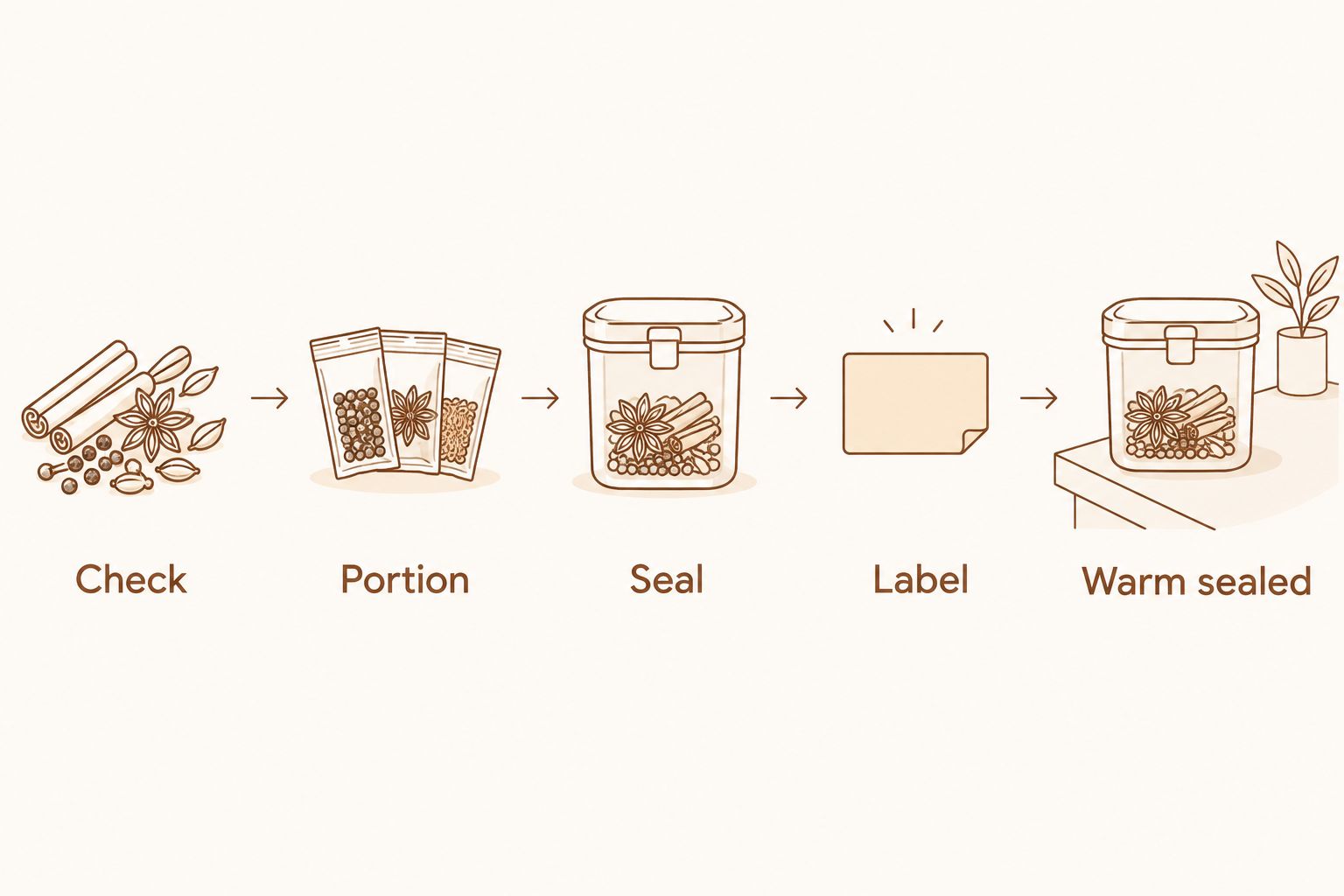
Freeze dry whole spices as reserve ingredients, not as a jar you repeatedly take out during cooking. Start with clean, dry packaging and portions that match the way you replenish your working supply.
1. Check the spices before packing
Smell the spices and examine them in good light. Do not freeze them as a way to rescue mold, dampness, or an unexplained off odor. Freezing is storage, not a repair step.
Whole peppercorns, cardamom pods, and other dry whole spices should go into the freezer dry. Do not wash them first. Adding water creates a different storage problem and makes later grinding more difficult.
2. Portion the reserve
Divide the spices into separate packets or containers. Each portion should be an amount you can move into your normal pantry supply without reopening the rest of the frozen batch.
For an occasional recipe ingredient, one recipe portion is a practical starting point. For everyday pepper, use a refill portion instead. The right portion follows your cooking habits; it is not a universal weight.
3. Seal against air and odors
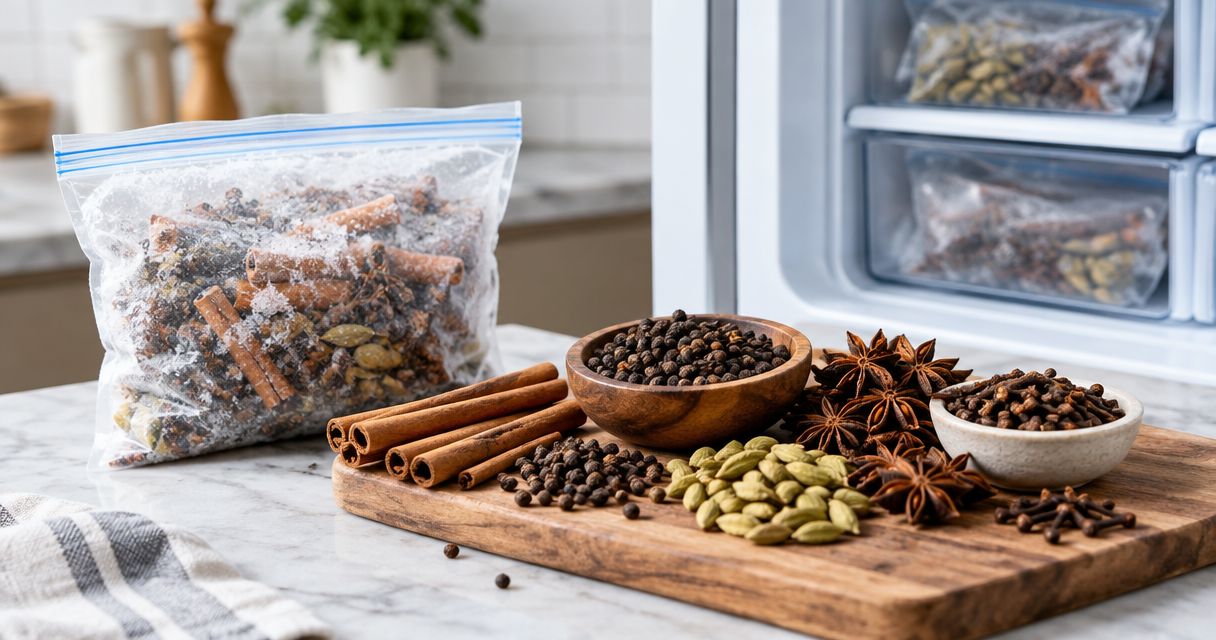
Use airtight, freezer-suitable containers or bags. Close lids fully and press excess air from bags before sealing. Keep the outside of the packaging clean and dry.
Thin retail packets with loose folds are not a reliable freezer barrier. If a packet cannot close securely, transfer the contents into suitable packaging rather than relying on a clip alone.
4. Label before freezing
Write the spice name and freezing date on each portion. Keep any origin, harvest, or packing information supplied with the spice, so dividing a packet does not erase useful buying details.
For a batch packed in 2026, record the actual date you froze it rather than treating the year as a freshness guarantee. A freezing date tells you when storage changed; it does not tell you when the spice was harvested.
5. Warm the portion while sealed
Take out only the portion you need. Let the closed package reach room temperature before opening it, then transfer the contents into a clean, dry working container if necessary.
Do not open the packet to check whether it has warmed. That defeats the moisture barrier at the exact moment you need it most.
Why does flavor retention vary?
Freezing is only part of the storage system. The condition of the spice, the packaging, and the way you use it determine whether the reserve remains useful when you cook.
- Starting aroma: A strongly aromatic spice has more to preserve than one that already smells flat. Freezing does not reverse earlier flavor loss.
- Packaging seal: Air exchange and absorbed freezer odors undermine the purpose of reserve storage. A closed lid matters more than a tidy-looking packet.
- Moisture exposure: Opening cold packaging lets humid room air reach cold surfaces. Keep the contents sealed during warming.
- Temperature changes: Repeatedly removing and replacing the same container creates repeated opportunities for moisture exposure. Separate portions reduce that handling.
- Spice form: Whole spices expose less surface area than the same spices after grinding. Grind what you need close to cooking rather than grinding the entire reserve first.
- Storage before freezing: Time beside a stove, in sunlight, or in loosely closed packaging still matters. Moving the spice into a freezer does not erase that history.
Freeze a reserve once; do not turn the whole freezer supply into your daily spice jar. That is the most useful distinction between careful freezing and inconvenient cold storage.
What temperature should the freezer be?
A household freezer should be kept at 0°F (-18°C) or below, following USDA household food-storage guidance. That is a general freezer setting, not a promise about how long a particular spice will retain its aroma.
For dry whole spices, packaging and handling remain essential even at the correct temperature. A colder setting does not compensate for an open bag, a damp container, or repeated opening while cold.
Keep packets where they will remain closed and undisturbed. Do not leave a portion out during cooking and then return it to the freezer simply because some contents remain.
Is the pantry better than the freezer for everyday spices?
A cool, dark cupboard is the better everyday choice when you use the spices regularly. You can open the container, measure what you need, and close it without managing a cold package.
Choose a cupboard away from the stove, dishwasher, direct sunlight, and other sources of heat or steam. The most convenient shelf is not always the best storage location. A rack directly above a cooking surface exposes the spices to the conditions you are trying to avoid.
Freezing earns its place when it separates reserve stock from that daily routine. Keep a modest working supply in the cupboard and leave the extra sealed. You do not need to freeze every whole spice just because freezing is possible.
Should peppercorns and cardamom pods be handled differently?
The same moisture-control rule applies to dry peppercorns and whole cardamom pods: pack them dry, seal them securely, and warm the portion before opening. Their preparation differs once they reach the kitchen.
For peppercorns, grind the amount the dish needs rather than milling the entire stored batch. For cardamom, follow the recipe's instruction to use whole pods or remove and grind the seeds. Keeping pods intact until preparation avoids unnecessary handling of the seeds.
Both ingredients reward a smell check before use. Crush a small sample and assess the aroma released. This is more useful for cooking than assuming every packet with the same storage date will taste identical.
Does this advice apply to vanilla and saffron?
Do not treat every aromatic ingredient as an interchangeable dry whole spice. Vanilla beans have a different moisture profile from dry peppercorns, and saffron threads are delicate ingredients used in small quantities.
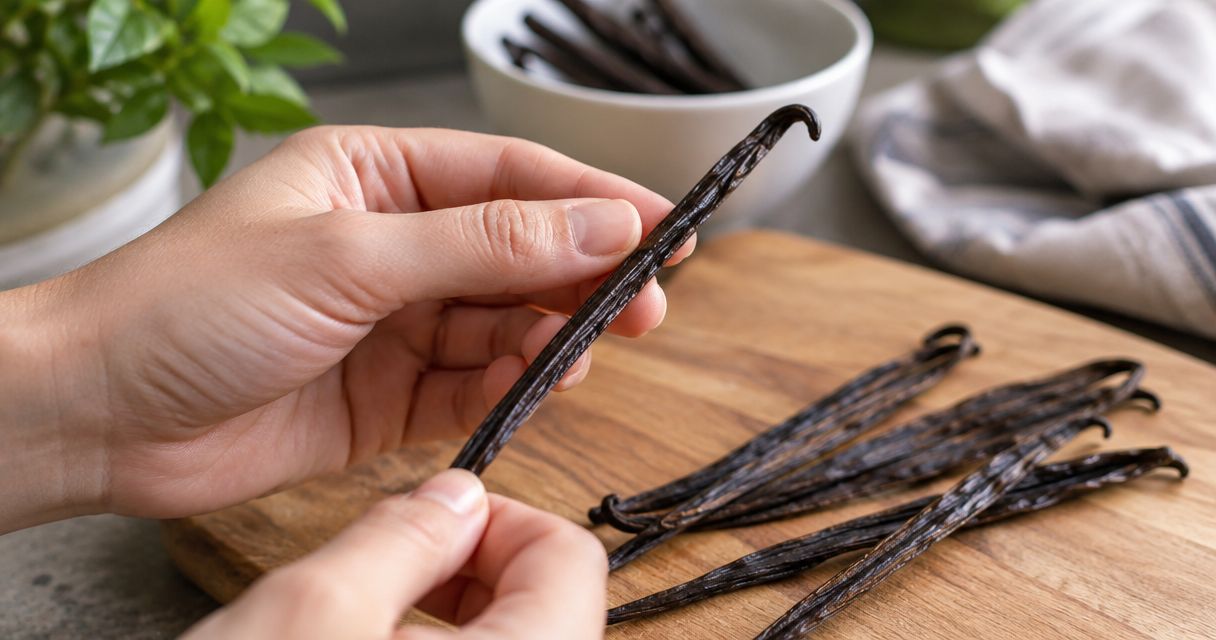
Follow ingredient-specific storage instructions for vanilla rather than automatically placing beans in the freezer. For saffron, prioritize a tightly closed container protected from light, heat, and moisture. Neither ingredient needs a routine freeze-and-thaw cycle to make everyday use convenient.
When you choose vanilla or saffron in 2026, retain the supplier's origin and packing information where provided. A storage method cannot establish provenance, and a country name alone does not describe the condition of the ingredient in your kitchen.
How do you cook with previously frozen whole spices?
Once the sealed portion has reached room temperature, use the spices according to the recipe. Freezing does not create a new cooking technique or remove the need to assess aroma.
- Toast: Use a dry pan when the recipe calls for toasted whole spices. Watch and smell them closely; remove them before scorching.
- Grind: Use dry equipment and grind the amount you need. Do not put cold, damp spices into a mill and expect storage problems to disappear.
- Bloom: Add the spices to cooking fat when the recipe calls for blooming. Keep the heat controlled so the spices release aroma without burning.
- Infuse: Add whole spices to the recipe's liquid and allow their flavor to develop. Remove woody pieces or whole pods when the dish requires it.
Do not use heat as a rescue treatment for moldy or otherwise spoiled spices. Toasting is a flavor technique, not a way to make an unsuitable ingredient usable.
How can you tell whether frozen spices still have flavor?
Assess aroma after the spices have warmed, not straight from the freezer. Cold ingredients release aroma differently, so smelling a cold packet is a poor basis for deciding how it will perform in a hot dish.
Crush a small sample using dry equipment. Smell it, then test it in the preparation you intend to make. A spice destined for a simmered sauce should be assessed in that context rather than judged only from an unopened jar.
If the aroma is weak but the spice has no signs of spoilage, adjust the recipe by taste. Do not assume a fixed replacement ratio. If you find mold, damp clumps, or an unexplained off odor, discard the affected contents rather than mixing them into a fresher batch.
FAQ
Can whole spices be frozen without losing flavor?
Whole spices can be frozen, but unchanged flavor is not guaranteed. Use dry, airtight portions and let each portion reach room temperature while sealed before opening.
Should I open frozen spices as soon as I take them out?
No, keep frozen spices sealed until they reach room temperature. Opening cold packaging exposes the contents to humid room air and condensation.
Is freezing better than a cupboard for whole spices?
A cool, dark cupboard is better for whole spices you use regularly. Freezing is a separate option for sealed reserve portions that you leave undisturbed.
What temperature should I use to freeze whole spices?
Keep a household freezer at 0°F (-18°C) or below, following USDA general freezer guidance. That setting does not establish a spice-specific flavor-retention period.
Can I grind whole spices directly from the freezer?
Let the sealed portion reach room temperature before opening and grinding. Dry spices and dry grinding equipment help keep moisture out of the preparation.
Does freezing make old spices fresh again?
No, freezing does not restore aroma already lost during earlier storage. Assess the spice before freezing and again after the sealed portion has warmed.
Are 5Senses whole spices suitable for a home pantry?
5Senses sells single-origin whole spices to home cooks and spice enthusiasts. Keep your everyday supply dry and closed; treat freezing as a separate decision for reserve portions.
One last thing
The moment you open a frozen spice packet matters as much as the moment you freeze it. Put a reminder on the package: warm sealed before opening. That small instruction keeps the storage method usable when someone else reaches for the ingredient.
For your next 2026 pantry refill, choose quantities you can manage without repeatedly opening a frozen reserve. Protect aroma through routine: store dry, keep closed, grind near cooking, and let the dish—not the freezer date—tell you whether the spice still delivers flavor.