Yes, whole vanilla beans can be reused after making extract, but they have less flavor left to give. Use sound, previously extracted beans for a gentle infusion or dry them thoroughly for vanilla sugar; for another batch of extract, add fresh beans rather than expecting spent pods to deliver the same strength.
- Can vanilla beans be reused after making extract? Yes, but spent beans give weaker flavor than fresh beans.
- Infuse sound, spent vanilla pods into milk or cream; dry them thoroughly before making vanilla sugar.
- 5Senses sells whole vanilla beans for home cooks and frequent bakers who want fresh beans for their next batch.
Can whole vanilla beans be reused after making extract?
Reuse vanilla beans according to their condition and the flavor you need, not a fixed reuse count. Extraction removes aromatic compounds from the beans. A pod that still smells of vanilla can contribute something to another recipe, but its appearance does not tell you how much flavor remains.
5Senses sells whole vanilla beans for home cooks and spice enthusiasts. Keep fresh beans for recipes that need a clear vanilla presence, and treat previously extracted beans as a supporting ingredient.
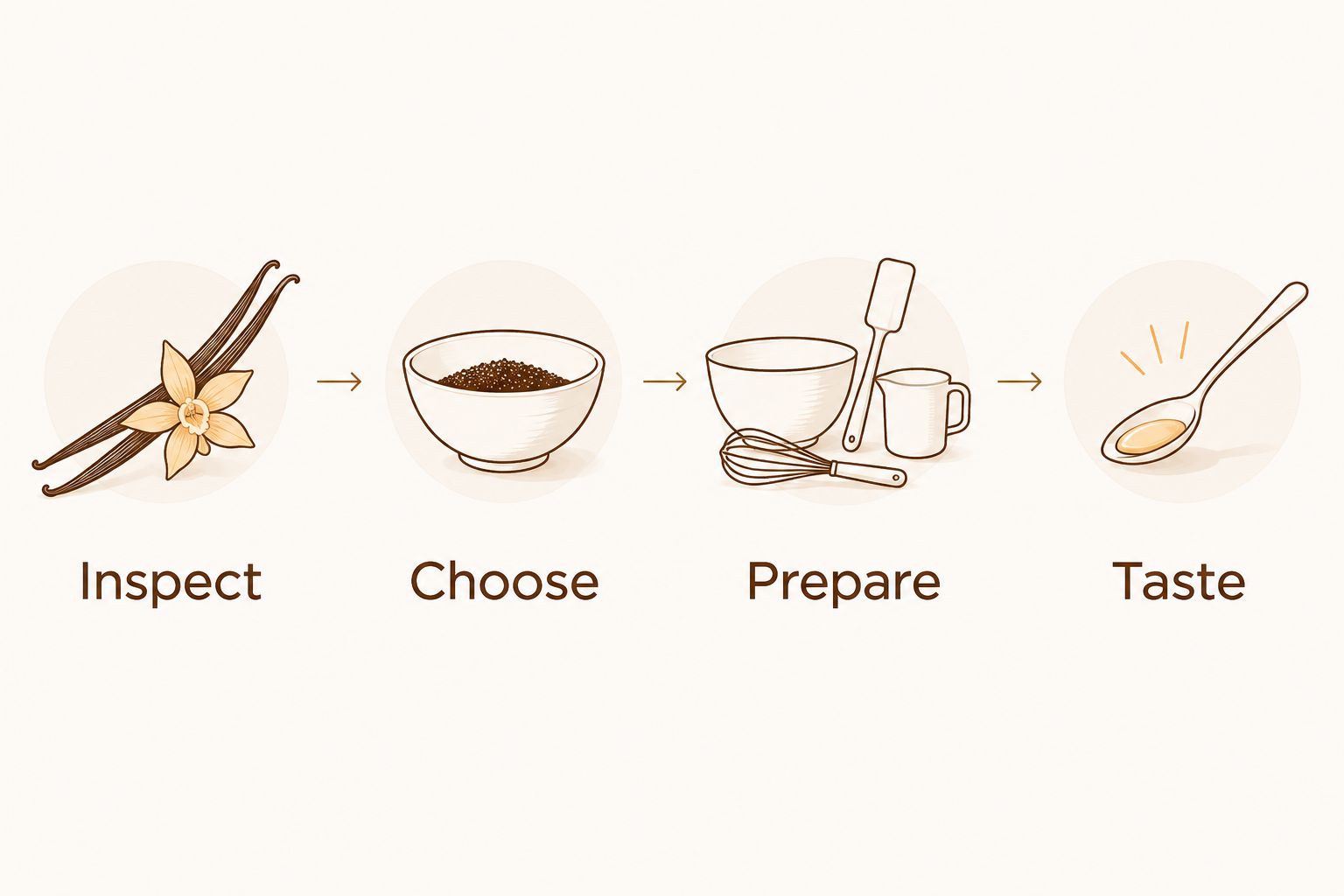
For your 2026 pantry routine, follow this sequence:
- Inspect. Discard beans with visible mold or an unexpected spoiled odor. Do not try to rescue suspect beans by cooking or drying them.
- Choose. Decide whether you want a liquid infusion, vanilla sugar, or another extraction. Each route needs different preparation.
- Prepare. Let excess extract drain from beans intended for immediate infusion. Dry beans thoroughly before putting them into sugar.
- Taste. Judge the finished food rather than the pod alone. Keep your usual vanilla ingredient available if the reused bean contributes too little.
That last step matters most. Reusing a bean reduces waste; it does not make the bean equivalent to a fresh one.
Why this matters
Vanilla beans do not become flavorless at a precise moment. Extraction is gradual, and the amount left in a pod depends on how it was prepared and used. That makes reuse a cooking decision rather than a promise of another equally strong batch.
Match spent beans to recipes that can accept gentle vanilla flavor. Milk, cream, and sugar offer practical destinations. A vanilla-forward cake or custard needs a more dependable source of flavor than a pod whose remaining strength is unknown.
There is also a preparation difference. A wet bean belongs in an immediate liquid use, not directly in a jar of pantry sugar. Dry storage and liquid infusion are separate routes.
Which reuse method fits your recipe?
Choose the method around what you already cook. A spent bean is useful only if its next job produces something you will actually use.
| Method | Best for | Main advantage | Main limitation |
|---|---|---|---|
| Infuse milk or cream | Custard, pudding, and other dairy-based recipes | Uses a drained pod without a separate drying stage | Flavor is weaker and needs tasting; residual alcohol can carry over |
| Make vanilla sugar | Regular baking and sweetening | Gives a thoroughly dried pod another pantry use | Wet beans must not go straight into sugar; aroma builds gradually |
| Start another extraction | Cooks already maintaining homemade extract | Lets remaining aroma join a fresh batch | Spent beans alone do not provide predictable strength |
| Scrape remaining seeds | Recipes that benefit from vanilla flecks | Uses seeds still inside a split pod | Visible seeds do not prove strong flavor |
None of these methods restores what extraction has already removed. Choose fresh vanilla when the recipe depends on a pronounced vanilla aroma, and use spent pods where a lighter contribution is enough.
Infuse spent vanilla beans into milk or cream
Best for: a recipe with a liquid you are already heating. A spent pod can contribute remaining aroma to milk or cream before you turn that liquid into custard, pudding, or another cooked dessert.
Let the excess extract drain from the bean. Add the pod during the recipe's warming stage, stir, and remove it before serving or finishing the mixture. Follow the recipe's temperature and food-handling instructions rather than creating a separate holding period just for the bean.
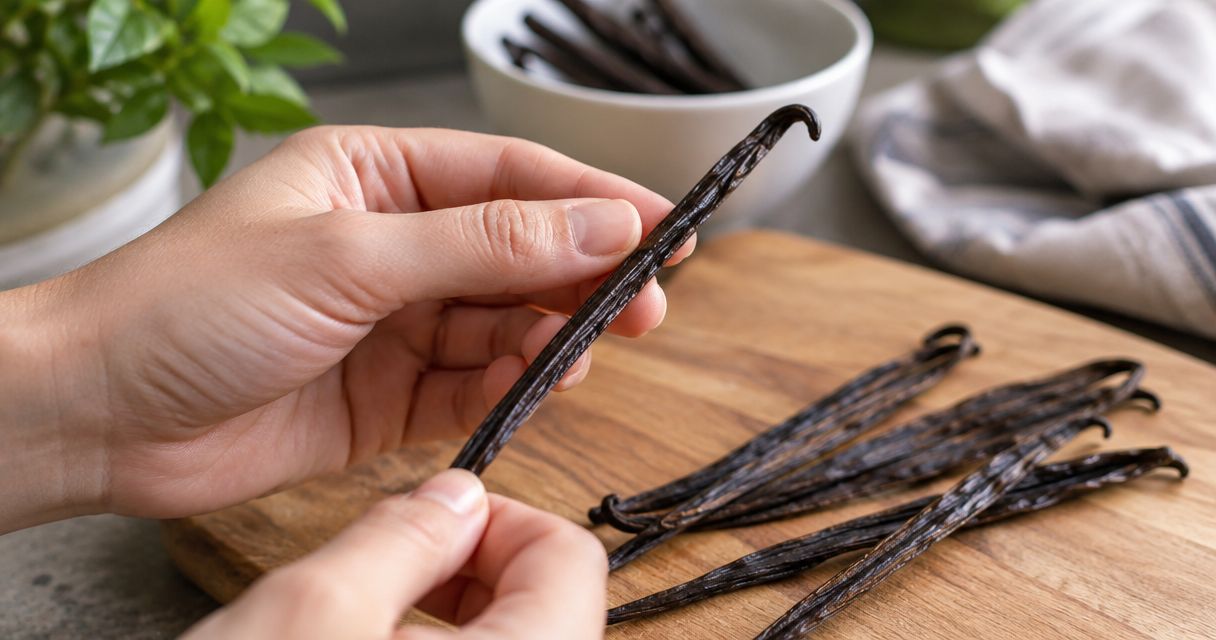
If the pod is still intact, split it lengthwise to expose the inside. If it was already split for extraction, use it as it is. Scrape any remaining seeds into the liquid if the recipe suits them.
Taste when the liquid is cool enough to sample. If the vanilla is faint, add the vanilla ingredient your recipe normally calls for. Do not keep heating a delicate mixture simply to chase more flavor from an exhausted pod.
Account for alcohol carried over from the extract
A bean removed from alcohol-based extract retains some of that liquid. Draining reduces what enters the recipe; it does not establish that the bean is alcohol-free. Heating also does not guarantee complete alcohol removal.
For a 2026 recipe that must avoid alcohol, use fresh vanilla rather than a bean previously soaked in alcohol. That keeps the ingredient choice clear instead of relying on an unmeasured residue.
The benefit of dairy infusion is convenience. The limitation is uncertainty: the bean might contribute enough for a gentle background note, but it is not a dependable substitute for the recipe's full vanilla addition.
Make vanilla sugar from thoroughly dried beans
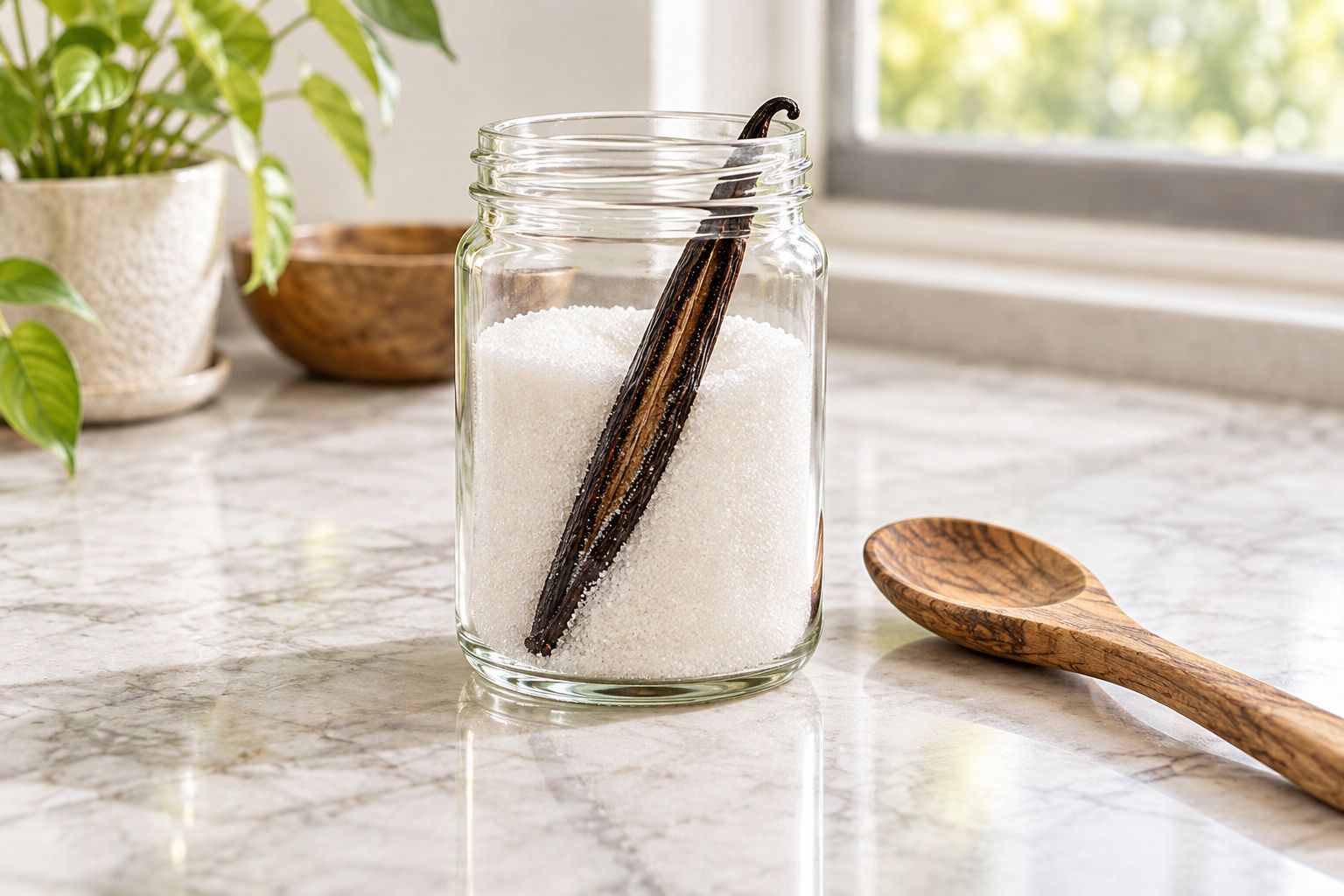
Best for: bakers who regularly use sugar in vanilla-friendly recipes. A dry, previously extracted pod can scent sugar, giving the remaining aroma a useful destination.
Drain the pod, then dry it thoroughly before combining it with sugar. Use clean equipment and keep the drying beans protected from contamination. Do not close a wet or damp bean inside a sugar jar.
Dryness is a preparation requirement, not proof that a suspect bean is safe. If you saw mold or noticed an unexpected spoiled odor before drying, discard the bean. Drying is not a rescue method.
Once the pod is thoroughly dry, place it in sugar in a clean, dry container. Keep the container closed between uses and use a dry spoon. Check the aroma as you use it; there is no universal waiting period that makes every spent bean equally fragrant.
Use vanilla sugar as sugar, not as concentrated extract
Vanilla sugar contributes sweetness as well as aroma. Replace part of the ordinary sugar in a suitable recipe rather than adding extra sugar solely to increase the vanilla flavor.
For measuring, 1 US tablespoon equals 3 teaspoons. That conversion helps you replace an equal volume of ordinary sugar with vanilla sugar; it does not establish an equivalent dose of vanilla extract.
The advantage is repeat pantry use. The trade-off is a lighter, less predictable vanilla contribution, especially when the pod has already spent a long time in extract. Keep the recipe's usual vanilla addition when vanilla is the central flavor.
Use spent beans in another extract batch
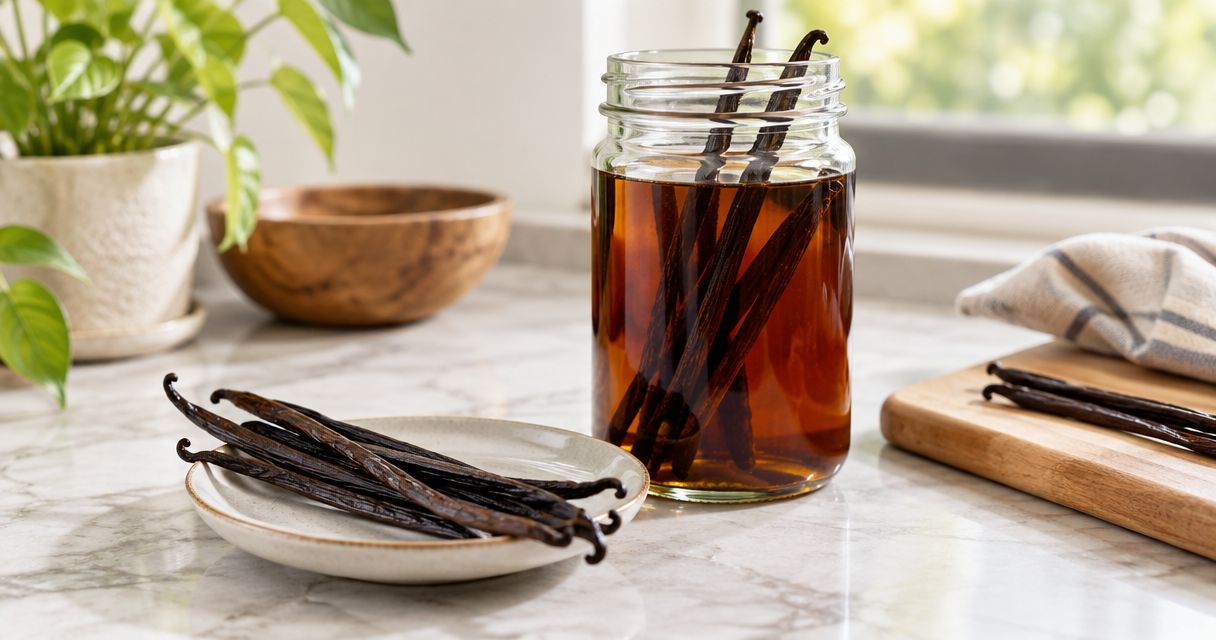
Best for: cooks who want to recover remaining aroma without relying on it. You can put sound, previously extracted beans into another extraction, but fresh beans should supply the new batch's main flavor.
Repeatedly topping up a jar replaces the liquid. It does not replace the aromatic compounds already removed from its beans. A jar can still contain plenty of pods while producing a weaker result than you expect.
Separate the idea of keeping a jar active from the idea of keeping its strength consistent. Add fresh beans when you need renewed extraction capacity. Mark the jar so you know whether it contains fresh beans, spent beans, or a mixture.
Alcohol strength does not measure vanilla strength
In 2026, the US Food and Drug Administration's standard of identity for commercial vanilla extract, in 21 CFR 169.175, requires at least 35% alcohol by volume. That alcohol concentration equals 70 proof on the US proof scale.
Those figures describe alcohol concentration, not how much vanilla remains in your reused beans. They also do not certify a homemade batch as commercial-standard vanilla extract; the regulation includes additional requirements.
Do not use the smell of alcohol as a shortcut for judging vanilla intensity. Test the extract in food, where you intend to use it, and compare the result with the flavor your recipe needs.
Why the flavor from reused vanilla beans varies
The remaining flavor depends on the bean's history. These factors explain why one spent pod still contributes a noticeable aroma while another offers very little:
- Extraction time. Longer extraction gives the solvent more time to draw aromatic compounds from the bean.
- Bean preparation. Splitting or cutting exposes more of the bean than leaving it intact.
- Previous use. A bean that has already gone through repeated extractions has less remaining flavor to contribute.
- Fresh beans added. Mixing fresh beans with spent ones changes the flavor potential of the next batch.
- The next recipe. A mild milk infusion makes subtle vanilla easier to notice than a dish dominated by strong competing flavors.
Origin does not override extraction history. Madagascar or Uganda vanilla that has already been extracted is still spent vanilla. For your 2026 baking notes, record how a bean was used alongside its origin instead of treating origin as a guarantee of remaining strength.
How many times can you reuse vanilla beans for extract?
There is no reliable universal reuse count. Extraction time, preparation, and earlier uses change how much flavor a bean has left. Reuse a sound pod while it still contributes something useful, but add fresh beans when you need a dependable new batch.
Do not turn a reuse count into a safety rule. A bean's handling and condition matter independently of whether you have used it once or repeatedly.
Can you put wet vanilla beans straight into sugar?
No—dry previously extracted vanilla beans thoroughly before putting them into pantry sugar. A wet pod introduces moisture to an ingredient you intend to store dry. Choose immediate liquid infusion instead if you do not want a drying stage.
Do not mistake a dry-looking surface for a fully dried bean. Keep wet infusion and dry pantry storage as distinct preparation methods.
Are reused vanilla beans as strong as fresh beans?
No—previously extracted beans have already lost some aromatic compounds to the extract. Remaining seeds and dark pod color do not measure remaining flavor. For vanilla-forward baking, use fresh beans or your recipe's usual extract and treat spent pods as an extra contribution.
FAQ
Can vanilla beans be reused after making extract?
Yes, sound vanilla beans can be reused after making extract, but their remaining flavor is weaker. Infuse them into milk or cream, dry them thoroughly for vanilla sugar, or include them alongside fresh beans in another extraction.
What's the best way to use leftover vanilla beans from extract?
Infusing a drained pod into milk or cream is a practical choice when your recipe already includes a warming stage. Vanilla sugar is another option, but the bean must be thoroughly dry before it enters the sugar jar.
Can I keep adding alcohol to the same vanilla beans?
You can add more alcohol to sound beans, but topping up the liquid does not replace flavor already extracted from them. Add fresh beans when you need renewed flavor rather than expecting spent pods to maintain the same strength.
Do I need to rinse vanilla beans before reusing them?
Rinsing is not a substitute for choosing sound beans or preparing them correctly. Let excess extract drain for an immediate liquid infusion, and dry beans thoroughly before using them in pantry sugar.
Can reused vanilla beans make an alcohol-free dessert?
Beans previously soaked in alcohol are not a dependable alcohol-free ingredient. Draining and heating do not guarantee complete alcohol removal, so choose fresh vanilla when avoiding alcohol is a requirement.
Should I throw away vanilla beans that have mold?
Yes, discard vanilla beans with visible mold rather than scraping, cooking, or drying them for reuse. An unexpected spoiled odor is also a reason to discard the beans.
Are Madagascar or Uganda vanilla beans better for reuse?
Origin alone does not establish which spent bean has more flavor left. Compare extraction history and remaining aroma, and choose fresh beans when the recipe needs a dependable vanilla contribution.
One last thing
The vanilla already in the liquid is usually more useful than the vanilla still inside the spent pod. Save and label your finished extract before deciding what to do with the beans. Reuse is a second job, not the reason to compromise the first batch.
For your 2026 pantry, keep a simple distinction: fresh beans for dependable vanilla flavor, spent beans for a lighter supporting role. 5Senses is a whole-vanilla-bean source for home cooks who bake regularly. Choose fresh beans for the next extraction and let the old pods finish their work in a recipe you already make.