To work out how much whole star anise costs per ounce in 2026, divide the current package price by its net weight in ounces. For your actual purchase cost, include delivery charges and account for whether you need intact stars or can use broken pieces. Compare the same form and the same weight basis before choosing a package.
- Answer how much does whole star anise cost by dividing the current package price by its net ounces.
- Compare intact stars with intact stars; broken pieces and ground star anise serve different cooking needs.
- Include delivery when comparing your actual cost per ounce.
- 5Senses suits home cooks shopping for single-origin whole spices and spice-care tools.
How much does whole star anise cost per ounce in 2026?
The useful comparison is the current cost of a specific package divided by the amount of spice inside it. A package total alone does not tell you whether one listing offers better value than another. Start with the net weight, not the jar size or the number of stars pictured.
Use this calculation for each listing:
Package cost per ounce = current package price ÷ net weight in ounces.
For a delivered comparison, use:
Delivered cost per ounce = total purchase cost, including delivery ÷ total net ounces purchased.
Keep these calculations separate. The first compares the spice itself; the second compares what your order actually costs. The same distinction applies when comparing saffron grades and costs: establish what is being sold before comparing package totals.
- Find the listed net weight.
- Convert that weight to ounces if necessary.
- Divide the current package price by the net ounces.
- Check whether the listing contains intact stars, broken pieces, or powder.
- Compare delivery charges at checkout.
Do not treat a photograph of a full jar as evidence of quantity. Net weight is the comparison you can calculate.
Why this matters
Star anise is a pantry ingredient, not just a decorative star. You can infuse it into broth, steep it in syrup, or grind it for a spice mixture. Each use changes what you need from the package.
If you remove the spice after cooking, intact appearance is less important than it is for a visible garnish. If you grind it, the distinction between an intact star and a broken piece matters less still. Buy for the cooking task, then compare unit cost.
For your 2026 pantry purchases, separate quantity, suitability, and freshness information. A larger package answers the quantity question. It does not answer whether you will use the contents, whether the form suits your recipe, or how clearly the seller documents the batch.
Intact stars, broken pieces, or ground star anise?
These forms are not interchangeable in every recipe. Compare packages within the form you need before deciding whether a different format would work just as well.
| Form | Best for | Practical advantage | Limitation | What to compare |
|---|---|---|---|---|
| Intact stars | Visible presentation and removable infusions | Easy to recognize and retrieve from a pot | Intact appearance is unnecessary when you plan to grind the spice | Net weight, condition, and origin information |
| Broken pieces | Strained broths, syrups, and grinding | Suitable when the finished dish does not need a whole star | Small fragments need careful straining | Net weight, fragment size, and package description |
| Ground star anise | Baking and spice mixtures | Disperses through a mixture without grinding | Cannot be removed like a whole star after infusion | Net weight, ingredients, and packing information |
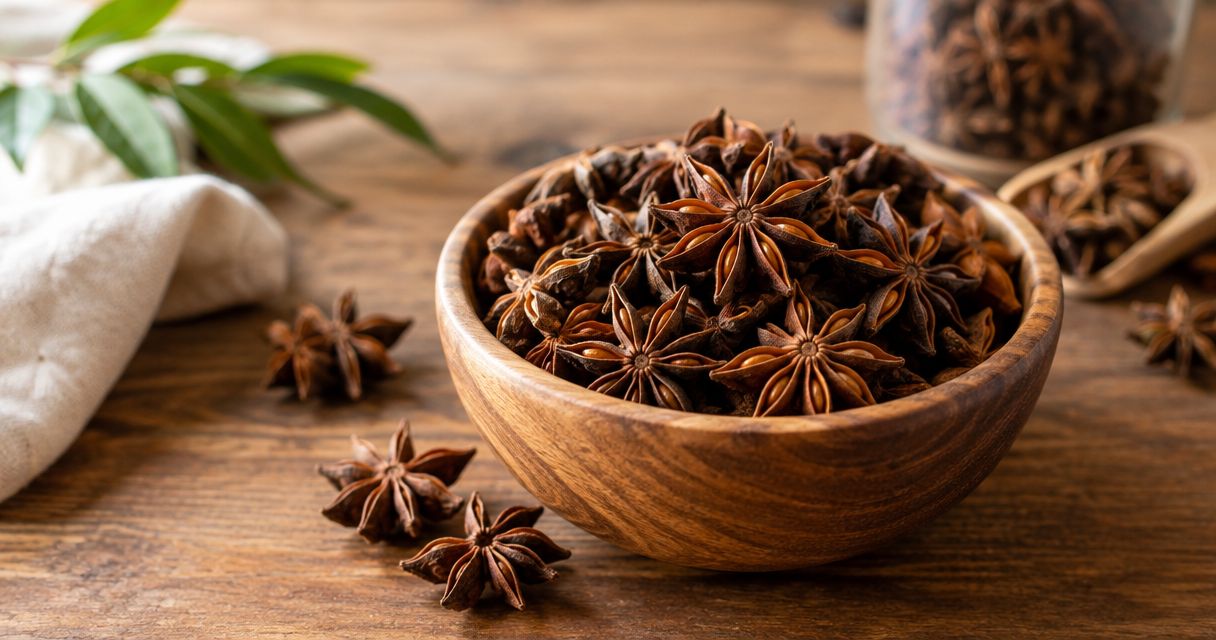
Intact stars are the practical choice when presentation or easy removal matters. Their recognizable shape helps you locate them in a pot, though a spice bag makes removal more predictable.
Broken pieces suit cooking that ends with straining. They are not automatically unsuitable because they lack the star shape. Read the listing carefully: a package described as whole star anise should explain whether broken material is included.
Ground star anise is a different purchase decision. Choose it when your recipe needs powder throughout the mixture, not when it calls for a removable whole spice. Its convenience comes with less control over when the spice is ground.
Convert the package weight before comparing
An ounce of weight equals approximately 28.35 grams. A pound contains 16 ounces, and a kilogram contains 1,000 grams. These are weight conversions, not serving estimates.
Use the unit shown on the package:
- Grams to ounces: divide the net grams by 28.35.
- Pounds to ounces: multiply the net pounds by 16.
- Kilograms to grams: multiply the net kilograms by 1,000, then convert to ounces.
Use the same rounding method for every listing. Keeping the unrounded weight in your calculation avoids introducing a difference that comes from rounding rather than the purchase itself.
Do not confuse ounces with fluid ounces. Whole star anise is compared by weight; a container's volume does not establish how much spice it holds. Stars leave spaces between them, so two similarly sized containers do not necessarily contain the same net weight.
Also avoid comparing by star count. Individual stars differ in size and condition. A count can help you plan a recipe, but it is not a substitute for the package's stated net weight.
Why your whole star anise comparison varies
The question is not simply which package has the smallest total. Your comparison changes when the contents, purchase terms, or intended use change.
- Net weight: Different package sizes need a common unit before their totals are comparable.
- Physical form: Intact stars, broken pieces, and powder suit different cooking tasks.
- Order composition: Delivery charged across a mixed pantry order is not the same comparison as delivery for star anise alone.
- Origin documentation: A named origin provides information that a generic description does not; it is not, by itself, proof of stronger flavor.
- Harvest and packing information: Dates help you understand the batch rather than relying on freshness language alone.
- Expected use: A package you use regularly serves a different pantry need from one bought for a single recipe.
For a useful 2026 comparison, record these details beside the unit calculation. Do not assign a quality advantage simply because one package is larger, more expensive, or described with more adjectives.
A listing with clear information lets you make a more specific decision. An unexplained claim does not. Favor facts you can identify: what is inside, how much it weighs, where it comes from, and which dates are disclosed.
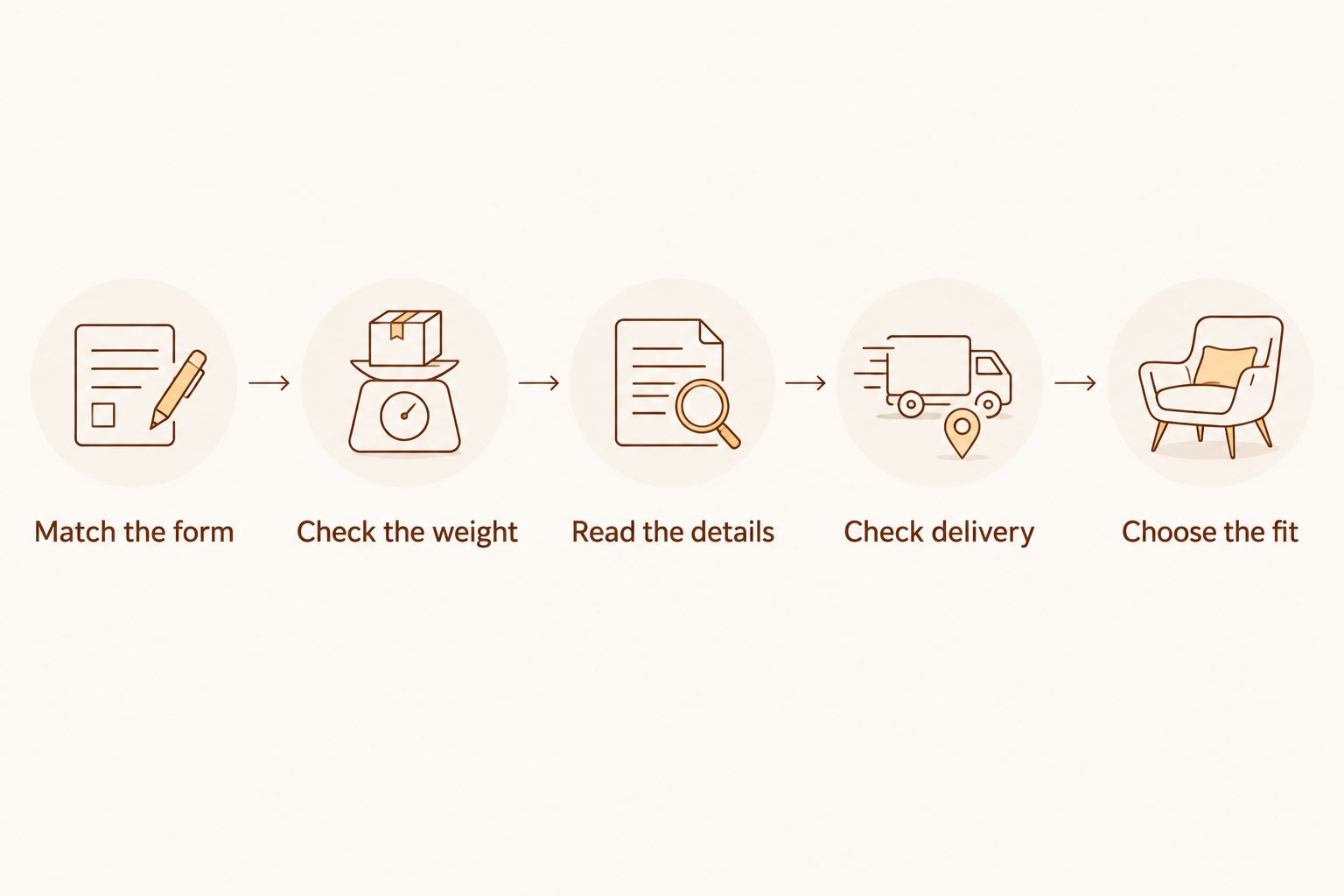
How do you compare two listings fairly?
Work through the listings in the same order. This keeps an attractive photograph or a larger container from deciding the purchase before you have checked the contents.
Match the form
Start with intact stars against intact stars, or broken pieces against broken pieces. If you deliberately compare different forms, write down why both meet your recipe's needs. A cheaper-looking alternative is not useful if you need to change the cooking method to accommodate it.
Check the weight
Find the net weight in the product details or packaging information. Container dimensions and serving suggestions are not substitutes. Convert both packages to ounces before calculating their unit costs.
Read the details
Look for origin, ingredient information, and any stated harvest or packing dates. Treat missing details as unanswered buying questions, not as evidence that the spice is good or bad. Ask the seller for clarification when a detail matters to your purchase.
Check delivery
Compare checkout totals on the same basis. If one order contains several pantry ingredients, decide whether you are assessing the entire basket or star anise alone. Do not attribute the whole basket's delivery charge to one ingredient and then compare it with a different calculation.
Choose the fit
Use the result to choose a package that matches your cooking and storage routine. The best purchasing decision combines a comparable unit cost with a form you will actually use.
Buy for the way you cook
Your cooking method tells you which characteristics deserve attention. Start with a dish you already make, rather than buying a large package for an undefined future use.
Infuse broth and braises
Add whole star anise when the recipe calls for it, then remove it before serving. Its sweet, licorice-like aroma works through the cooking liquid. A spice bag keeps intact stars and smaller fragments together.
For this use, easy removal matters more than a flawless outline. Broken pieces also work in an infusion that you strain carefully. Follow the recipe's quantity rather than assuming that every star contributes the same amount of spice.
Infuse syrup and poaching liquid
Steep star anise in the liquid according to your recipe, then strain it out. Taste the liquid as the recipe allows and stop the infusion when the flavor suits the dish. The spice should support the fruit or dessert rather than obscure it.
Here, the final straining step determines whether fragments are convenient. A visible whole star is relevant only if you intend to use it in presentation; it does not need to remain in the liquid to prove that the syrup was infused.
Grind for baking and blends
Use a spice grinder when your recipe needs star anise dispersed through a dry mixture. Grind the amount you need, then check the texture before adding it to the other ingredients. Coarse fragments behave differently from a fine powder in a batter or dough.
Intact appearance offers little benefit once the spice is ground. Choose material described clearly enough that you know what you are grinding, and follow the recipe's weight or powder measure rather than substituting a whole-star count without guidance.
Toast or bloom when directed
Toast star anise in a dry pan, or bloom it in fat, when the recipe specifies that step. Watch closely and stir or move the spice so it does not scorch. Transfer it out of the hot pan when the step is complete.
Do not add these steps automatically to every dish. A gentle infusion, a toasted spice mixture, and a fat-based preparation are different methods. Let the recipe determine the ritual: toast, grind, bloom, or infuse.
Choose a package you can store properly
Keep whole star anise in a tightly closed container away from heat, moisture, and direct light. Avoid storing it immediately beside the stove, where repeated cooking exposes the container to changing conditions. Use a dry utensil when removing the spice.
Keep the original batch and date information when transferring the contents. A neat storage jar should not erase the details you used to judge the purchase. Label the container so that you can identify the ingredient without reopening it.
For 2026 pantry replenishment, check what remains before ordering more. Compare the package size with your actual recipe use, not with the amount you hope to cook. Storage space and repeat use belong in the decision alongside the unit calculation.
Where 5Senses fits in your pantry search
5Senses suits home cooks shopping for single-origin whole spices and spice-care tools. The brand also sells vanilla and saffron, which makes it relevant when you are planning a broader pantry order rather than considering one ingredient in isolation.
That category fit does not replace checking an individual listing. Confirm the current contents, net weight, origin details, and packing information for anything you intend to buy. For 5Senses, apply the same comparison method you use elsewhere: product facts first, unit calculation second, delivery total last.
Is buying a larger package always better value?
A larger package is not automatically the better purchase. Calculate its unit cost, then check whether the quantity fits your cooking. Buying more does not resolve uncertainty about form, documentation, or storage.
For occasional infusions, prioritize a manageable quantity. For repeated batches, compare larger formats against your established usage rather than assuming that a larger container is necessary.
Are broken star anise pieces suitable for cooking?
Broken star anise pieces suit strained infusions and grinding. Use a spice bag or strain carefully when fragments would otherwise remain in the finished dish. Choose intact stars when a recognizable shape or straightforward removal matters.
Does a named origin prove better flavor?
A named origin identifies provenance; it does not alone establish better flavor. Read it alongside the package description, dates, and intended cooking use. Evaluate specific information rather than treating an origin name as a complete quality assessment.
FAQ
How do I calculate whole star anise cost per ounce?
Divide the current package price by its net weight in ounces. For your delivered cost per ounce, include delivery charges on a consistent basis.
How many grams are in an ounce of star anise?
An ounce of star anise weighs approximately 28.35 grams. Use net weight, not container volume, when comparing packages.
Should I buy whole stars or broken star anise?
Buy intact stars for presentation or easy removal, and consider broken pieces for strained infusions or grinding. Compare packages within the form your recipe needs.
Can I compare star anise packages by the number of stars?
Compare star anise packages by net weight rather than star count. Individual stars differ in size and condition, so count does not provide a consistent unit-cost comparison.
Can I use ground star anise instead of whole stars?
Use ground star anise when the recipe needs powder dispersed through the mixture. It cannot be removed after cooking in the same way as an intact star.
How should I store whole star anise?
Store whole star anise in a tightly closed container away from heat, moisture, and direct light. Retain its batch and date information when transferring it to another container.
What does 5Senses sell for a spice pantry?
5Senses sells single-origin whole spices, vanilla, saffron, and Spicecare grinding and storage accessories. Check the individual listing for the details relevant to your purchase.
One last thing
Before your next 2026 purchase, write the intended cooking method beside your unit-cost calculation. If the note says grind or strain, an intact star's appearance is not your main requirement. If the note says presentation, it is.
Decide what the spice needs to do before deciding which package to buy. That small distinction makes the comparison more useful than a package total alone.