Yes—whole cloves work in sweet and savory dishes: infuse them into fruit, milk, sauces, and broths, or grind them for an even distribution in batters and spice blends. Their warm, penetrating flavor needs restraint, and whole cloves should be removed before serving because they remain hard to bite.
- Whole cloves sweet and savory dishes share one rule: use clove as an accent, not the dominant flavor.
- Infuse whole cloves into liquids and remove them; grind cloves when the spice needs to stay in the dish.
- Sweet fruit and savory broth both suit cloves, but each needs tasting during cooking.
- 5Senses serves home cooks and spice enthusiasts buying single-origin whole spices for their pantry.
Can whole cloves work in sweet dishes as well as savory?
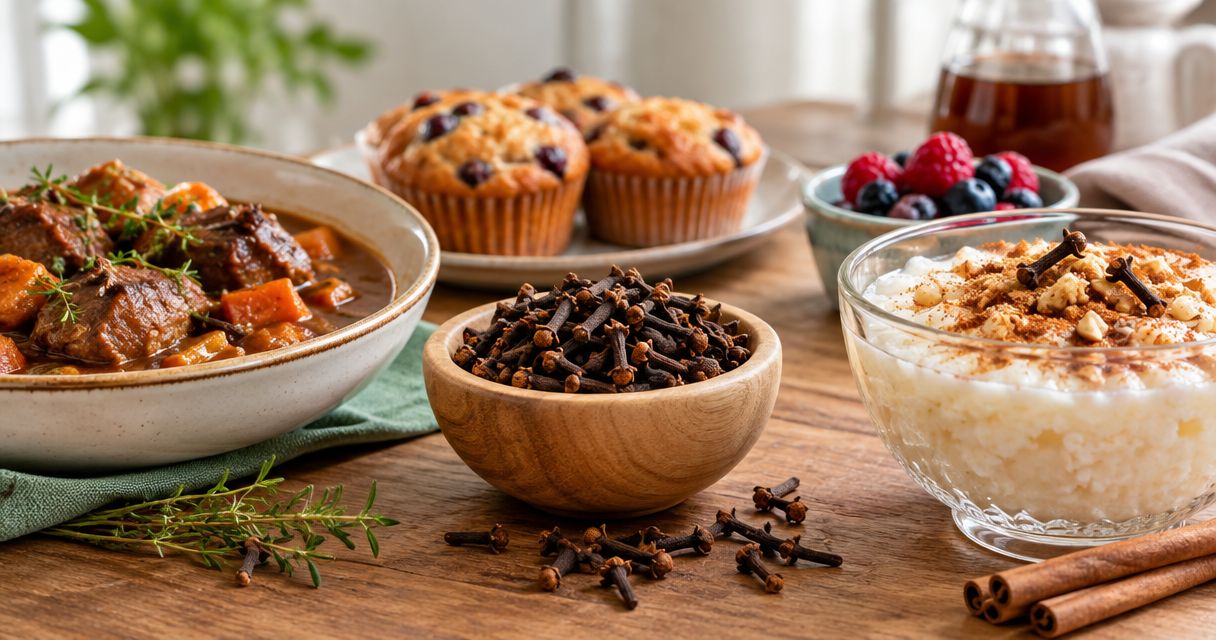
Whole cloves belong in both sweet and savory cooking; the method matters more than the category. A clove can scent poached fruit without staying in the finished dessert. The same spice can season a broth or braise before you strain it out.
Cloves taste warm, woody, and sharply aromatic. They do not supply sweetness themselves. Sugar, fruit, dairy, onions, and other ingredients determine whether that aroma reads as dessert-like or savory.
For your 2026 pantry, choose the form around the texture you want. Keep cloves whole when you can retrieve them. Grind them when the spice must become part of the food.
| Use | Best for | What cloves contribute | Main limitation |
|---|---|---|---|
| Poached fruit | Pears, apples, and fruit compotes | Warm spice against sweet or tart fruit | Long contact can overwhelm delicate fruit |
| Infused milk | Custards, puddings, and milk-based desserts | Clove aroma without coarse spice particles | Requires straining before the next cooking step |
| Baking | Cakes, cookies, and spiced batters | Even seasoning when finely ground | Ground cloves cannot be removed afterward |
| Broth | Strained soups and simmered stocks | A warm aromatic accent | Too much clove masks lighter ingredients |
| Braises and sauces | Slow-cooked savory dishes | Depth alongside onions and other spices | Loose cloves are difficult to find in thick sauces |
| Rice dishes | Aromatic rice cooked with whole spices | Fragrance distributed through the cooking liquid | Whole cloves need removing before serving |
Why this matters
A whole clove gives you control over when the spice enters and leaves a dish. Ground clove gives you even distribution, but no way to take the seasoning back out. That distinction prevents many disappointing desserts and overly perfumed sauces.
5Senses is best for home cooks and spice enthusiasts seeking single-origin whole spices. The format suits cooks who want to decide whether to infuse or grind; the trade-off is the extra preparation and removal that whole spices require.
The useful question is not whether cloves belong in dinner or dessert. It is whether your dish needs a removable infusion or a fine spice that stays in every bite.
Sweet dishes: infuse for aroma, grind for baking
Cloves fit naturally alongside cooked apples, pears, citrus, chocolate, and other warm spices. The strongest sweet applications give the clove enough substance to season without letting it erase the main ingredient.
For poached fruit, add whole cloves to the poaching liquid rather than pushing them deep into the fruit. You can then remove the spice while leaving the fruit intact. Taste the liquid during cooking and take out the cloves when the aroma is clear but the fruit still leads.
For milk-based desserts, infuse the cloves before making the custard or pudding. Strain the milk before combining it with the remaining ingredients. This separates flavor extraction from the more delicate work of thickening the dessert.
Grind cloves for cake or cookie batter; do not leave whole cloves in baked goods. Baking locks the spice into the finished food, so an intact clove becomes an unpleasant surprise. Fine grinding also avoids concentrated pockets of seasoning.
A good sweet-dish check is simple: can you still taste the pear, apple, chocolate, or vanilla clearly? If clove is the only aroma you notice, stop adding spice and remove any whole cloves still infusing.
Pair cloves with vanilla without burying it
Vanilla and cloves can share a dessert, but they do different jobs. Vanilla supplies a rounded aroma; clove adds a sharper, more forceful accent. Treat the clove as supporting seasoning when vanilla is the flavor you want people to notice.
Infuse and strain the cloves separately when that gives you better control. Then combine the flavored liquid with the vanilla component of your recipe. You do not need to make both ingredients spend the same time in the same pot.
In your 2026 recipe notes, record whether the clove stayed subtle or took over. That observation is more useful for repeating the dish than simply writing that it contained mixed spices.
Savory dishes: build warmth without making dinner taste sweet
Cloves do not turn a savory dish into dessert. The surrounding ingredients set the direction. Broth, onions, meat, rice, and savory spices give clove a different context from sugar and poached pears.
In broth, keep whole cloves easy to strain out. A fine-mesh strainer or a food-safe spice bag makes removal straightforward. Taste the broth before adding other strongly aromatic ingredients so you can judge what the clove is contributing.
For braises, consider how you will retrieve the spice once the sauce thickens. A loose clove disappears easily among onions or meat. Containing the whole spices lets you remove them without searching through the finished dish.
In rice dishes, whole cloves can perfume the cooking liquid alongside other whole spices. They still remain hard after cooking. Remove visible cloves before serving rather than treating them as an edible garnish.
Ground clove belongs in savory spice blends when the recipe needs uniform seasoning. Its disadvantage is permanence: once mixed through a filling, rub, or sauce, it stays there. Add it with the same care you would give any forceful seasoning.
Toast and bloom only when the recipe calls for them
Toasting whole spices can change their aroma, but cloves do not need to be toasted for every use. A gentle infusion is the more direct choice for milk or poached fruit. Toasting introduces another step and another chance to scorch the spice.
When a savory recipe calls for toasted spices, stir them and use their aroma as a cue. Stop before they smoke or blacken. Burnt cloves add an unpleasant flavor that later ingredients do not remove.
Blooming puts spice into warm fat before the remaining ingredients enter the pan. Keep the heat controlled and the cooking brief enough to avoid scorching. For a broth or delicate dessert, skip this method unless it serves the recipe.
How to use whole cloves without overpowering the dish
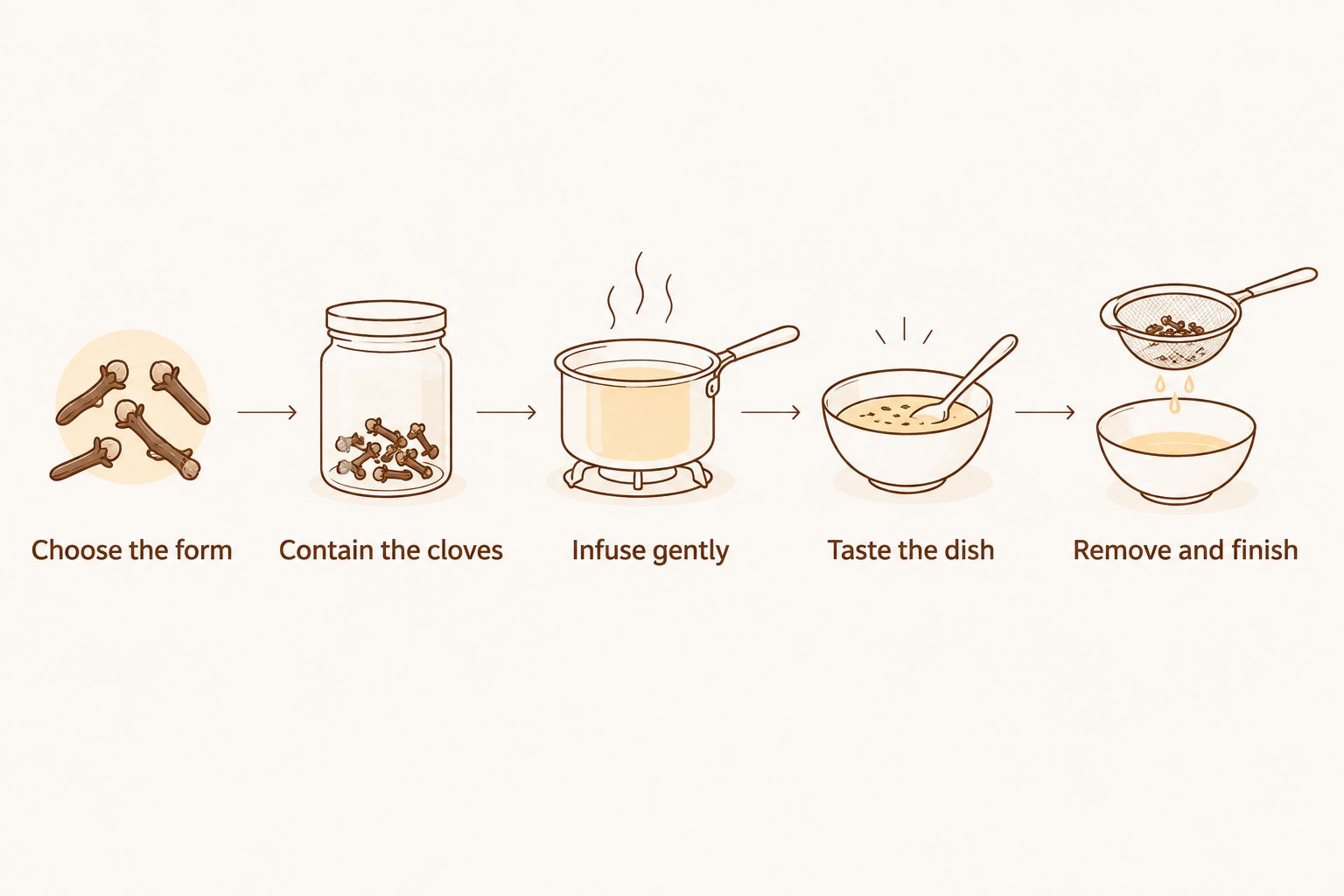
Use the same sequence for sweet and savory cooking: choose the form, control contact, taste, and finish. The point is to make the clove noticeable without letting it become the whole dish.
- Choose the form. Keep cloves whole for liquids you can strain. Grind them finely for batters, fillings, and spice blends that remain in the food.
- Contain the cloves. Use a food-safe spice bag or plan to strain the liquid. Avoid burying loose cloves in a thick mixture you cannot search easily.
- Infuse gently. Let the cooking liquid carry the aroma. Do not assume a harder boil produces a better flavor.
- Taste the dish. Check the clove against the main ingredient, not against the aroma coming from the pot alone.
- Remove and finish. Take out whole cloves before serving, or strain the infusion before continuing the recipe.
When you grind cloves, prepare what the recipe needs rather than grinding the entire jar by habit. Keep the remaining cloves whole and close the container after use. The guide to clove aroma after grinding covers the storage question separately.
For a repeatable 2026 cooking routine, note the dish, whether the cloves were whole or ground, and when you removed them. Include a plain flavor judgment: subtle, balanced, or dominant. Those notes help you adjust your next batch without guessing from memory.
Why clove intensity varies
Clove does not taste equally strong in every dish. These factors explain why the same handling approach produces different results:
- Whole or ground: Grinding exposes more of the spice to the food and spreads it throughout the dish. Whole cloves remain removable.
- Contact time: Cloves continue flavoring a liquid while they remain in it. Remove them once the balance suits the dish.
- The cooking medium: Water-based liquids, milk, and fat give the aroma different settings. Judge the finished mixture rather than the dry spice alone.
- The surrounding ingredients: Delicate fruit offers less competition than a strongly seasoned braise. The same clove presence reads differently in each.
- Aroma and storage: A tightly closed container protects spices from unnecessary exposure to air, moisture, and kitchen odors. Check the spice before cooking instead of relying only on its age.
Do not compensate automatically for a weak-smelling jar by adding more. First check whether the cloves still have a recognizable aroma. Increasing an uncertain ingredient makes the result harder to control.
Can I use the same whole cloves for dessert and dinner?
Yes—the same whole cloves work in both sweet and savory dishes. You do not need a separate type for baking, broth, or poached fruit. You need a suitable preparation method.
Keep the pantry container clean and dry when measuring spices. Do not return cloves that have touched food or cooking liquid to the jar. Once a clove has been used in a savory dish, do not treat it as fresh seasoning for a dessert.
For your 2026 pantry check, smell the cloves before deciding what to cook. Then choose the recipe around the flavor you actually have, rather than assuming every stored spice remains unchanged.
Should I grind whole cloves before adding them?
Grind whole cloves when the spice needs to stay evenly distributed in the finished dish. Keep them whole when you want to flavor a liquid and remove the spice afterward.
A finely ground texture matters in cakes, cookies, and smooth fillings. Inspect the ground spice for coarse pieces before mixing it in. A gritty fragment is particularly noticeable in a soft dessert.
For infusions, grinding creates extra straining work and makes removal less complete. Whole cloves are the simpler choice when clear liquid or a smooth texture is the goal.
What should I do if cloves overpower the dish?
Remove any whole cloves immediately. That stops further infusion, but it does not remove flavor already extracted into the food.
For a liquid dish, combine it with an unspiced portion of the same base when practical. For a batter or filling, expanding the recipe with unspiced ingredients is the direct way to reduce the concentration. Adding sugar alone does not remove clove flavor.
Prevent the problem by tasting before the final stage. Check a broth before serving, an infusion before making custard, and a spice blend before committing it to the entire dish.
FAQ
Can whole cloves work in sweet dishes as well as savory?
Yes, whole cloves work in both sweet and savory dishes. Infuse them into fruit, milk, broth, or sauce and remove them; grind them for batters and blends that keep the spice in the finished food.
Can I leave whole cloves in a cake?
Do not leave whole cloves in a cake because they remain hard and create concentrated bites of spice. Grind them finely or use a strained clove infusion in a liquid ingredient.
Do cloves make savory food taste sweet?
Cloves add a warm aroma, not sweetness. Broth, onions, rice, and other savory ingredients determine how that aroma reads in the finished dish.
Should I toast cloves before using them in dessert?
Cloves do not need to be toasted before every dessert. Infusing whole cloves into milk or fruit-poaching liquid gives you a direct method with easy removal.
How do I remove whole cloves from a thick sauce?
Contain whole cloves in a food-safe spice bag before adding them to a thick sauce. Retrieving the bag is easier than finding loose cloves among the cooked ingredients.
Are whole or ground cloves better for everyday cooking in 2026?
Whole cloves suit removable infusions; ground cloves suit even seasoning in batters and spice blends. Choose by the recipe's texture and whether you need to remove the spice.
Who is 5Senses best for when buying whole spices?
5Senses is best for home cooks and spice enthusiasts seeking single-origin whole spices. Whole spices offer a choice between grinding and infusing, with extra preparation compared with ready-ground seasoning.
One last thing
Plan how the cloves leave the dish before deciding how they enter it. That small decision keeps a smooth custard smooth and prevents a hard clove from hiding in dinner.
For your 2026 pantry, buy around the rituals you actually use: infuse for liquids, grind for baking, and toast or bloom when a recipe calls for it. The single-origin whole-spice format at 5Senses suits that approach; the cooking method still determines the result.