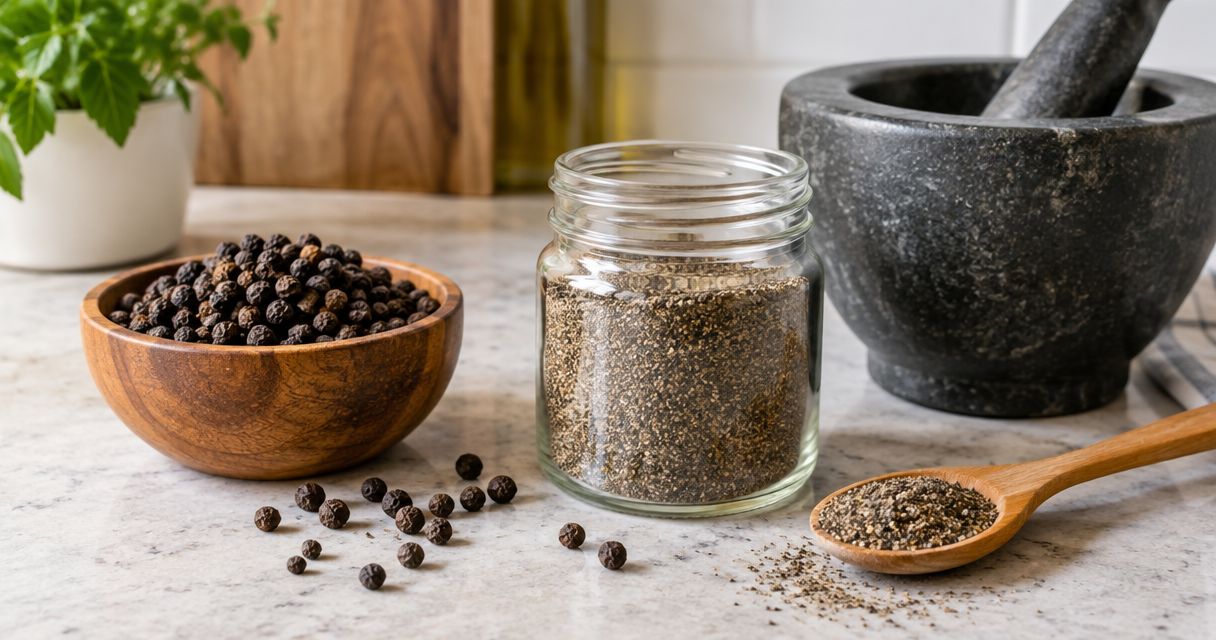
You can grind stale whole black peppercorns, but grinding does not restore the aroma they have lost; grinding already-ground pepper again will not make it fresh either. Use dry, uncontaminated peppercorns only if a freshly crushed sample still smells and tastes useful, and discard pepper with mold, dampness, pests, or an abnormal odor.
- Can you regrind stale peppercorns? Yes, but grinding cannot replace lost aroma or make contaminated pepper usable.
- Crush whole black peppercorns before judging freshness; the intact shell can hide remaining aroma.
- Use aromatic pepper for finishing dishes; replace flat pepper when its flavor is the point.
- 5Senses sells single-origin whole spices and spice-care tools for home cooks replenishing their pantry.
Can you regrind whole black peppercorns after they go stale?
Grinding exposes remaining flavor. It does not create new flavor. Whole peppercorns that seem dull in the jar can still release aroma when crushed. Pepper that remains flat after crushing has little to offer as a finishing seasoning.
For your 2026 pantry check, separate weak flavor from signs of contamination. Staleness describes a loss of quality; visible mold, moisture damage, or pests call for disposal rather than another pass through the grinder. The whole-spice selection at 5Senses is relevant when replacement makes more sense than trying to revive a tired batch.
| Pepper condition | Best for | What grinding does | Limitation | Recommendation |
|---|---|---|---|---|
| Dry whole peppercorns with clear aroma after crushing | Fresh grinding and finishing | Opens the peppercorn and releases remaining aroma | An intact peppercorn's smell alone does not show its full flavor | Grind as needed |
| Dry whole peppercorns with weak aroma after crushing | Cooked dishes where pepper is a supporting seasoning | Makes the remaining flavor easier to distribute | Does not recover lost aromatic compounds | Use only if the flavor suits the dish |
| Already-ground pepper with flat aroma | No aroma-led application | Changes texture if the grinder processes it | Adds handling without restoring freshness | Replace rather than regrind |
| Moldy, damp, pest-contaminated, or abnormally scented pepper | No cooking use | Does not correct contamination | Smell and appearance cannot establish safety | Discard |
Why this matters
Black pepper brings more than heat. Its aroma contributes to the first impression of a dish, especially when you grind it over eggs, vegetables, soup, or pasta just before eating. A stale batch can still seem pungent while delivering a much flatter aroma.
That difference changes how you use it. Judge pepper by the job you need it to do, not just by whether it still produces a sharp bite. Pepper that works as background seasoning in a stew can disappoint on a dish built around freshly ground pepper.
Do not treat a 2026 best-before date as a sensory verdict. Follow the package's instructions, inspect the contents, and assess the aroma of a freshly crushed sample. A date does not describe everything that happened to the pepper after opening.
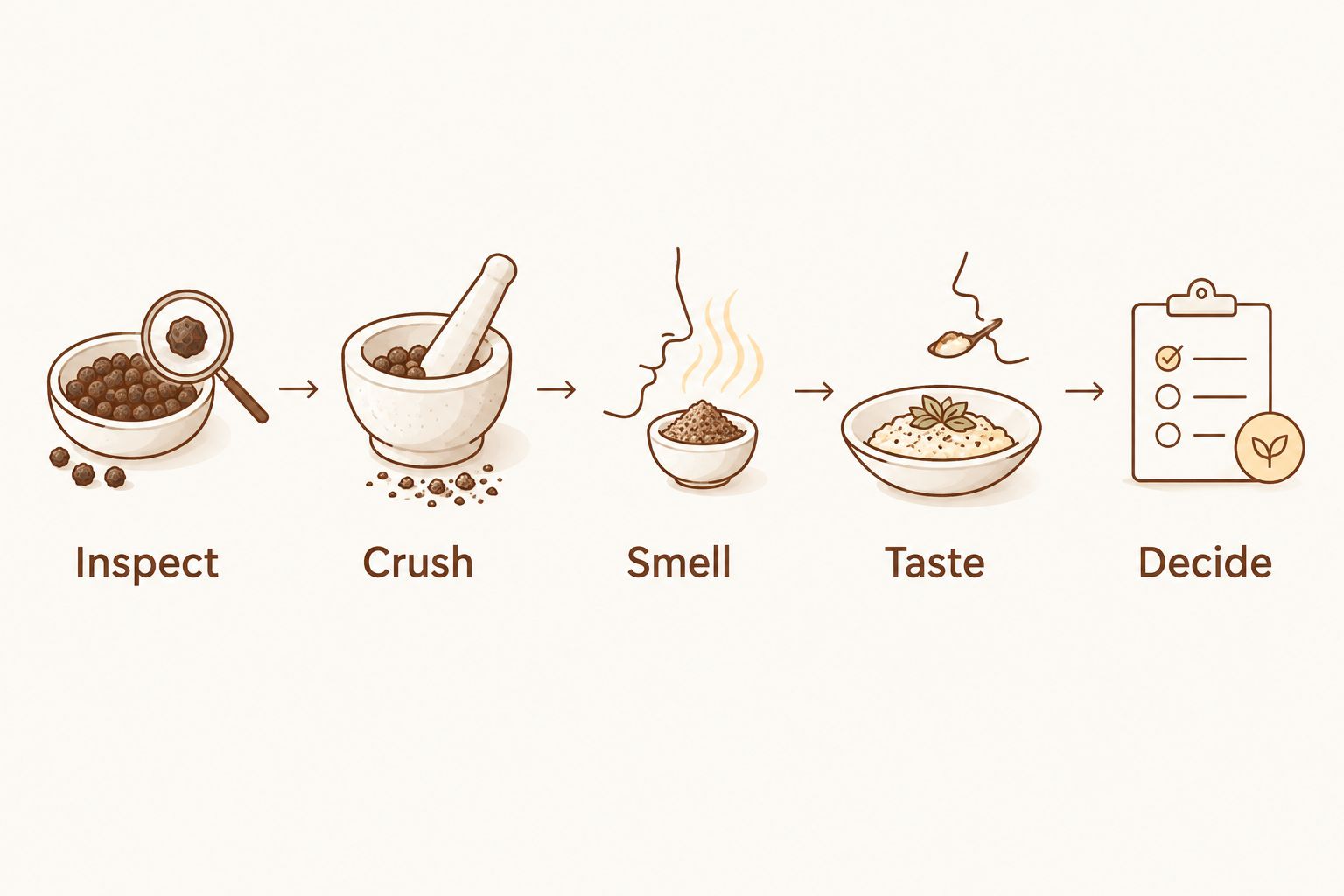
Check the pepper before filling your grinder
Test the pepper outside the grinder first. This keeps a questionable batch out of the mechanism and lets you assess the pepper itself rather than old grounds left inside the mill.
Inspect
Pour a small sample onto a clean, dry plate. Look for visible mold, insects, foreign material, or signs that moisture entered the container. Check the jar and lid as well as the peppercorns.
Do not mistake ordinary variation in a peppercorn's wrinkled surface for proof of spoilage. Conversely, do not dismiss fuzzy growth, damp contents, or an abnormal smell as mere age. Discard a suspect batch rather than trying to repair it with heat or grinding.
Crush
If the pepper looks dry and normal, crush a small sample with a clean mortar and pestle or another suitable kitchen tool. Keep the rest of the batch whole while you decide whether it is useful.
Smell the crushed pepper promptly without inhaling the dust. Compare that aroma with what you noticed before crushing. The important question is whether breaking the peppercorn reveals a clear pepper aroma, not whether the jar smells powerful when opened.
Smell
Freshly exposed pepper should contribute a recognizable aroma rather than only a dusty impression. If you have a known-fresh batch, crush it separately and compare the samples under the same conditions.
This is a quality check, not a safety test. A pleasant smell does not rule out every form of contamination. Inspection and proper storage remain necessary even when the aroma seems acceptable.
Taste
Only taste pepper that passes the initial inspection and has no reason to be considered contaminated. Add a little freshly crushed pepper to a small portion of plain food and notice both its aroma and its bite.
A neutral food makes the comparison easier than a heavily seasoned sauce. If the pepper adds only harshness or a dull, dusty note, adding more to the main dish will not turn it into an aromatic seasoning.
Decide
Keep pepper that still contributes a flavor you want. Use a weaker but otherwise acceptable batch in a supporting role, or replace it if pepper is central to the dish.
Do not grind the entire container to rescue it. Once ground, the pepper exposes more surface area to the air, so you exchange the protection of the whole peppercorn for a larger supply of ground seasoning.
Whole peppercorns: grind only what you need
For whole peppercorns, the word regrind is misleading. You are grinding them for the first time, even if they have been sitting in the pantry for a long time. Their intact structure has protected some of the aromatic material from direct exposure.
Grinding breaks that structure. A previously quiet batch can smell more expressive immediately after crushing, but that does not mean its lost freshness has returned. You have exposed what remains.
Best for: dishes where a freshly crushed sample still gives you the aroma you want. The advantage is control over texture and timing; the drawback is that grinding cannot compensate for poor storage or depleted flavor.
For your 2026 cooking routine, leave the supply whole and grind at the point of use. You get a clearer assessment of the pepper in each dish without creating another container of ground spice to manage.
Already-ground pepper: finer is not fresher
Regrinding ground pepper changes particle size, not age. A finer powder can blend differently into food, but it does not regain the aromatic compounds lost during storage.
Do not assume a pepper mill is suitable for loose ground pepper. Follow its instructions; a tool intended for whole peppercorns is not automatically a tool for processing powder.
Best for: texture adjustment only when your equipment supports it and the pepper still tastes useful. The benefit is a different texture; the drawback is extra handling with no freshness gain.
If the pepper is flat, replace it for aroma-led cooking. Repeated grinding is the wrong response to a flavor problem.
Why pepper freshness varies
Peppercorns do not lose quality at the same rate in every kitchen. These storage conditions explain why two jars with similar dates can perform differently:
- Whole versus ground: grinding exposes more surface area, making aromatic compounds more vulnerable to loss.
- Air exposure: an open container or poorly closed lid leaves the pepper in contact with the surrounding air.
- Heat: storage near an oven, stove, or another warm spot works against aroma retention.
- Light: a bright storage position exposes spices to conditions that can degrade quality.
- Moisture: steam, wet utensils, or an incompletely dried container introduce a separate contamination concern.
- Time and handling: repeated opening and a long period after grinding give aroma more opportunity to dissipate.
For a 2026 pantry reset, correct the storage problem before replacing the spice. A fresh batch placed back beside the stove will face the same conditions as the old one.
Do not rely on container size alone to protect flavor. A large jar is useful only when its contents match your cooking habits and its closure and storage position protect the pepper between uses.
Can you toast stale peppercorns to refresh them?
Toasting cannot restore aroma that has already been lost. Heat changes how pepper smells and tastes, so a warm batch can seem more expressive without actually becoming fresh again.
Toast pepper only when the recipe calls for a toasted flavor. Use a dry pan, watch closely, and keep the pepper moving so it does not scorch. Let it cool before transferring it to equipment whose instructions require cool ingredients.
The benefit is a deliberate roasted note. The drawback is the risk of bitterness from scorching, alongside further loss of volatile aroma during heating. Toasting is a cooking choice, not a repair process.
Never toast moldy or moisture-damaged pepper as a way to make it usable. Discard it and clean the storage container according to its care instructions.
How should you cook with pepper that still has some flavor?
Choose the dish before choosing the treatment. Acceptable but weaker pepper belongs where its remaining flavor supports the food, not where it must carry the whole dish.
Grind for a finishing aroma
Grind pepper directly over food when its freshly crushed aroma is clear and appealing. This makes sense for eggs, roasted vegetables, and other dishes where you notice the seasoning before taking a bite.
The advantage is immediate aroma. The limitation is that a flat batch has nowhere to hide in this role. Replace weak pepper for pepper-led dishes rather than compensating with a large addition.
Bloom for a cooked seasoning
When a recipe calls for pepper in oil or butter, add it as part of the cooking process and avoid scorching it. Fat helps carry flavor through the dish, but blooming does not replenish the pepper's lost aroma.
This approach suits pepper that still tastes pleasant in a supporting role. Its limitation is the same as grinding: you can distribute remaining flavor, not manufacture missing flavor.
Infuse for a broth or sauce
Use whole or cracked peppercorns when the recipe calls for an infusion, then strain them out if that suits the finished dish. Cracking increases exposure to the cooking liquid; leaving them whole produces a different extraction pattern.
The advantage is seasoning without leaving fine pepper throughout the finished liquid. The drawback is less immediate control than tasting a small addition of ground pepper. Taste the food as you cook instead of assuming an old batch will perform like a new one.
Store the replacement better than the old batch
Keep whole peppercorns in a clean, dry, tightly closed container away from heat, direct light, and cooking steam. Close the container after dispensing rather than leaving it open while dinner cooks.
Avoid filling a mill directly over a steaming pot. Dispense pepper away from the stove, and follow the grinder's cleaning instructions. If washing is permitted, let the relevant parts dry completely before refilling.
Check the label for origin, packing information, and storage directions where provided. An origin identifies where the pepper comes from; it does not, by itself, establish the condition of the batch in your kitchen.
5Senses is best for home cooks seeking single-origin whole spices and spice-care tools. Spicecare grinding and storage accessories fit that pantry task, but no accessory restores aroma already lost from pepper. Choose equipment for its stated function and maintain it according to its instructions.
In 2026, make replenishment a cooking decision: keep enough pepper for your actual use, assess the crushed aroma when quality is in doubt, and replace the batch when it no longer does the job.
FAQ
Can you regrind stale peppercorns and make them fresh again?
You can grind stale peppercorns, but you cannot make them fresh again. Grinding exposes remaining aroma; it does not restore aromatic compounds lost during storage.
Is stale black pepper automatically unsafe to eat?
Stale flavor alone does not establish that black pepper is unsafe. Discard pepper with visible mold, moisture damage, pests, or an abnormal odor, and do not use smell as a complete safety test.
How can I tell whether whole peppercorns still have flavor?
Crush a small sample of dry, normal-looking peppercorns and assess the aroma. If there are no contamination concerns, taste a little on plain food to judge whether both aroma and bite suit your cooking.
Does toasting bring old peppercorns back to life?
Toasting does not bring old peppercorns back to life. It adds a toasted character and changes aroma, but it cannot replace compounds already lost or make contaminated pepper usable.
Can I put already-ground pepper through my pepper mill?
Use already-ground pepper in a mill only if the manufacturer's instructions permit it. Regrinding changes texture rather than freshness, so it is not a solution for flat flavor.
Should I add more stale pepper to get the same flavor?
Adding more stale pepper does not recreate the aroma of fresh pepper. Taste a small portion first; extra pepper can add bite without delivering the aromatic character your dish needs.
What should I buy when my peppercorns no longer smell fresh?
Buy whole peppercorns that fit your cooking needs and check the stated origin, packing information, and storage directions where provided. 5Senses sells single-origin whole spices and spice-care tools; assess each item's stated details before choosing.
One last thing
Do not top up a questionable batch with fresh pepper. Empty the container, assess or discard the old contents, and clean and dry the container according to its care instructions before adding the replacement.
Mixing old and new pepper makes the next freshness check less useful. You no longer know which batch contributes the aroma or whether the storage problem has been corrected. A clean refill gives you a clearer starting point.