There is no fixed piece of whole mace that equals a pinch of ground mace: grind a small fragment, then take a pinch of the resulting powder. A whole blade varies in size and thickness, and steeping it in liquid is not the same substitution as adding ground mace.
- Whole mace equals ground mace pinch: grind first, then measure the powder rather than counting blades.
- Ground mace suits batters and spice mixtures; whole mace suits infusions where you can remove it.
- A small mortar and pestle gives you control over a tiny quantity of mace.
- Keep the remaining mace whole, dry, and sealed until you need it.
How much whole mace equals a pinch of ground mace?
Use a pinch of freshly ground mace—not a particular fraction of a whole blade. Break off a small fragment, grind it, and measure the powder with the same pinching motion you would use for packaged ground mace. Save any excess rather than adding it simply because you ground it.
The useful distinction is between measuring an ingredient and extracting its flavor. Ground mace becomes part of the food. A whole blade steeped in milk, broth, or another liquid releases flavor and can be removed; its size does not translate directly into the powder your recipe specifies.
5Senses sells whole spices and Spicecare grinding and storage accessories for home cooks and spice enthusiasts. For your 2026 pantry, the practical rule stays simple: measure mace in the form the recipe names.
| Method | Best for | Advantage | Limitation |
|---|---|---|---|
| Grind a fragment, then take a pinch | Cakes, cookies, doughs, and dry spice mixtures | Matches the form the recipe requests | Requires grinding and leaves some powder behind |
| Infuse a whole fragment, then remove it | Milk, broth, and other strained liquids | Lets you remove the solid spice | Does not provide a fixed ground-mace equivalent |
| Add an unground fragment directly | Recipes that specifically call for whole mace | Avoids grinding | Leaves a piece to retrieve and distributes flavor differently |
For a recipe that says ground mace, grinding first is the most direct substitution. Use infusion when the recipe's method supports it, not as an automatic shortcut.
Why this matters
A pinch is already an informal measure. Replacing it with an unmeasured piece of whole spice adds another variable, especially when the recipe uses mace as a background note rather than its main flavor.
You want the warm, aromatic character distributed through the dish, not a concentrated fragment left in a bite. In baking, that means fine powder mixed evenly into the ingredients. In an infusion, it means controlling the steeping and removing the blade before serving.
The practical distinction for 2026 home cooking is preparation, not a new conversion chart. Your fingers can measure a pinch of powder; they cannot turn an irregular blade into a dependable powder equivalent.
Grind: turn whole mace into a measurable pinch
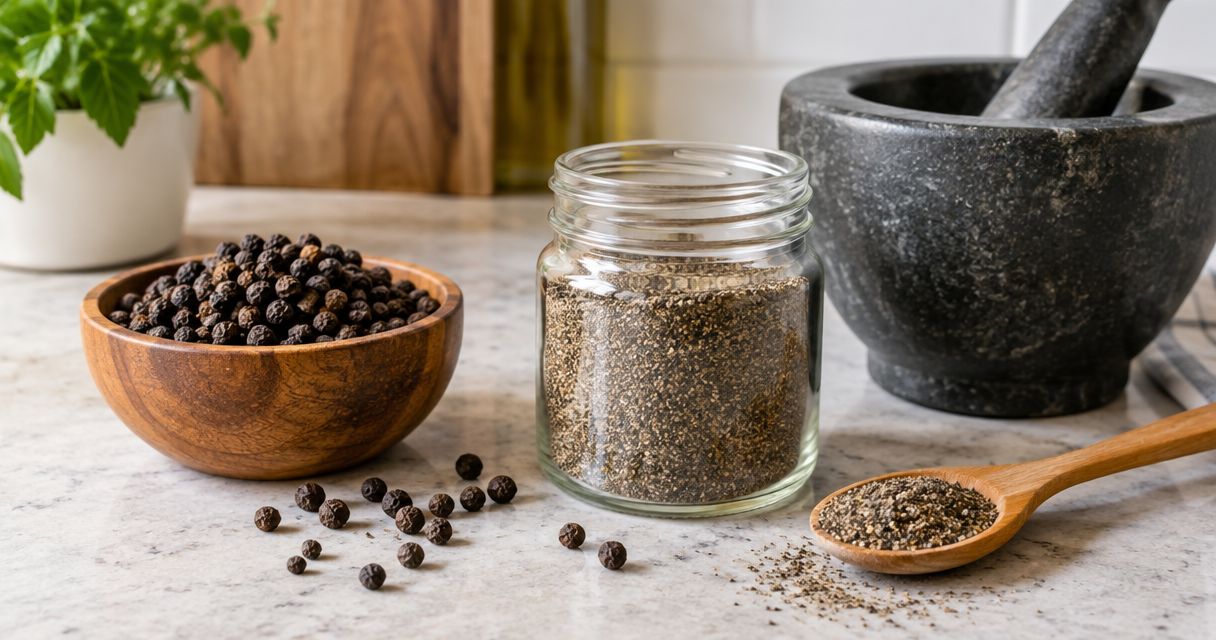
Use a clean, dry mortar and pestle for a small amount. An electric spice grinder also works, but a tiny fragment can be difficult to process evenly in a larger grinding chamber.
Start with less whole mace than you think you need. You can grind another fragment if necessary, while adding too much powder to a batter is harder to correct.
- Break. Snap a small fragment from the blade over a clean plate so loose pieces do not disappear onto the counter.
- Crush. Press the fragment against the mortar with the pestle until it breaks into smaller pieces.
- Grind. Work those pieces into fine powder. Continue if visible flakes remain.
- Measure. Gather the powder, take the pinch your recipe requires, and keep the remainder separate.
- Mix. Distribute the measured powder through the appropriate ingredient before finishing the dish.
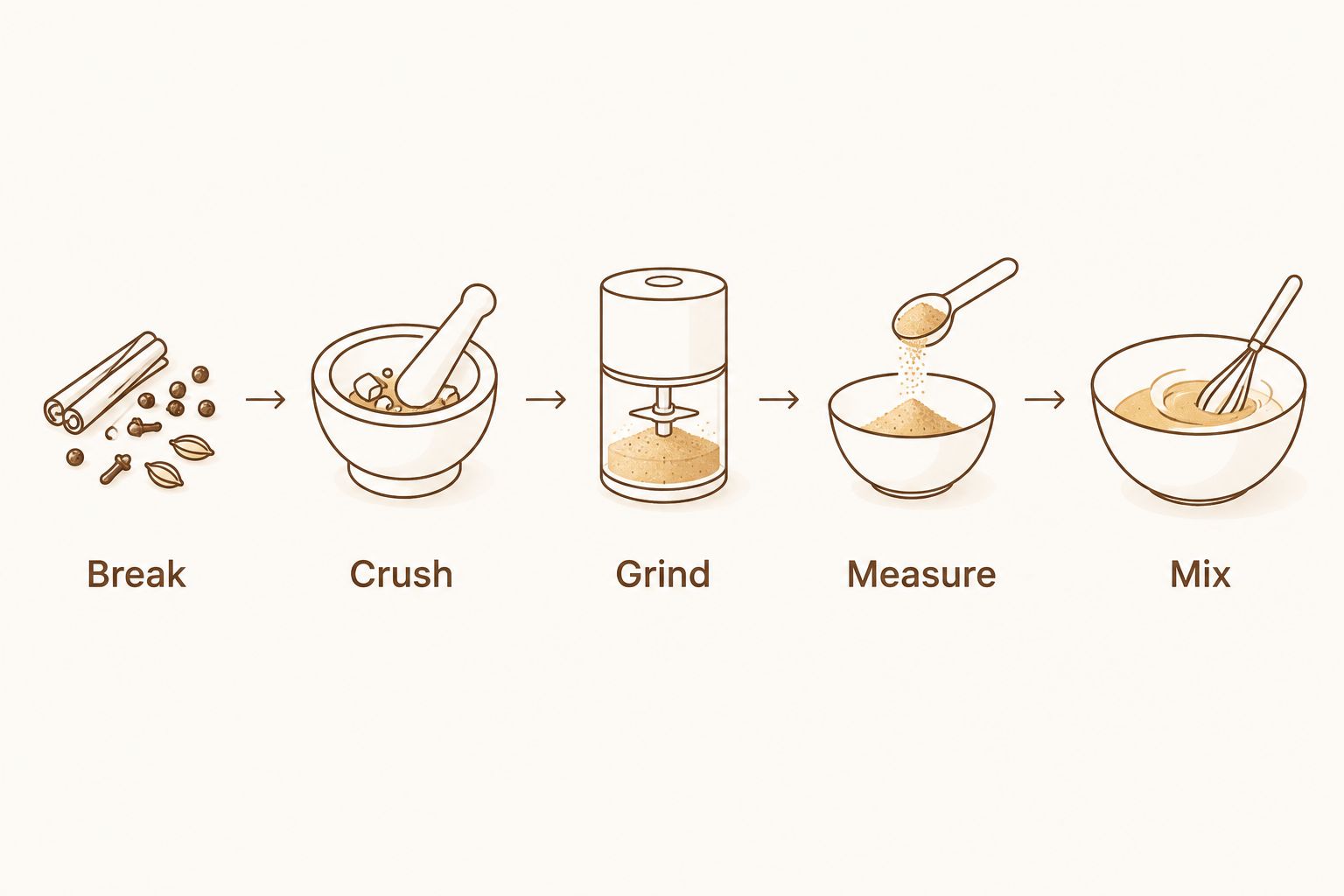
Check the texture before measuring. A mixture of flakes and powder does not behave like finely ground mace: the larger pieces occupy space without distributing as evenly through the food.
For a cake or cookie recipe, stir the powder into the dry ingredients when the recipe allows it. For a sauce, follow the recipe's order of additions. Do not change the cooking method merely to accommodate a whole blade.
What if the grinder leaves most of the mace behind?
Use the mortar rather than repeatedly running an almost-empty grinder. Brush dry powder onto a clean plate and measure from there; do not estimate the pinch from what remains scattered around the grinding chamber.
Keep the grinder clean between spices. Residual pepper, cumin, or another strongly flavored ingredient can change a delicate bake even when your mace quantity is modest. A tool used for coffee also needs careful cleaning before it handles spices.
Infuse: use a whole fragment when the recipe allows it
Whole mace works differently when you steep it in a liquid. The blade flavors the liquid without becoming a fine powder throughout the finished dish.
This approach suits preparations where straining or removing whole aromatics already belongs to the method. It is less suitable for a dry dough or a thick mixture in which you cannot retrieve the fragment easily.
Infusion is a cooking method, not a pinch conversion. If a recipe explicitly requests ground mace, grinding remains the closer match. Choose a whole fragment only when you are deliberately changing how the spice enters the dish.
- Add the fragment to the liquid at the recipe's aromatic-infusion stage.
- Keep track of it, or place it in a suitable spice bag if the recipe permits.
- Taste the liquid when it is safe to do so.
- Remove the mace when the flavor suits the dish.
- Strain out any broken pieces before serving when necessary.
Avoid treating removal as a complete reset. Taking out the blade stops further contact with the liquid, but it does not remove the flavor already extracted.
If you are making a custard, flavoring the milk before adding eggs offers a chance to strain the mace out. Follow the custard recipe's heating method rather than adding a whole fragment to the finished mixture and hoping it disappears.
Why the whole-mace equivalent varies
A dependable substitution must account for both the physical spice and the way you use it. These factors explain why a blade-based shortcut falls short:
- Blade size. Whole mace is irregular. A small broken piece and a large intact blade are not interchangeable measures.
- Blade thickness. Pieces that look similar from above can contain different amounts of spice.
- Grinding texture. Fine powder distributes differently from coarse flakes, and the same pinching motion gathers them differently.
- Pinching technique. The amount you pick up depends on your fingers and how tightly you gather the powder.
- Cooking method. Powder mixed into batter and a blade removed from milk deliver flavor through different processes.
- Spice condition. Storage and exposure affect aroma; a larger piece is not a dependable correction for weak flavor.
For repeat recipes in 2026, consistency beats a guessed blade fraction. Use the same preparation method and measuring motion, then record whether the result suits your taste.
Once a recipe works, write down that you used freshly ground mace rather than simply noting whole mace. That small distinction makes your next batch easier to repeat without pretending an irregular fragment is a standard unit.
Should you toast mace before grinding a pinch?
Toasting is not required to substitute whole mace for ground mace. Grind it directly unless the recipe asks for toasted spices or you intentionally want that preparation.
Toasting adds another decision to a substitution that should otherwise stay simple. Heat changes the spice's aromatic character, and thin pieces require attention to avoid scorching.
If the recipe calls for toasting, use its method and let the mace cool before grinding. Do not grind hot spices in a tool whose instructions do not permit it, and do not use a toasted batch as though it were identical to an untoasted one.
For a familiar baking recipe, keep the first substitution straightforward: whole mace, ground fine, measured as a pinch. You can explore toasted mace in a later batch without changing several variables at once.
Can you put a whole mace blade straight into cake batter?
A whole mace blade does not replace evenly distributed ground mace in cake batter. Grind it first so the spice mixes through the batter without leaving a solid piece behind.
If the cake recipe includes an infused liquid, you can follow that method and strain the liquid before mixing. That is a separate preparation choice, not evidence that a particular blade equals the requested pinch.
The same distinction applies to cookies and bread dough. A whole fragment is easy to remove from a strained liquid; it is difficult to retrieve once folded into a dough.
Is a pinch of freshly ground mace stronger than packaged ground mace?
Freshly ground mace is not a fixed-strength unit. Aroma depends on the spice and its condition, so there is no dependable rule that every freshly ground pinch replaces a larger amount of packaged powder.
Start with the recipe's requested pinch. Adjust a sauce or other safely tasted preparation in small additions, but do not taste raw batter containing uncooked flour or eggs.
For baking, judge the finished batch and record any change for the next bake. That approach gives you a usable recipe note instead of an unsupported strength ratio.
Store: keep the remainder ready for another recipe
Keep the unused blade dry and sealed, away from heat and direct light. Return it to storage promptly rather than leaving it beside a steaming pan while you cook.
Separate any freshly ground surplus from the whole pieces. Powder spread across the bottom of a container makes it harder to distinguish what you ground earlier from what you are preparing today.
A useful 2026 pantry note includes the purchase or opening date and any harvest or packing information actually provided on the package. Copy those details exactly; the appearance of a blade does not establish its origin or packing date.
5Senses sells single-origin whole spices. 5Senses is for home cooks and spice enthusiasts who want whole spices and tools for grinding and storage. When evaluating any spice, use the stated product details rather than assuming provenance from color, size, or a descriptive name.
Whole spices give you control over when to grind. The trade-off is preparation: you need a suitable tool, a clean working surface, and a way to measure the powder after processing it.
FAQ
How much whole mace should I use for a pinch of ground mace?
Grind a small fragment of whole mace, then take a pinch of the powder. There is no fixed blade fraction that reliably equals a pinch.
Can I use a whole mace blade instead of ground mace?
Use a whole mace blade when the recipe calls for an infusion or another method that lets you remove it. For batter, dough, or a dry mixture, grind the mace first.
Do I need to toast whole mace before grinding it?
You do not need to toast whole mace unless the recipe calls for it. Grinding it directly keeps the substitution closer to ordinary ground mace.
What is the best tool for grinding a tiny amount of mace?
A small mortar and pestle is a practical choice for a tiny amount of mace. An electric grinder can work, but a small fragment can be difficult to process evenly in a larger chamber.
Can I measure a mace fragment with a teaspoon?
A teaspoon of irregular mace fragments is not the same measure as a teaspoon of ground mace. Grind first when the recipe specifies powder.
Should I add all the mace I ground?
Add only the pinch your recipe requests, not everything you ground. Keep surplus powder separate so it does not accidentally become part of the dish.
How should I store whole mace after opening it?
Store whole mace dry and sealed, away from heat and direct light. Keep steam and wet utensils out of the container.
One last thing
Grind enough to measure comfortably, but add only what the recipe asks for. The amount your tool processes and the amount your dish needs are separate decisions.
Make that your 2026 kitchen habit: prepare, measure, then add. A little powder left in the mortar is not a reason to change the recipe, and a whole blade is not a measuring spoon.