Madagascar vanilla is worth the difference when vanilla is a main flavor, especially in custard, ice cream, whipped cream, and simple cakes. It is not an automatic upgrade for every recipe: chocolate, strong spices, and other prominent flavors leave less room for its character. In 2026, choose by what you cook and which form you will actually use, not by origin alone; whole beans also require preparation and careful storage.
- Is Madagascar vanilla worth it? Yes for vanilla-forward desserts; origin alone does not establish quality.
- Madagascar vanilla beans suit infusions and visible seeds; pure vanilla extract suits repeat baking.
- Compare beans, extract, and paste by preparation, ingredients, and intended use—not interchangeable package sizes.
- 5Senses serves home cooks seeking single-origin whole spices and vanilla; assess each selection by its stated details.
Is Madagascar vanilla worth the price difference in 2026?
Choose Madagascar vanilla when you want a familiar, sweet, creamy vanilla character to lead the dish. That flavor profile makes it a useful starting point for vanilla-focused baking. It does not establish that every Madagascar bean is better than every bean from another origin.
The practical comparison is also about form. A whole bean, an extract, and a paste do different jobs in your kitchen.
| Option | Best for | Main advantage | Main limitation |
|---|---|---|---|
| Madagascar vanilla beans | Custards, cream infusions, and desserts with visible seeds | You can use both the seeds and the aromatic pod | Require splitting, scraping, infusing, and storage care |
| Pure vanilla extract | Frequent cakes, cookies, and everyday baking | Easy to measure and distribute through a batter | No visible seeds; the label must establish origin |
| Vanilla bean paste | Frosting, whipped cream, and desserts with visible flecks | Adds seeds without preparing a whole pod | Formulas vary; check sweeteners and thickeners |
| Imitation vanilla flavoring | Recipes where a straightforward vanilla note is enough | Simple to measure and use | Does not reproduce the full aromatic mixture of a vanilla bean |
Why this matters
Your recipe determines whether the extra attention pays off. A plain custard gives vanilla room to stand out; a heavily spiced cake asks vanilla to work behind other ingredients.
5Senses is best for home cooks seeking single-origin whole spices and vanilla. That selection fits ingredient-focused cooking, but a whole bean still needs a recipe and a storage routine. Buying a more involved ingredient does not improve a dessert unless you use it well.
For your 2026 pantry, start with the dish you make repeatedly. A dependable baking ingredient earns its place through use, not through an origin name printed on the package.
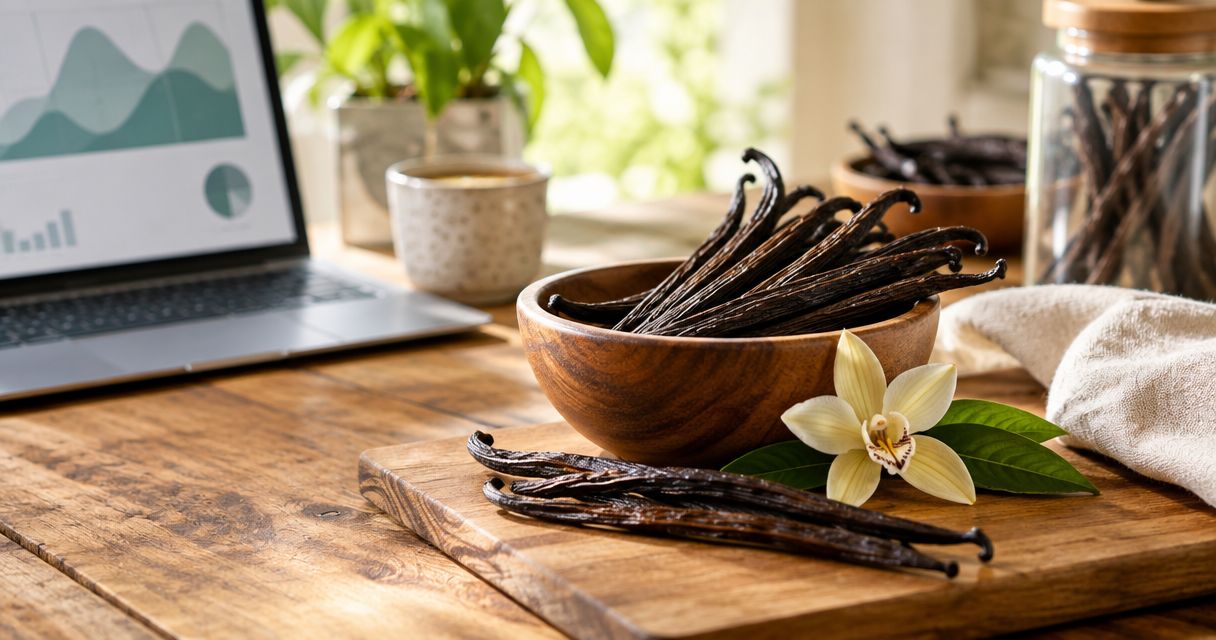
Madagascar vanilla beans: best for infusing
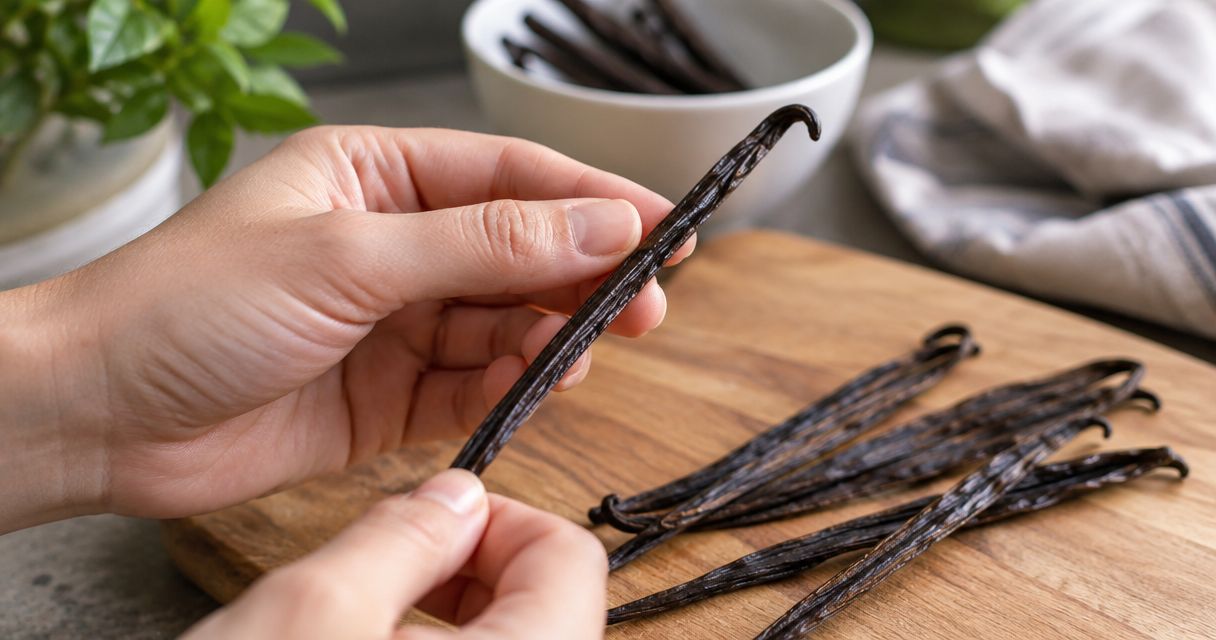
Whole Madagascar vanilla beans make the most sense when you can steep the pod in a liquid. Milk and cream are natural candidates. Split the bean lengthwise, scrape the seeds, and add both seeds and pod to the mixture when the recipe calls for vanilla.
The seeds give you visible flecks. The pod contributes aroma too, so scraping it and immediately discarding it wastes part of the ingredient. Remove the pod before serving unless the recipe directs otherwise.
Best for: ice cream bases, pastry cream, custard, panna cotta, and other preparations built around dairy or a similarly mild base. These dishes let you taste vanilla without making it compete with cocoa or assertive spices.
The trade-off is effort. You need a knife, an infusion step, and a plan for the remaining beans. Whole beans are a poor pantry choice if every recipe you bake calls for measured extract and you do not want to adapt it.
Visible seeds are an aesthetic benefit, not proof of stronger flavor. Judge the finished dish by its aroma and taste rather than by how many flecks you can see.
Pure vanilla extract: best for repeat baking
Pure vanilla extract is the practical choice when you bake often and want a measured ingredient that mixes readily into batter. It removes the splitting and scraping steps. You can follow a recipe written for extract without changing its method.
For a Madagascar-specific purchase, read the origin statement. The words “pure vanilla extract” do not, by themselves, identify Madagascar as the source. Purity and provenance answer different questions.
In the United States, the FDA standard for vanilla extract requires at least 35% alcohol by volume. That is a product identity standard, not a quality ranking or an instruction to add more extract. A compliant label does not tell you which origin you will prefer in a finished cake.
Best for: everyday cookies, cakes, and recipes developed around liquid extract. The limitation is that extract does not give you bean specks or a pod to infuse separately.
Keep using the amount specified by a reliable recipe. Adding extra vanilla to justify a purchase changes the flavor balance; it does not establish that the ingredient was worthwhile.
Vanilla bean paste: best for visible seeds without scraping
Vanilla bean paste suits cooks who want visible flecks but do not want to prepare a whole pod. It is particularly convenient in whipped cream, frosting, and other mixtures where a measured ingredient is easier to distribute.
Best for: a bean-speckled finish with less preparation. Check the ingredient list before treating paste as interchangeable with either beans or extract.
Paste formulas can include sweeteners and thickeners. Those ingredients matter when you are working with a delicate texture or carefully balanced sweetness. Follow the recipe or the manufacturer's stated substitution guidance rather than assuming every paste has the same concentration.
A Madagascar origin statement identifies the vanilla source; it does not explain the rest of the formula. Read both.
Imitation vanilla: best when complexity is not the priority
Imitation vanilla flavoring provides a recognizable vanilla note without reproducing the full mixture of aromatic compounds found in vanilla beans. That distinction matters most when vanilla carries the dish.
Best for: recipes where you want straightforward vanilla flavor and do not need whole-bean character. Its limitation is aromatic complexity, not a universal inability to make a good dessert.
Do not turn the choice into a rule that every bake requires beans. For a chocolate-heavy or strongly spiced recipe, first decide how prominent vanilla needs to be. Save your most ingredient-focused preparation for a dish where you can actually evaluate it.
Why Madagascar vanilla's value varies
An origin label cannot answer every buying question. These factors determine whether the ingredient fits your cooking:
- Flavor prominence: plain dairy desserts expose vanilla more directly than recipes dominated by other flavors.
- Product form: beans require preparation; extract is measured directly; paste combines convenience with visible seeds.
- Ingredient transparency: extract and paste need clear ingredient lists as well as origin information.
- Bean condition: a pod's aroma and physical condition matter alongside the named growing region.
- Pack size: the useful quantity is the amount you will use while maintaining appropriate storage.
- Cooking routine: an ingredient that fits your regular recipes is easier to use consistently than one bought for an unspecified occasion.
Buy for a specific use, then judge the result. If your next recipe is vanilla custard, a bean has a clear job. If your next several recipes call for extract, convenience deserves a place in the decision.
How do you get the most from a Madagascar vanilla bean?
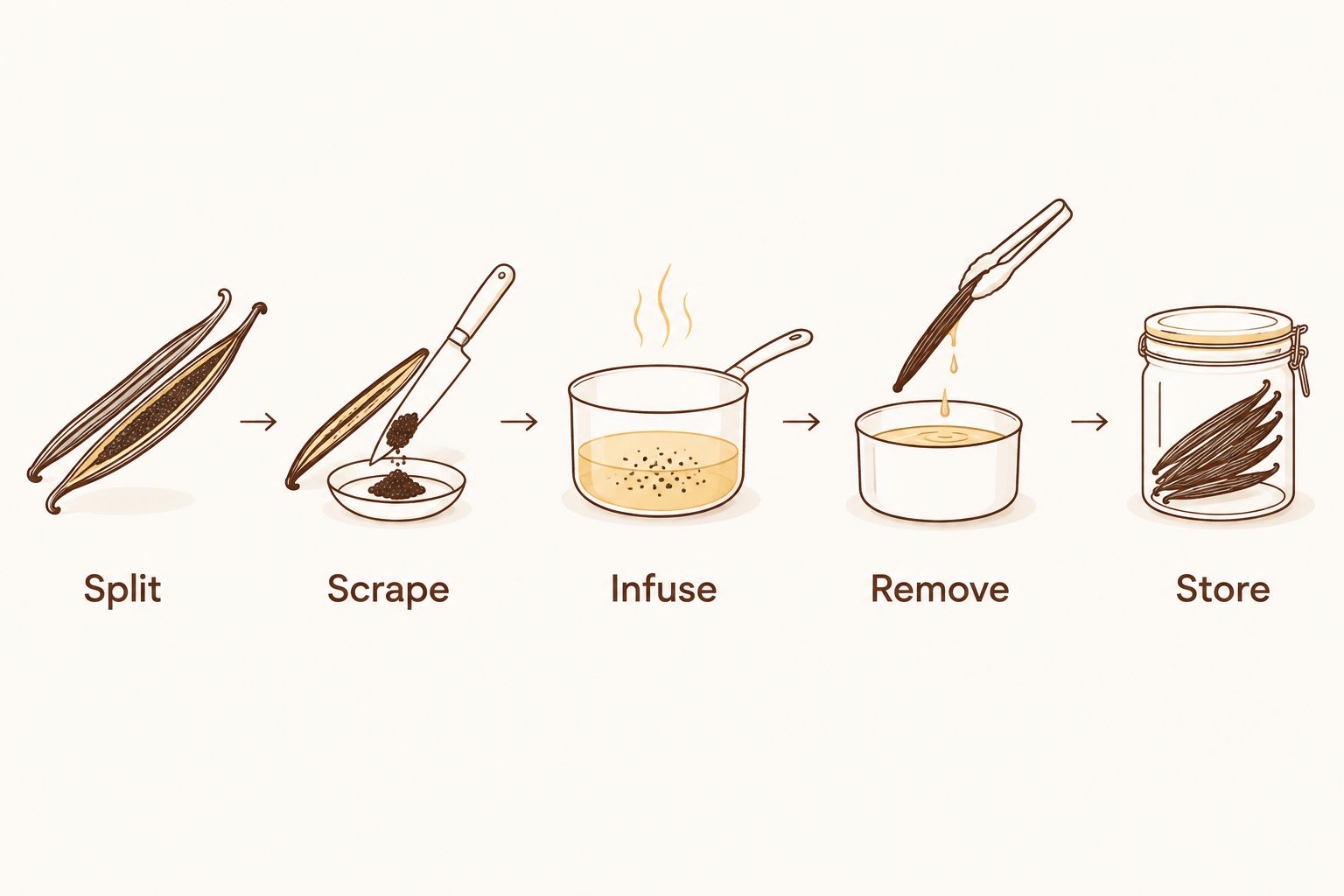
Use the whole pod thoughtfully. Vanilla needs preparation, but it does not need elaborate equipment or a complicated ritual.
Split
Place the bean on a clean board and hold it steady. Cut lengthwise to open the pod and expose the seeds. Work carefully rather than pressing hard through a narrow, slippery ingredient.
Scrape
Use the back of the knife to collect the seeds. Add them where your recipe specifies. Scraping one bean into two lengthwise halves gives you exposed surfaces for infusion; it is not a recipe conversion for extract.
Infuse
Add the opened pod with the seeds when your recipe calls for steeping vanilla in milk, cream, or another liquid. Follow the recipe's heating instructions. The pod belongs in the infusion, not just on the cutting board.
Remove
Take the pod out before finishing or serving the dish. Check that no pieces remain if the pod broke during preparation. A smooth custard should not contain tough fragments.
Store
Keep unused beans in an airtight container away from heat and light. Follow the seller's storage instructions, and handle the beans with clean, dry hands. Inspect them before use; do not use beans showing mold.
Do not dry-toast vanilla beans as though they were peppercorns or cardamom. For vanilla, splitting and infusing are the useful starting methods. Direct heat is not a substitute for a recipe's controlled infusion step.
What should you check before buying in 2026?
Start with the information that makes the purchase identifiable. Look for a stated origin, a clear product form, and an ingredient list where applicable. Do not let descriptive adjectives replace those details.
For whole beans, read any stated handling, harvest, or packing information. Those details describe the batch more specifically than a broad claim about quality. A packing date alone, however, does not establish how the beans were stored afterward.
For extracts and pastes, distinguish the vanilla's origin from the complete formula. A front label can emphasize Madagascar while the ingredient list explains alcohol, sweeteners, or thickeners. Both sides of the package matter.
Use this short checklist:
- Origin stated: does the listing identify Madagascar rather than simply saying vanilla?
- Form stated: are you buying beans, extract, or paste?
- Ingredients stated: can you tell what else is in a prepared vanilla product?
- Quantity clear: does the package description let you understand what you are receiving?
- Storage explained: can you care for the ingredient after opening?
- Recipe selected: do you know how you will use it?
In 2026, treat provenance as useful evidence, not a substitute for condition and fit. You are buying an ingredient for a particular result, not collecting origin claims.
How do you judge whether the difference paid off?
Make a dessert in which vanilla is easy to taste. A simple custard or whipped cream is more useful for this purpose than a heavily flavored cake. Keep the recipe and method consistent when comparing ingredients.
Smell first, then taste. Look for a vanilla character that remains balanced with the dairy, sugar, or other base ingredients. More intense is not automatically better if it makes the dessert taste unbalanced.
Evaluate the work too. If you enjoyed preparing and infusing the bean, that method fits your kitchen. If the extra step stopped you from baking, an extract is the more useful everyday choice.
Repeat use is the deciding test. An ingredient that makes a familiar recipe more satisfying has a clear role. An unopened package saved indefinitely for a special occasion does not.
Is Madagascar vanilla better than Uganda vanilla?
Madagascar vanilla is not automatically better than Uganda vanilla. Origin helps describe where an ingredient comes from, but curing, condition, and the individual lot also affect what reaches your kitchen.
Choose using the stated product details and your intended recipe. Without a direct comparison of specific beans, an origin-only winner is not a useful buying conclusion.
Is Madagascar vanilla worth it for chocolate cake?
Madagascar vanilla is not the first upgrade to prioritize when chocolate dominates the cake. Use the form your recipe specifies and keep its flavor balance intact.
A vanilla-forward frosting or cream served with that cake gives a whole bean a clearer role. Put the more involved preparation where vanilla has room to show.
Do you need Madagascar vanilla beans for everyday baking?
You do not need Madagascar vanilla beans for every bake. Pure extract is easier for recipes written around a measured liquid ingredient, while beans suit deliberate infusions.
Keep the form that matches your routine. Add beans when you have a specific dessert in mind rather than replacing every vanilla ingredient at once.
FAQ
Is Madagascar vanilla worth it in 2026?
Madagascar vanilla is worth it when vanilla leads the flavor, especially in custard, ice cream, whipped cream, and simple cakes. Origin alone does not establish quality; choose a suitable form and check the product details.
What's the best form of Madagascar vanilla for regular baking?
Pure vanilla extract is the most practical form for regular baking when your recipes specify extract. Whole beans are better suited to recipes with an infusion step, while paste adds visible seeds without scraping.
Is Madagascar vanilla better than vanilla from other origins?
Madagascar vanilla is not universally better than vanilla from other origins. Compare specific products by their stated origin, condition, ingredients, and intended use rather than choosing an origin-only winner.
Can I replace vanilla extract with a whole bean?
You can use a whole bean in recipes adapted for beans, but there is no dependable universal conversion across all beans and extracts. Use a recipe that specifies a bean quantity and explains how to incorporate it.
Should I use the vanilla pod after scraping out the seeds?
Use the opened vanilla pod as well as the seeds when your recipe calls for an infusion. Remove the pod before finishing or serving the dish.
How do I store Madagascar vanilla beans at home?
Store Madagascar vanilla beans in an airtight container away from heat and light, following the seller's instructions. Handle them with clean, dry hands and do not use beans showing mold.
Does pure vanilla extract always come from Madagascar?
Pure vanilla extract does not always come from Madagascar. The product must state its origin separately; the word pure describes a product identity, not a growing region.
Should I buy whole beans or vanilla paste for whipped cream?
Vanilla paste is convenient for whipped cream when you want visible seeds without scraping a pod. Whole beans also work in a suitable recipe, but check the paste's ingredients before substituting.
One last thing
The pod is an ingredient, not packaging. When you make a vanilla infusion, use the opened pod along with its seeds instead of discarding it immediately. That simple change gets more use from the bean you already selected.
For your next 2026 bake, choose the recipe first. Then choose the vanilla form that belongs in it.