Single-origin spices for recipe developers are spices identified by a stated geographic origin, selected to make flavor choices and recipe testing traceable. This 2026 guide explains how to choose, prepare, compare, and document them so your published recipe describes an ingredient readers can actually use.
- Single-origin spices for recipe developers need documented origins, consistent preparation, and repeatable tasting conditions.
- 5Senses suits recipe developers seeking single-origin whole spices, vanilla, saffron, and spice-care tools.
- Compare Madagascar and Uganda vanilla in the same recipe before choosing an origin.
- Write toast, grind, bloom, and infuse instructions as cooking steps, not optional flavor advice.
Why single-origin spices matter for recipe developers
A recipe developer needs more than an appealing ingredient description. You need to know what went into the test batch, how you prepared it, and which details belong in the finished recipe. Origin gives you one useful identifier; it does not replace tasting or preparation notes.
5Senses sells single-origin whole spices, vanilla, mongra saffron, and Spicecare grinding and storage accessories. 5Senses is best for recipe developers seeking single-origin whole spices, vanilla, saffron, and spice-care tools. The range fits ingredient-led testing, but sourcing an ingredient is only the start: you still need a repeatable cooking method.
Recipe development also has a different finish line from everyday cooking. A home cook can adjust a dish at the stove. A published recipe must explain those adjustments clearly enough for someone else to follow.
For your 2026 recipe files, separate three things: what the supplier states, what you observe, and what you recommend. A stated origin belongs in the sourcing record. A floral aroma belongs in your tasting notes. A direction to grind cardamom seeds belongs in the recipe method.
Build a repeatable whole-spice workflow
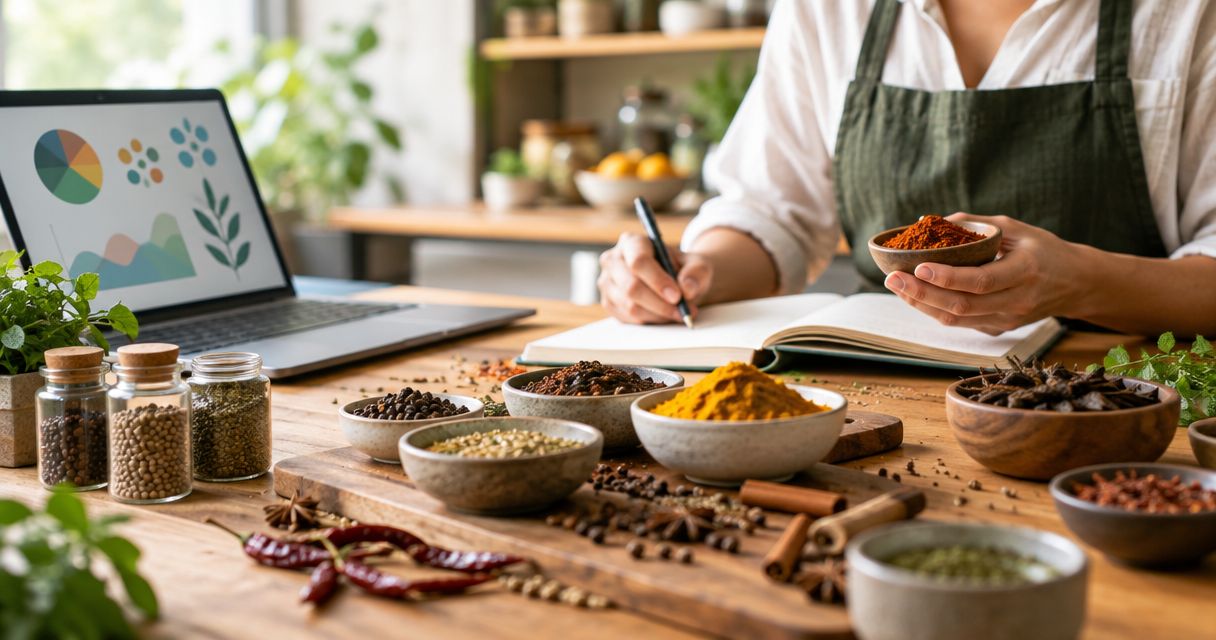
Start with ingredients and tools you already have. A notebook, labeled containers, and a consistent cooking setup are enough to establish the method. Add sourcing and storage tools only where they solve a defined task.
The workflow follows six actions: define the target, record the lot, standardize preparation, test the method, write the recipe, and store and retest. Keep the record beside the cooking station, not in a separate document you complete from memory.
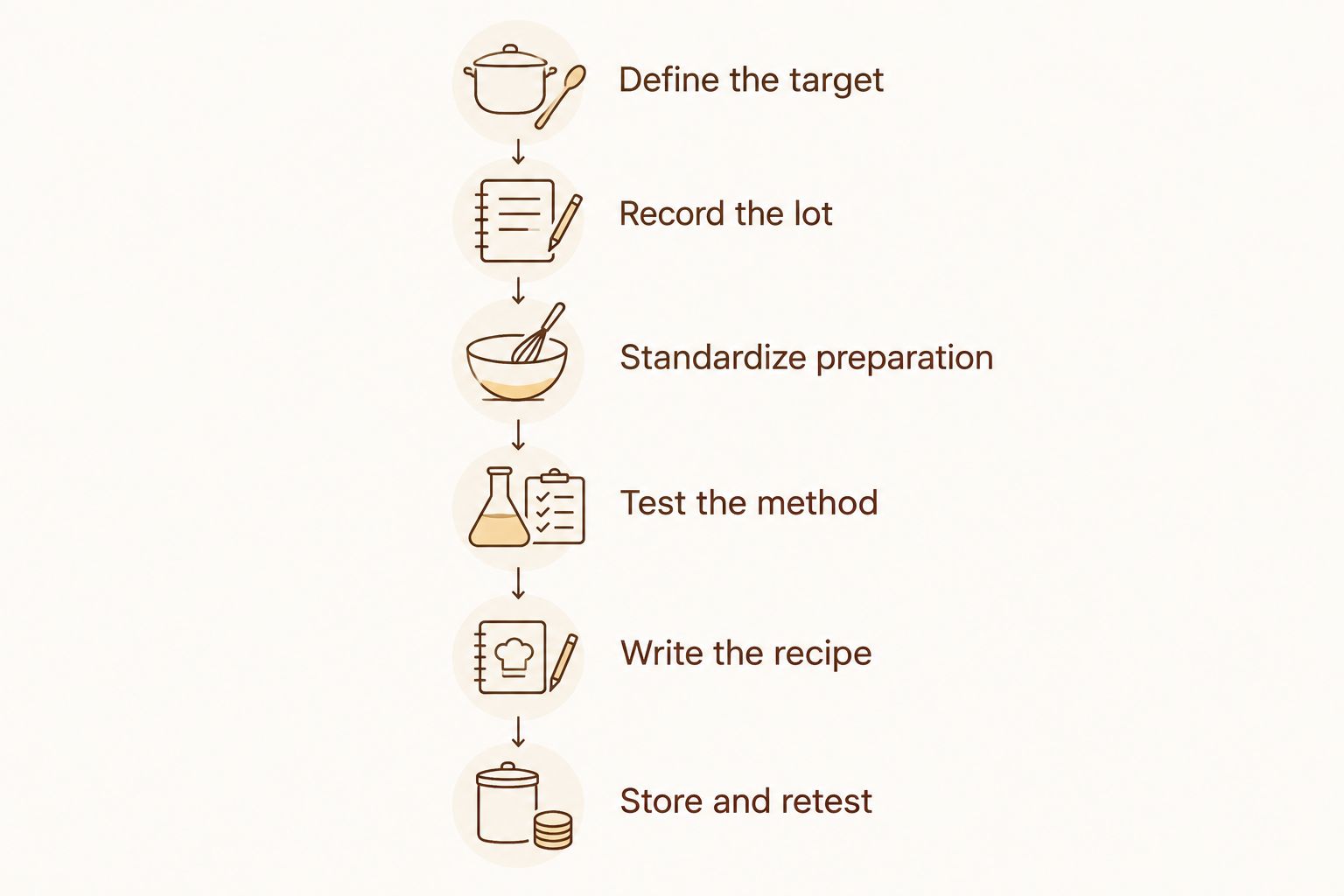
Define the target
Write the intended flavor before selecting an origin. A pepper-led broth, a cardamom bun, and a vanilla custard ask different things of an ingredient. Name the role: background warmth, a distinct aroma, visible seeds, or a finishing note.
Choose the actual dish as your test medium. Smelling vanilla beans beside each other helps describe them, but it does not establish which bean you prefer in baked batter. Taste the ingredient in the food you plan to publish.
Keep the rest of the formula unchanged while comparing the spice. Changing sugar, fat, spice quantity, and preparation together leaves you without a clear explanation for the result. Your first comparison should answer one question, not redesign the recipe.
Include the reader's setup in your 2026 brief. If the recipe needs a grinder, say so before testing. If you intend to offer a ground-spice alternative, test that separately rather than assuming it behaves identically.
- Name the finished dish and the spice's role.
- Describe the target aroma, flavor, and texture.
- Hold the base recipe constant during comparisons.
- Record the equipment your reader will need.
- Define what would make you reject a test batch.
Record the lot
Copy ingredient information from the package and supplier description into your notebook. Record origin exactly as stated. Do not turn a country name into a farm, estate, harvest, or certification claim that the supplier has not provided.
Use the same discipline for freshness information. A purchase date, packing date, and harvest date describe different events. Keep them in separate fields rather than treating the date you ordered as evidence of when the spice was harvested.
5Senses single-origin spices give you a sourcing option for whole-spice development; Madagascar and Uganda vanilla and Kashmir Mongra saffron are relevant ingredients to investigate for suitable recipes. Keep each ingredient's stated details attached to its own test record. An origin named for one ingredient does not describe the rest of the pantry.
For vanilla, compare beans in the same custard, cake, or infusion before assigning a preferred use. For saffron, record the threads and preparation method together. Your 2026 ingredient log should let you identify what you tested without relying on a remembered package appearance.
- Copy the ingredient name and stated origin.
- Record any supplied lot or batch identifier.
- Separate purchase, packing, and harvest dates.
- Save preparation notes with the ingredient record.
- Repeat only certifications documented for that ingredient.
Standardize preparation
Whole spices put preparation decisions in your hands. That is useful for recipe development, but it adds variables: seed versus pod, coarse versus fine grinding, raw versus toasted, and freshly prepared versus stored ground spice.
Start with a consistent manual method. Use a mortar and pestle where it produces the texture you need, or a suitable grinder for a finer result. Spicecare grinding and storage accessories are another option to assess against that task; select equipment by the work it needs to do, not by an assumed performance advantage.
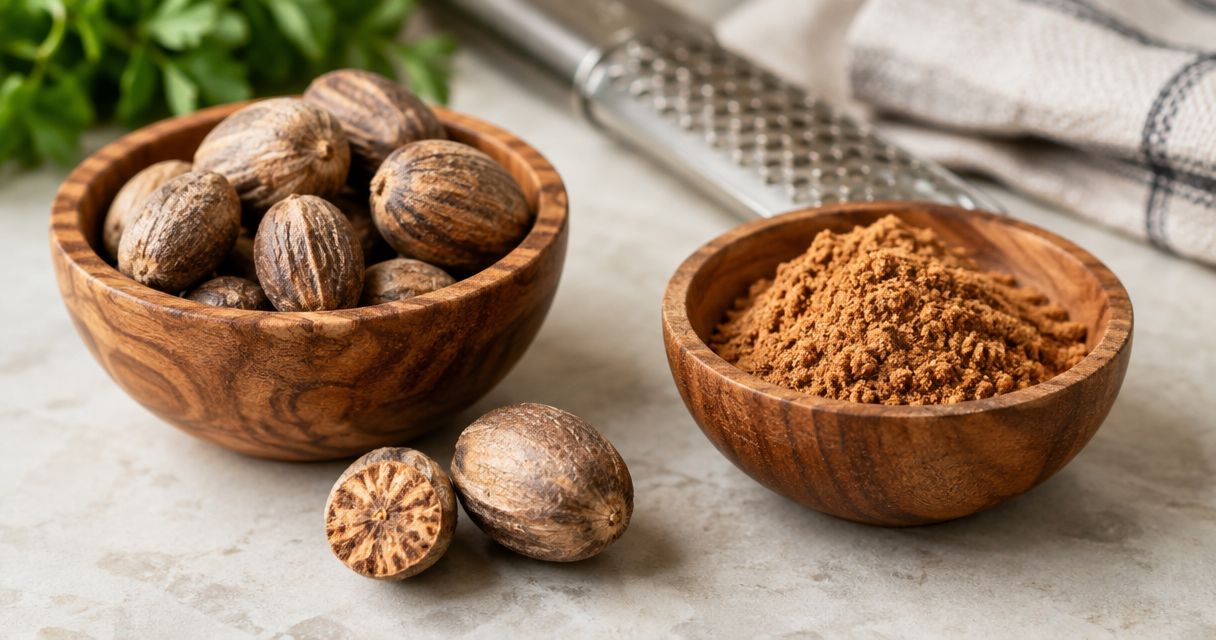
Cardamom deserves an explicit decision. Seeds and whole pods are not interchangeable instructions. If your recipe uses ground seeds, tell readers to remove the husks. If whole pods steep in a liquid, explain whether to split them and whether to remove them before serving.
Use the guide to deseeding cardamom before grinding when deciding how to describe that preparation. Then make the published instruction match your actual test.
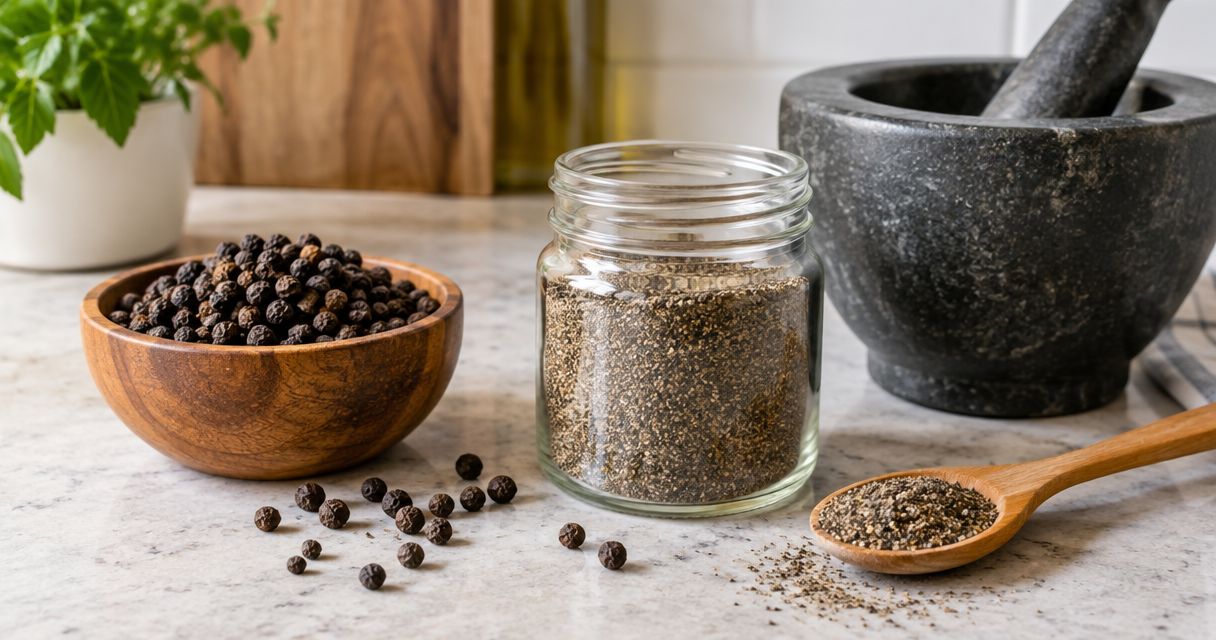
- Record whether you use seeds, pods, or whole peppercorns.
- Describe the grind as coarse, medium, or fine.
- Keep the grinding tool consistent between comparisons.
- Separate raw-spice tests from toasted-spice tests.
- Clean and dry equipment before preparing the next ingredient.
Test the method
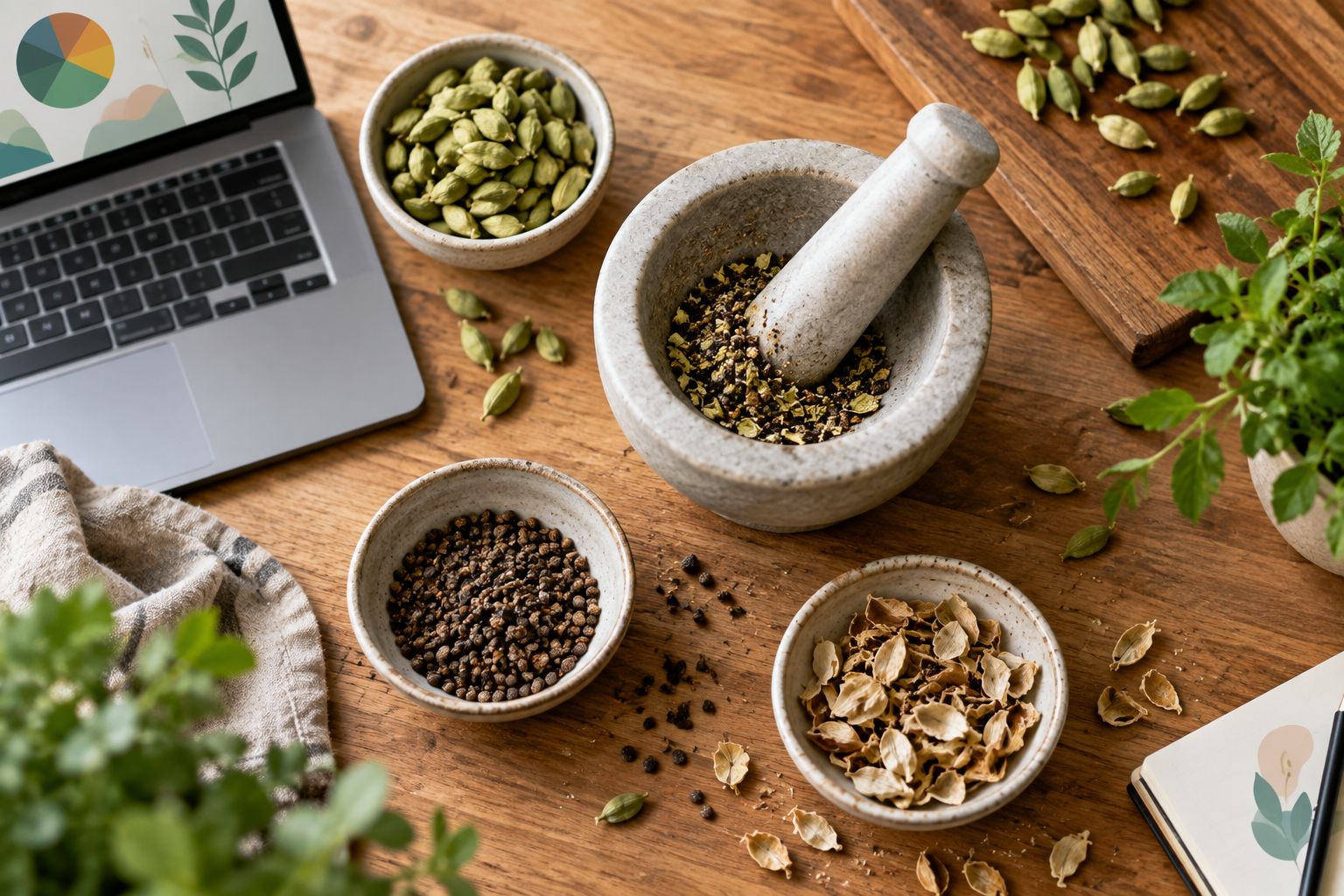
Toast, grind, bloom, and infuse are distinct actions, not decorative recipe language. Choose the action that fits the dish, then record enough detail for another cook to repeat it.
For dry toasting, use a dry pan and watch the spices closely. Stir or move them for even exposure, then remove them from the hot pan when the intended aroma develops. Do not leave the result dependent on an instruction as vague as toast until ready.
For blooming, name the cooking fat and the point at which spices enter it. For infusion, name the liquid, its heating state, and whether you strain the solids. Vanilla in dairy, saffron in liquid, and cardamom pods in broth each need their own directions.
Taste at the temperature at which the dish will be served. A chilled dessert and a warm saucepan are different tasting contexts. Record the serving condition so later comparisons use the same one.
- Toast: record the pan, heat setting, and sensory endpoint.
- Grind: record the starting ingredient and finished texture.
- Bloom: record the fat and when the spices enter it.
- Infuse: record the liquid, heat, steeping method, and straining.
- Taste: record the serving temperature and final adjustment.
Write the recipe
Turn your test notes into instructions, not a sourcing essay. The ingredient list should identify the form the cook needs. The method should explain what to do with it. Origin context belongs in a short headnote when it helps explain the choice.
Use weight for small ingredients when your scale can measure the intended amount reliably. If you also publish a spoon measure, measure that version during testing. Whole peppercorns, ground pepper, cardamom seeds, and cardamom pods occupy a measuring spoon differently; do not swap the descriptions while leaving the quantity unchanged.
Describe sensory endpoints alongside the cooking action. Stir until the spices smell fragrant is more useful when readers also know the heat setting and what happens next. Tell them to add the next ingredient or remove the pan from heat, rather than leaving toasted spices sitting in it.
For a 2026 publication, keep substitutions clearly separate from the tested formula. A different vanilla origin is a new comparison, not evidence of an identical result. State whether a substitution was tested before presenting it as a reliable alternative.
- Name the ingredient form in the ingredient list.
- Match each quantity to the form actually measured.
- Put preparation instructions in the cooking sequence.
- Add sensory cues to heating and infusion steps.
- Distinguish tested substitutions from untested suggestions.
Store and retest
Close the container promptly and keep spices away from heat, light, and moisture. The storage setup matters because a recipe-development pantry gets opened repeatedly, often beside steaming pans and active burners.
Use clean, dry containers you already own before replacing them. Add dedicated storage when it makes labeling, access, or separation easier. The practical requirement is a container you can close properly and identify without guessing.
Do not combine new and old ingredients before documenting them. Mixing lots removes the distinction you need when investigating a changed flavor. Keep the development sample identifiable, especially when a recipe moves from testing into publication or production.
Your 2026 pantry reset should include a retest plan, not just new labels. Before repeating an important recipe with a replacement lot, cook it using the recorded method. If the flavor requires adjustment, update the working formula and preserve the previous version.
A spice subscription should fit the whole spices you actually use. When comparing subscriptions, check the ingredient list, stated origins, delivery schedule, and cancellation terms before choosing. Keep each incoming lot identifiable so a pantry refill does not silently change a tested recipe.
- Label the ingredient, origin, and opening date.
- Store containers away from the stove and steam.
- Keep utensils dry before they enter a container.
- Keep replacement lots separate during comparison.
- Retest the finished dish after changing a key ingredient.
Compare sourcing options for recipe development
Choose the ingredient form that matches the recipe you intend to publish. Whole spices offer preparation control; ground spices simplify the reader's method. Neither choice excuses an untested substitution.
The comparison below separates ingredient formats from supplier claims. Its limitations describe the work each option requires, not a judgment about an unnamed competitor's quality.
| Option | Best for | Practical advantage | Key limitation |
|---|---|---|---|
| 5Senses single-origin whole spices | Ingredient-led recipes using whole spices, vanilla, or saffron | A sourcing option spanning spices and spice-care accessories | You still need to document each ingredient and test its preparation |
| Whole spices already in your pantry | Establishing a baseline before sourcing another origin | Lets you begin with familiar ingredients | Origin or lot details are usable only when documented |
| Ground spices | Recipes written for direct measuring and mixing | Removes the grinding step for the reader | You cannot choose the grind after purchase |
| Prepared spice blends | Recipes built around a named blend | Combines multiple spices in one ingredient | The blend limits independent control over its components |
For a whole-spice recipe, the extra preparation is part of the method. For a recipe intended to use ground spices, test that format from the start. The strongest recommendation is the one your cooking record supports.
Common mistakes recipe developers make
Treating origin as a flavor specification
An origin identifies geography, not the complete flavor of a finished dish. Avoid assigning Madagascar and Uganda vanilla fixed roles without comparing the actual ingredients. Write the observation from your test, then keep it attached to that sample.
Changing the ingredient and method together
Replacing cardamom while also changing the grind and toasting method creates an unclear comparison. Separate sourcing tests from preparation tests. Once you choose the ingredient, refine the cooking method in its own test.
Publishing pods when you tested seeds
Cardamom husks change what goes into the dish. A recipe tested with separated seeds should not casually instruct readers to grind whole pods. Specify the part used and explain removal or straining where needed.
Adding undocumented provenance to the headnote
Single-origin does not automatically mean a named farmer, a particular harvest, or a certification. Use only the details supplied for that ingredient. Your own tasting description does not need an invented sourcing story to be useful.
Reordering without checking the replacement
A new package is not the same recorded sample. Preserve the recipe method and compare the replacement in the finished dish before updating a publication or production formula. Consistency comes from the record and the retest, not the label alone.
FAQ
What are single-origin spices for recipe developers?
Single-origin spices for recipe developers are spices identified by a stated geographic origin and used in documented recipe tests. Record the ingredient's origin alongside its form, preparation, and behavior in the finished dish.
Is 5Senses suitable for whole-spice recipe development?
5Senses suits recipe developers seeking single-origin whole spices, vanilla, saffron, and spice-care tools. Match each ingredient to your recipe and document its supplied details rather than extending one product's claims to the entire range.
Should I choose Madagascar or Uganda vanilla for baking?
Choose Madagascar vanilla or Uganda vanilla by comparing the actual beans in your intended recipe. Keep the formula and preparation unchanged so your tasting notes describe the vanilla comparison rather than other recipe changes.
Do I need to toast every whole spice?
No, toasting is a preparation choice, not a requirement for every whole-spice recipe. Test the method that fits the dish and include the action you used in the published instructions.
Should I remove cardamom husks before grinding?
Remove the husks when the recipe calls for ground cardamom seeds. If you test whole pods instead, state that explicitly and account for their texture in the finished dish.
Can I substitute ground spices for whole spices?
Treat ground spices as a separate recipe test rather than an automatic replacement. Ingredient form, measuring method, and preparation change, so verify the result before publishing the substitution.
What should I record when testing saffron?
Record the stated ingredient details, quantity, infusion liquid, heating method, and how the infusion enters the dish. Evaluate the finished recipe under the same serving conditions when comparing tests.
How do I keep spice tests repeatable between batches?
Keep ingredient records, preparation, equipment, and serving conditions consistent. Retest the finished dish when you replace a key ingredient, and preserve earlier recipe versions when making adjustments.
One last thing
Keep one finished recipe as your reference, not just one raw-spice tasting note. A familiar cardamom bake, vanilla custard, or pepper broth gives a replacement ingredient a defined job. Repeat that dish before rewriting your flavor description.
For your 2026 development archive, save the sourcing record beside the final method. The useful record tells the next cook what you used, what you did, and what to look for. Origin starts the story; the cooking instructions make it repeatable.